If your scan tool reports P00FE EVAP system tank vapor line restricted/blocked, the engine computer has detected insufficient vapor flow between the fuel tank and the EVAP system. The usual repair is not simply replacing the purge valve: a blocked vapor hose, saturated charcoal canister, stuck vent valve, damaged fuel tank pressure sensor, or a pinched line may be responsible. You can often drive a short distance if the car runs normally, but the fault should be diagnosed promptly, especially if you smell fuel or refueling has become difficult.
What Does the P00FE Code Mean?
P00FE is an evaporative emissions system diagnostic trouble code. The EVAP system captures gasoline vapors in a charcoal canister instead of allowing them to escape into the atmosphere. When operating conditions are correct, the engine opens the purge valve and draws those vapors into the intake to be burned.
The tank vapor line is part of the vapor path between the fuel tank, the charcoal canister, the vent hardware, and—in some vehicle designs—the purge circuit. With P00FE stored, the powertrain control module has detected that this path is restricted or blocked during an EVAP flow or pressure test. The exact test strategy is manufacturer-specific, so always confirm the definition and test procedure in the service information for your year, make, model, and engine.
Common Causes of P00FE
- Pinched or collapsed vapor hose: A hose can be crushed after underbody work, fuel-tank removal, or contact with a heat shield.
- Debris or mud in the vent path: The canister vent filter or vent valve may become blocked by dust, insects, road salt, or water.
- Faulty EVAP vent valve: A vent valve stuck closed can make the system appear restricted even when the hoses are clear.
- Charcoal canister contamination: Overfilling the tank after the pump clicks off can send liquid fuel into the canister and restrict vapor flow.
- Damaged fuel tank vapor line: Plastic lines can crack, deform, or become internally obstructed.
- Faulty fuel tank pressure sensor: An implausible pressure reading can cause the module to interpret a normal system as restricted.
- Wiring or connector problems: Corrosion, broken wires, poor grounds, and water intrusion can prevent the vent or purge components from operating.
- Incorrect previous repair: A hose connected to the wrong port or a non-EVAP replacement hose with the wrong internal diameter can alter system flow.
Symptoms You May Notice
The check engine light is the most common symptom, and some vehicles will not show any drivability problem at all. EVAP faults often appear during a self-test performed after the vehicle has been parked overnight, driven at a steady speed, or refueled.
- Difficulty filling the fuel tank or a fuel nozzle that repeatedly clicks off
- A noticeable gasoline smell near the rear of the vehicle
- Hard starting immediately after refueling
- Rough idle or a brief stumble if the purge valve is also malfunctioning
- Reduced ability to complete emissions-readiness monitors
- Check engine light with additional EVAP codes such as P0446, P0451, P0455, or P0496
A fuel-filling problem is an especially useful clue. If the nozzle shuts off every few seconds, the tank may be unable to displace vapor through the vent path. That symptom points toward a blocked vent or vapor line, although a defective fuel nozzle or station vapor-recovery system should also be ruled out.
How to Diagnose P00FE Correctly
Replacing the purge valve first is a common mistake. The purge valve controls vapor flow toward the engine, while the restriction described by P00FE may be located at the tank, canister, vent valve, or connecting line. A proper diagnosis follows the flow path instead of guessing from the code.
1. Check all stored and pending codes
Record freeze-frame data before clearing anything. Look for fuel level, engine temperature, vehicle speed, and other EVAP codes. A P0451 related to tank pressure data or a vent-control code may identify the real starting point.
2. Inspect the system from the tank to the canister
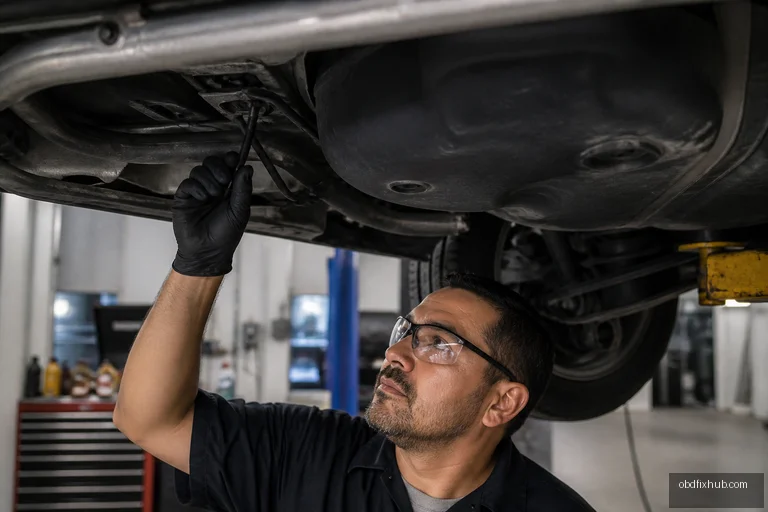
Raise the vehicle safely and inspect the vapor lines for crushed sections, kinks, loose fittings, abrasion, and melted plastic. Pay close attention to areas near the fuel tank, rear suspension, exhaust, and recent repair work. Do not blow compressed air through an EVAP line without following the manufacturer’s pressure limit; excessive pressure can damage the canister or tank.
3. Test the vent valve and filter
Use a scan tool to command the vent valve open and closed while checking its electrical response. Depending on the design, an ohmmeter test may confirm an open coil or short, but electrical resistance alone does not prove that the valve seals and flows correctly. Remove dirt from an accessible vent filter, but replace a contaminated or damaged filter rather than forcing debris deeper into the system.
4. Check the charcoal canister
A canister that smells strongly of raw fuel, leaks charcoal granules, or has restricted ports may be saturated or internally damaged. Never rinse a charcoal canister with solvent or water. If liquid fuel has entered it, replacement is normally the reliable repair, followed by correcting the cause of the overfill or fuel-control problem.
5. Use a smoke machine and pressure test
A smoke test is valuable for leaks, but smoke alone will not always locate an internal restriction. The technician should verify that smoke and low-pressure air can travel through the correct ports, isolate sections of the system, and compare tank-pressure sensor readings with actual test pressure. Factory scan-tool data and the service manual’s flow chart are more reliable than a universal internet test procedure.
How to Fix the P00FE Code
The repair depends on where the restriction is found. Typical fixes include replacing a collapsed vapor hose, restoring a damaged line, replacing a blocked vent valve or filter, installing a new charcoal canister, repairing wiring, or replacing a fuel tank pressure sensor that fails its plausibility test.
- Confirm the code and document freeze-frame information.
- Inspect the vapor lines, fittings, canister, vent valve, and wiring.
- Test flow and valve operation rather than relying only on visual inspection.
- Replace the failed component with the correct emissions-rated part.
- Clear the code and perform the manufacturer’s EVAP monitor drive cycle.
- Rescan for pending codes and confirm that the readiness monitor completes.
After a repair, the light may not turn off immediately. Some vehicles extinguish it after several successful trips; others require a scan tool to clear the code, followed by a complete monitor cycle. Clearing the code without fixing the restriction only resets the symptom temporarily.
Can You Still Drive With an EVAP Leak or P00FE?
For a short trip to a repair shop, usually yes, provided the engine runs normally and there is no strong fuel odor, visible fuel, or difficulty starting. An EVAP fault generally does not cause immediate engine damage because it concerns vapor control rather than lubrication or cooling.
Do not continue driving if you smell raw gasoline inside or around the vehicle, see wet fuel, notice severe hard starting, or suspect a damaged fuel tank. Gasoline vapors are flammable, and a restricted system may also leave you unable to refuel normally. Leaving the issue unresolved can prevent emissions testing and allow a separate drivability problem to go unnoticed.
Can You Drive With a Bad EVAP Purge Valve?
Usually, a car with a mildly faulty purge valve can be driven temporarily, but the risk depends on how it failed. A purge valve stuck open can create a vacuum leak, causing rough idle, stalling, lean fuel trims, or hard starting after refueling. A valve stuck closed may mainly trigger an emissions code, although it can contribute to failed EVAP tests.
If the vehicle stalls in traffic, struggles to start, or has a flashing check engine light, stop driving and have it inspected. Also remember that a bad purge valve is only one possible cause of P00FE; replacing it without testing the tank vapor path can waste money.
How Long Does an EVAP Code Take to Go Away?
If the underlying fault is repaired, the code may disappear after three or more successful drive cycles, depending on the vehicle. The check engine light may switch off automatically once the EVAP monitor passes, but the stored history code can remain in memory for much longer.
A scan tool can clear the code immediately, but that does not make the repair complete. Clearing codes also resets emissions readiness monitors, which can cause an emissions test to show not ready. Drive through the specified conditions in the service manual—often including a suitable fuel level, cold soak, steady-speed cruising, and a period of engine-off time—then verify the monitor status.
Practical Tips That Prevent Repeat EVAP Problems
- Stop filling when the fuel nozzle clicks off; do not repeatedly top off the tank.
- Keep the fuel cap clean and replace it if its seal is damaged, although a cap alone does not explain every P00FE fault.
- Inspect the rear EVAP plumbing after off-road driving, underbody repairs, or fuel-tank work.
- Use smoke-test equipment designed for EVAP systems and regulated to the correct low pressure.
- Ask for the exact failed test and measured result before approving an expensive canister or tank replacement.
Summary: The Smartest Next Step
P00FE means the vehicle has detected restricted or blocked vapor flow in the EVAP tank vapor path. Start with a visual inspection and code scan, then test the vent valve, canister, vapor lines, pressure sensor, and wiring in the direction of flow. A short drive is often acceptable when there is no fuel leak or serious drivability symptom, but a fuel smell, visible fuel, or repeated refueling difficulty requires prompt attention. Diagnose the restriction before replacing the purge valve, clear the code only after the repair, and confirm that the EVAP monitor passes.
Frequently Asked Questions
How do I fix the P00FE code?
Find the restricted section first. The repair may involve replacing a pinched vapor hose, blocked vent valve, contaminated charcoal canister, damaged wiring, or inaccurate tank pressure sensor. The code definition and test limits vary by vehicle, so use the manufacturer’s diagnostic procedure.
Can I still drive my car with an EVAP leak?
Usually, limited driving is possible if the car runs normally and there is no fuel odor or visible leak. Avoid driving and seek immediate inspection if gasoline is leaking, vapors are strong, or the vehicle is hard to start or stalls.
How long does it take for an EVAP code to go away?
After a successful repair, the light may turn off after several completed drive cycles. The code can be cleared sooner with a scan tool, but the EVAP readiness monitor must still run and pass.
Can I drive my car with a bad EVAP purge valve?
Possibly for a short time, if the valve only causes an emissions fault. A purge valve stuck open can cause stalling, rough idle, hard starting, and lean operation, so those symptoms should be repaired before normal driving continues.




