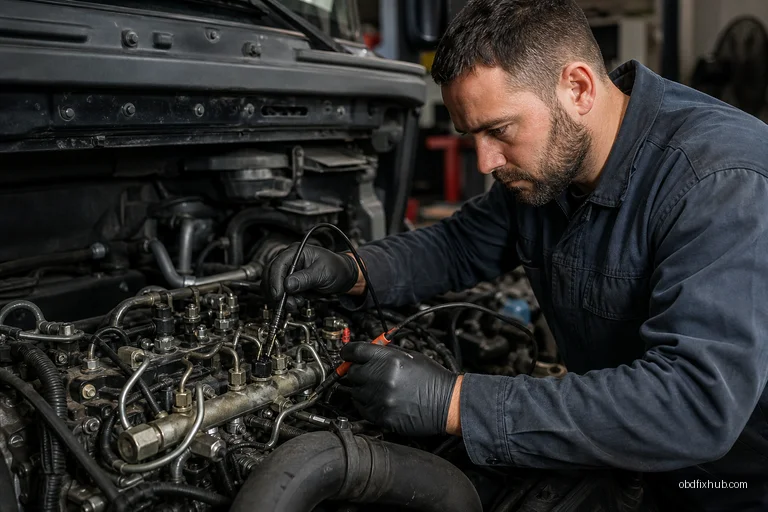
P026C Fuel Injection Quantity A Lower Than Expected means the engine control module has detected that the fuel delivered through an injector or fuel-injection circuit is below the amount it requested. The fault is most common on modern diesel and common-rail systems, but the exact definition and affected component can vary by manufacturer. Do not replace an injector immediately: restricted fuel supply, low rail pressure, wiring faults, or incorrect injector calibration can trigger the same code.
What Does P026C Mean?
The ECM constantly compares commanded fuel quantity with the amount it believes was actually delivered. It uses information from the fuel rail pressure sensor, crankshaft speed changes, injector control feedback, and other operating data to make that comparison. When the calculated quantity remains lower than expected for a defined period, P026C is stored.
The word “A” does not always identify cylinder 1 or a specific injector. On some vehicles it refers to an injector group, fuel-injection quantity control circuit, or a manufacturer-defined bank. Always check the factory service information for the vehicle’s year, engine, and calibration before testing parts.
Symptoms of P026C Fuel Injection Quantity A Lower Than Expected
Driving symptoms depend on how large the fuel shortage is and whether the ECM can compensate. A minor deviation may only illuminate the check engine light, while a severe problem can leave the vehicle unable to start.
- Check engine light or malfunction indicator lamp
- Hard starting, extended cranking, or a no-start condition
- Rough idle or noticeable engine vibration
- Hesitation during acceleration and reduced engine power
- Engine misfire, especially under load
- Lower fuel economy or an unusual change in fuel consumption
- Diesel smoke, often white or gray during poor combustion
- Reduced-power or limp-home mode
- Stalling when the engine is hot or under heavy acceleration
In a workshop, one useful clue is when the fault appears. If it occurs during cranking, suspect fuel pressure buildup, a restricted filter, excessive injector return flow, or a weak high-pressure pump. If it appears only under load, the low-pressure supply system may be unable to maintain volume at higher demand.
Common Causes of P026C
1. Restricted fuel supply
A clogged fuel filter, contaminated diesel, blocked pickup strainer, pinched fuel line, or failing tank pump can starve the injection system. A filter can look acceptable externally while its internal media is restricted, particularly after water or sediment enters the tank.
2. Low fuel rail pressure
Common-rail engines need accurate pressure before the injectors can deliver the commanded quantity. Low pressure may result from a weak supply pump, a defective fuel pressure regulator, a faulty metering valve, excessive injector return flow, or a worn high-pressure pump.
3. Injector restriction or internal failure
An injector with a blocked nozzle may deliver less fuel than commanded. Internal wear can also create excessive leak-off, reducing rail pressure for every injector. On some systems, a replacement injector must be coded or calibrated in the ECM; an unprogrammed injector can cause poor running even when the mechanical installation is correct.
4. Electrical or wiring problems
Loose injector connectors, damaged harnesses, corrosion, poor engine grounds, and high resistance in the power or control circuit can reduce injector operation. Heat-related opens are easy to miss: the engine may run normally cold and develop the code after the harness or injector reaches operating temperature.
5. Incorrect sensor information
A biased fuel rail pressure sensor, crankshaft sensor, or camshaft sensor can make the ECM calculate fuel quantity incorrectly. A sensor may produce a plausible-looking signal without accurately tracking rapid pressure changes, so a basic code scan alone is not enough.
6. Software or mechanical engine issues
In less common cases, outdated ECM software, incorrect injector data, low compression, valve-timing problems, or air entering the fuel system can create a quantity mismatch. These possibilities become more relevant when pressure, wiring, and injector tests pass.
How to Diagnose P026C Correctly
The most reliable diagnosis starts with data, not parts replacement. Record all stored and pending codes, freeze-frame information, engine temperature, fuel pressure, battery voltage, and engine speed when the code was set. A related low-pressure, rail-pressure, injector-circuit, or crankshaft-speed code may identify the primary fault.
- Confirm the complaint and inspect the basics. Check fuel level and fuel quality, inspect for water or gasoline contamination in a diesel system, and look for leaks, crushed lines, and a loose fuel-filter seal.
- Compare commanded and actual pressure. Use a scan tool during key-on, cranking, idle, and a controlled acceleration test. Actual rail pressure should follow the commanded value closely; use the manufacturer’s specified limits rather than generic internet numbers.
- Test the low-pressure side. Measure supply pressure and volume before the high-pressure pump. A system can show acceptable pressure at idle but fail a volume test under load.
- Check injector balance or return flow. A leak-off test can reveal an injector that returns substantially more fuel than the others. Compare cylinders under the same temperature and test duration; one outlier is more meaningful than an arbitrary universal limit.
- Inspect the electrical circuit. Test connector fit, terminal tension, power supply, grounds, continuity, and voltage drop while the engine is cranking. A visual inspection alone will not find a high-resistance connection.
- Verify calibration and mechanical condition. Confirm injector coding, ECM updates, synchronization, compression, and valve timing if the fuel system passes its tests.
A practical diagnostic rule is to avoid condemning an injector solely because the code mentions injection quantity. On many diesel vehicles, a restricted filter or excessive return flow from one injector lowers rail pressure and makes the entire system appear fuel-starved.
How to Fix P026C
The repair depends on the failed test result. Replace a contaminated or restricted fuel filter, repair damaged supply lines, and flush the system when contamination is confirmed. If water, gasoline, metal particles, or severe debris is found, inspect the tank, pump, rail, and injectors before installing new components.
- Repair corroded terminals, damaged injector wiring, and poor engine grounds.
- Replace a failed low-pressure pump, fuel metering valve, pressure regulator, or rail pressure sensor after testing confirms the fault.
- Replace or professionally service an injector that fails balance, leak-off, or electrical tests.
- Repair or replace a worn high-pressure pump when pressure and contamination tests support that diagnosis.
- Enter injector correction codes and perform the required relearn procedure after injector replacement.
- Update ECM software only when the manufacturer identifies a calibration issue or the service procedure calls for it.
After repairs, clear the code and carry out the manufacturer’s fuel-system priming procedure. Then verify actual versus commanded pressure during cold start, warm idle, and road-load acceleration. A repair is not fully confirmed until the code stays cleared through a complete drive cycle and the original symptoms do not return.
Can You Still Drive With P026C?
Short, gentle driving may be possible if the engine starts normally, runs smoothly, and the warning light is steady. However, avoid towing, hard acceleration, and long trips because a lean fuel condition or unstable rail pressure can cause stalling, poor combustion, or secondary damage. Stop driving if the vehicle loses power, stalls, produces heavy smoke, shows an oil-pressure warning, or enters severe limp mode.
Estimated Repair Cost
Diagnostic labor is often the first expense because P026C can originate in several parts of the fuel system. A filter or wiring repair is usually far less expensive than an injector or high-pressure pump. Costs vary significantly by engine, access, labor rates, and whether the fuel system has been contaminated, so a confirmed test result is more valuable than a quick parts quote.
Key Takeaway
P026C Fuel Injection Quantity A Lower Than Expected indicates a mismatch between requested and delivered fuel, not automatic proof of a failed injector. Start with fuel quality, filter restriction, low-pressure supply, actual rail pressure, injector return flow, and wiring. Use live data and manufacturer specifications, then complete injector coding and a post-repair drive cycle when required.
Frequently Asked Questions
Is P026C caused by a bad fuel injector?
It can be, but not always. A restricted filter, low fuel pressure, excessive injector leak-off, wiring fault, or inaccurate pressure sensor can produce the same code. Injector replacement should follow a balance, return-flow, and electrical test.
Does P026C identify a particular cylinder?
Not necessarily. The “A” designation is manufacturer-specific and may refer to a fuel quantity circuit, injector group, or bank rather than cylinder A. The vehicle-specific service information is required for a precise interpretation.
Can a clogged fuel filter trigger P026C?
Yes. A restricted filter can limit fuel volume to the high-pressure pump, especially during acceleration or cranking. Checking supply pressure and volume before replacing expensive components is an important diagnostic step.
Will clearing P026C fix the problem?
No. Clearing the code only removes the stored fault temporarily. If the fuel quantity mismatch remains, the code and symptoms will return after the ECM completes its monitoring tests.




