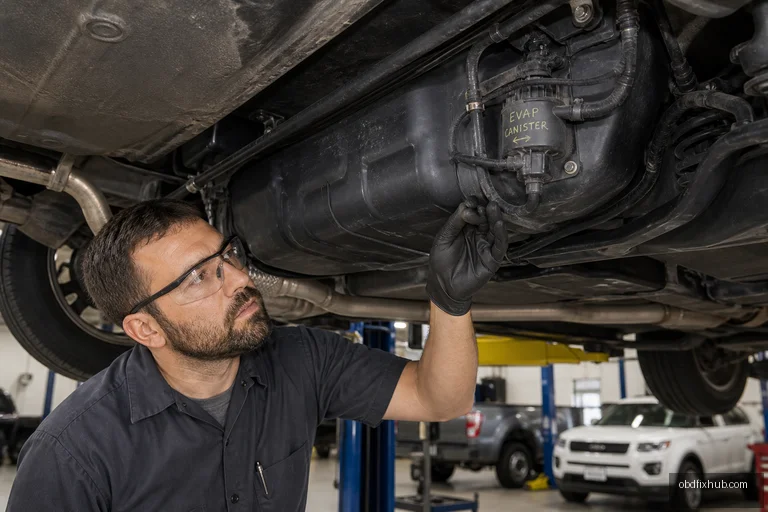
The P043E code means the engine computer has detected abnormally low airflow through the EVAP leak-detection reference orifice. In plain English, the vehicle cannot create or measure the small, controlled restriction it uses to test the evaporative-emissions system. The fault may be caused by a blocked orifice, a restricted hose, a faulty leak-detection pump or pressure sensor, or an electrical problem—not necessarily a simple fuel-cap issue.
What Does the P043E Code Mean?
OBD-II trouble code P043E is defined as “EVAP Leak Detection Reference Orifice Low Flow.” The EVAP system captures gasoline vapors from the fuel tank and routes them into the engine to be burned instead of releasing them into the atmosphere.
During an EVAP self-test, the vehicle closes its purge and vent valves, pressurizes or draws a vacuum in the vapor system, and checks how quickly the pressure changes. A calibrated reference orifice provides a known amount of airflow. The engine control module compares the measured result with an expected value. If the flow is consistently too low, it stores P043E.
This code is often confused with P0430, which relates to catalytic-converter efficiency. They are unrelated. P043E concerns the fuel-vapor system and its leak-detection hardware.
Common Causes of P043E
- A blocked EVAP reference orifice caused by dust, mud, insects, charcoal granules, or corrosion
- A kinked, pinched, collapsed, or internally restricted EVAP hose
- A faulty leak-detection pump or natural-vacuum-leak-detection assembly
- An EVAP pressure sensor that reports incorrect pressure or flow data
- A vent valve that is stuck closed or does not respond correctly
- Damaged wiring, corroded terminals, poor grounds, or an intermittent connector
- A saturated or damaged charcoal canister, particularly after repeated overfilling of the fuel tank
- A missing or incorrectly installed filter, screen, hose, or factory restrictor after previous repairs
A loose fuel cap can trigger other EVAP codes, but it is not the most convincing explanation for a specific “reference orifice low flow” fault. Always inspect the cap because it is quick to check, but do not stop the diagnosis there.
P043E Symptoms You May Notice
Many vehicles drive normally with this code because the EVAP system does not control basic engine operation under most conditions. The first sign is frequently a check-engine light discovered during an emissions inspection.
- Check Engine Light or malfunction indicator lamp
- Failure of an emissions or inspection test
- Occasional fuel odor near the rear of the vehicle
- Difficulty filling the fuel tank if the vent path is restricted
- A fuel nozzle that repeatedly clicks off while refueling
- Rarely, rough running or hard starting after refueling if a purge-related fault is also present
Freeze-frame data can be useful. Note the fuel level, coolant temperature, vehicle speed, and engine load when the code was set. EVAP monitors commonly run only under specific conditions, so a vehicle may pass several short trips before the warning returns.
How to Diagnose the P043E Code Correctly
Replacing the purge valve immediately is a common—and often expensive—mistake. P043E requires testing the complete leak-detection circuit and following the manufacturer’s EVAP test procedure.
- Confirm the code and record related faults. Use a quality scan tool to check stored, pending, and history codes. Codes for EVAP pressure, vent control, purge flow, or sensor voltage can change the diagnostic direction.
- Inspect the fuel cap and EVAP plumbing. Look for cracked vapor lines, disconnected quick-connect fittings, crushed hoses, damaged canister ports, and signs of rodent damage. Pay particular attention to the line between the canister, vent valve, and leak-detection assembly.
- Check the reference orifice and filter. Depending on the vehicle, the orifice may be integrated into a vent valve, leak-detection pump, canister, or a dedicated hose assembly. Do not drill, enlarge, or aggressively clean it; changing its calibrated size can create another fault.
- Test the electrical circuit. With the wiring diagram, verify power supply, ground quality, continuity, connector condition, and command signals. A component can click during a basic test and still fail to produce the required airflow.
- Use a scan tool for active testing. Command the vent valve, purge valve, and leak-detection pump if supported. Compare pressure-sensor readings with the actual system state. A sensor stuck at one value is a strong clue.
- Perform a smoke test when appropriate. A smoke machine can locate leaks, but P043E is primarily a low-flow reference-orifice code. A system may show no visible leak and still have a blocked orifice, restricted filter, or failed pump.
One practical tip from workshop diagnosis: inspect the air path on the vent side before pressurizing the system. A vent filter packed with road dust can make the system appear to have a defective pump, while a small restriction may only show up during the vehicle’s commanded self-test.
How to Fix a P043E Code
The correct repair depends on the failed part. A loose connector or damaged hose may be inexpensive, while an integrated canister or leak-detection pump may require more labor.
- Repair damaged wiring or replace corroded terminals.
- Replace a pinched, cracked, or internally collapsed EVAP hose.
- Replace the vent valve, leak-detection pump, pressure sensor, or canister assembly when testing proves it defective.
- Restore the correct factory filter, restrictor, and hose routing after aftermarket or previous repair work.
- Clear the code only after the repair, then complete the EVAP monitor drive cycle.
Do not bypass the reference orifice or leave the vent path permanently open. Those shortcuts can prevent the monitor from running, create additional codes, and increase vapor emissions.
How Serious Is the P043E Code?
P043E is usually moderately serious rather than an immediate breakdown emergency. You can often drive to a repair shop if the vehicle runs normally and there is no strong fuel smell. However, the code indicates that emissions equipment is not operating as designed, and it may prevent the vehicle from passing inspection.
Stop driving and investigate promptly if you smell raw fuel, see wet fuel near the tank, notice fuel leaking, or experience hard starting after refueling. Those symptoms may indicate a separate safety-related fuel or EVAP problem.
How Much Does It Cost to Fix a P043E Code?
Repair prices vary significantly by vehicle and by the part that contains the reference orifice. Typical independent-shop estimates in the United States are:
- Diagnosis: $100–$200, sometimes credited toward the repair
- Fuel-cap, hose, or connector repair: $20–$180
- Vent valve or purge-related component: $150–$450
- Leak-detection pump or pressure sensor: $250–$750
- Charcoal canister or integrated EVAP assembly: $400–$1,200 or more
These are broad estimates, not a quote. Labor access is a major factor: a component mounted beside the fuel tank may take considerably longer to replace than one in the engine bay. Ask the shop whether the estimate includes an EVAP smoke test, scan-tool verification, parts, labor, and the final monitor drive cycle.
Is P043E Easy to Fix Yourself?
Basic inspection is suitable for a capable DIY owner. Checking the fuel cap, visible hoses, connectors, and signs of a damaged canister can prevent an unnecessary parts purchase. A scan tool that displays EVAP pressure and commands valves is much more useful than a code reader that only erases faults.
The repair becomes more difficult when the reference orifice is built into a canister or leak-detection module. EVAP diagnosis also requires care around gasoline vapors and a properly designed smoke machine—never use compressed air carelessly on a fuel-vapor system. If you cannot identify the airflow path from the vehicle’s service information, professional testing is usually cheaper than replacing several valves by trial and error.
Frequently Asked Questions About P043E
Can a bad gas cap cause the P043E code?
It is possible for a faulty cap to contribute to EVAP faults, but P043E specifically points toward low flow through the leak-detection reference circuit. Inspect the cap first, then test the orifice, vent path, sensor, and wiring.
Will clearing P043E make it go away permanently?
No. Clearing the code only removes the stored warning. If the fault remains, the EVAP monitor will usually detect it again after the required drive conditions are met.
Can I pass an emissions test with P043E?
Usually not if the check-engine light is on or the EVAP monitor is incomplete. After repair, the vehicle may need several normal drive cycles before the monitor reports “ready.”
Is an EVAP leak expensive to repair?
Not always. A loose hose or damaged connector may cost under $200, while a canister, pump, or sensor assembly can cost several hundred dollars. Accurate diagnosis is the best way to control the repair bill.
Bottom Line
The P043E code identifies a low-flow condition in the EVAP leak-detection reference-orifice circuit. Start with a visual inspection, verify the vent and reference-air path, test the pressure sensor and electrical controls, and use smoke testing only as part of a complete diagnosis. Avoid replacing the purge valve or charcoal canister until testing proves it is the failed component.
If the vehicle has a fuel odor, refueling difficulty, or a warning light that returns after clearing, arrange a proper EVAP diagnostic rather than postponing the repair. A targeted test is usually far less expensive than guessing.




