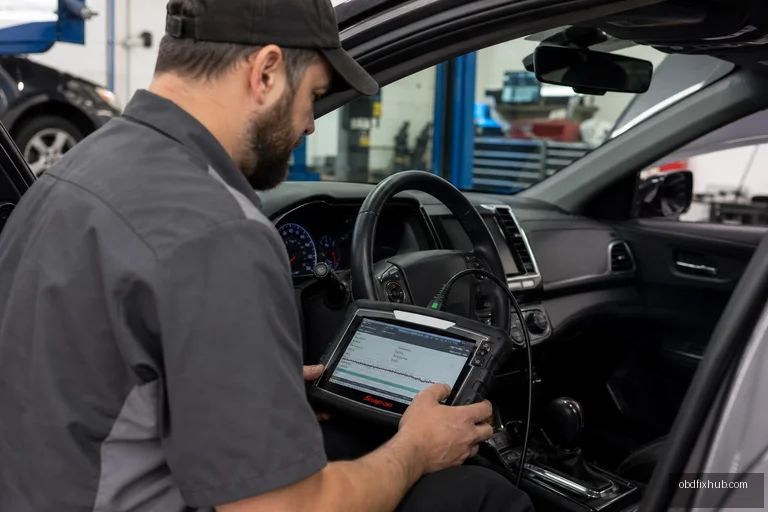
The P0601 code means the vehicle’s powertrain control module (PCM), engine control module (ECM), or another internal control module has detected a memory checksum mismatch. In plain English, the computer’s self-test found that stored software or calibration data does not match what it should be. A weak battery or poor power supply can trigger it, but a repeatedly returning P0601 often points to corrupted module memory or a failing PCM.
What Does “Internal Control Module Memory Checksum Error” Mean?
A checksum is a calculated value used by the control module to verify that its software and calibration data are intact. Each time the module powers up, it checks the stored data against the expected value. If the numbers do not match, the module logs P0601.
This is different from a typical sensor code. P0601 does not directly identify a bad oxygen sensor, throttle position sensor, or fuel injector. It identifies a problem with the controller’s ability to verify its own memory. The code may be caused by damaged software, interrupted programming, internal memory failure, or unstable voltage during startup.
Common P0601 Symptoms
Some vehicles continue to drive almost normally with P0601 stored, while others develop serious drivability or starting problems. The symptoms depend on which module is affected and whether the fault is intermittent or permanent.
- Check Engine Light or a warning message
- Hard starting, extended cranking, or a no-start condition
- Engine stalling shortly after startup
- Reduced-power or limp-home mode
- Harsh, delayed, or incorrect automatic transmission shifts
- Rough idle, hesitation, or poor throttle response
- Unexplained loss of communication with scan tools
- Multiple unrelated warning lights appearing together
- Intermittent electrical behavior after a dead battery or battery replacement
A useful diagnostic clue is timing. If P0601 appeared immediately after the battery went completely flat, the battery was connected backward, or a module was programmed, test the power supply and programming history before condemning the PCM.
Why Does the P0601 Code Appear?
1. Low system voltage or a failed battery
Control modules are sensitive to voltage drops during cranking. A battery can show 12.4 volts with the engine off yet collapse under load because of an internal fault. A failing alternator, loose battery terminal, or corroded ground can create the same problem.
2. Poor PCM power or ground connections
Loose grounds, water intrusion, oxidized connectors, and damaged power feeds can interrupt module operation. On older vehicles, inspecting the engine-to-body ground strap is especially worthwhile. A module may set an internal memory code simply because its voltage supply became unstable for a fraction of a second.
3. Interrupted or incorrect programming
P0601 can follow a failed software update, low voltage during reprogramming, or installation of a module with the wrong calibration. A professional scan tool may show additional programming, communication, or configuration codes that explain the event.
4. Internal PCM or ECM memory failure
If the battery, charging system, wiring, and grounds are proven good and P0601 returns after clearing, the control module itself may have damaged nonvolatile memory. Heat, moisture, vibration, age, and repeated voltage events can contribute to internal failure.
5. Aftermarket electrical equipment
Remote starters, alarm systems, poorly installed audio equipment, and nonstandard tuning devices can interfere with module power or communication circuits. Disconnecting an aftermarket accessory for testing can reveal a fault that a basic code scan will not identify.
How to Diagnose P0601 Correctly
Do not begin by ordering a PCM. A disciplined diagnosis prevents an expensive module replacement from masking a simple voltage problem.
- Scan every module. Record all stored and pending codes, not just P0601. Network, low-voltage, ignition, and communication codes may be more important than the checksum code itself.
- Check the battery and charging system. A healthy battery typically measures about 12.4–12.7 volts at rest, while a running charging system often measures approximately 13.5–14.8 volts. Exact specifications vary, so use the vehicle manufacturer’s data.
- Perform a voltage-drop test. Check the positive and ground circuits while cranking and with electrical loads operating. Visual inspection alone will not reliably find a high-resistance connection.
- Inspect PCM connectors and grounds. Look for bent terminals, moisture, green corrosion, oil contamination, damaged harnesses, and loose ground eyelets.
- Check for technical service bulletins. Some models have known software updates or module-related service procedures for internal control module codes.
- Clear the code and road-test the vehicle. If the code does not return after several complete drive cycles, the original trigger may have been a temporary voltage or programming event.
- Verify software and configuration. If the code returns immediately, a qualified technician should confirm the module’s calibration, vehicle identification configuration, immobilizer data, and communication integrity.
Use a battery support unit, not a small trickle charger, during professional module programming. A voltage interruption while writing software can turn a recoverable programming issue into a no-start condition.
How Can I Fix the P0601 Code?
The correct fix depends on the test results. Possible repairs include replacing a weak battery, repairing a corroded ground, correcting a charging-system fault, repairing a PCM power circuit, or reprogramming the original module with the correct factory software.
If the PCM has an internal memory defect, replacement or specialist module repair may be necessary. A replacement PCM is rarely a simple plug-in part. It may require immobilizer pairing, VIN configuration, injector coding, throttle relearn, transmission calibration, or other manufacturer-specific procedures.
A used module can be less expensive, but it must be compatible with the exact engine, transmission, emissions package, and calibration. Some used modules can be professionally cloned or reprogrammed; others cannot be configured correctly. Ask the supplier whether programming, security pairing, and warranty coverage are included before buying.
What Does P0601 Mean in a Chevy Malibu?
On a Chevy Malibu, P0601 generally indicates that the engine or powertrain control module failed its internal memory verification. The practical diagnosis is the same: test battery voltage, alternator output, module grounds, connectors, communication circuits, and software before replacing the ECM or PCM.
Malibu symptoms may include a Check Engine Light, reduced engine power, stalling, no-start conditions, or several warning messages at once. The exact repair varies by model year and engine. A factory-level scan tool or a repair facility familiar with GM programming may be needed to perform SPS programming, security relearn, and configuration correctly.
Is It Worth Fixing a P0601 Code?
Usually, yes—especially when the vehicle is otherwise reliable and the fault is caused by a battery, ground, or software issue. Those repairs are often far cheaper than replacing a PCM. It becomes a financial decision when the vehicle needs a replacement module, programming, and additional electrical repairs at the same time.
Do not keep driving indefinitely if the engine stalls, enters reduced-power mode, or becomes difficult to restart. A car that currently runs normally can still lose module communication without much warning. Get a written diagnosis that separates testing costs, reprogramming, module repair, and replacement parts before approving the work.
Can You Drive With P0601?
Short-distance driving may be possible if the vehicle runs normally and the code is stored only, but it is not risk-free. Avoid driving if there is stalling, a no-start history, severe shifting, reduced power, or multiple communication faults. A tow is safer when the engine can shut off in traffic or the vehicle cannot maintain normal control.
Final Takeaway
P0601 is a control-module self-test failure, not proof that the PCM must immediately be replaced. Start with battery condition, charging voltage, grounds, connectors, and related codes. If the code repeatedly returns after those checks, have the module software verified and obtain a professional assessment for reprogramming, repair, or replacement. That sequence saves money and prevents a new module from being damaged by the original electrical fault.
Frequently Asked Questions
Can a weak battery cause P0601?
Yes. A battery or charging-system voltage drop can interrupt module operation and create a checksum error. Test voltage under load and during cranking rather than relying only on an at-rest voltage reading.
Will clearing P0601 fix the problem?
Clearing the code may remove a one-time fault caused by low voltage, but it will not repair damaged memory or an ongoing power-supply problem. If P0601 returns quickly, further diagnosis is required.
Can I replace the PCM myself?
Physical installation may be straightforward, but programming, immobilizer pairing, VIN configuration, and relearn procedures often require professional equipment. Installing the wrong module can create additional communication and starting problems.
How much does a P0601 repair cost?
The cost ranges from a relatively inexpensive battery, terminal, or ground repair to a much larger PCM repair or replacement bill. Vehicle model, module availability, programming requirements, and labor rates determine the final price.




