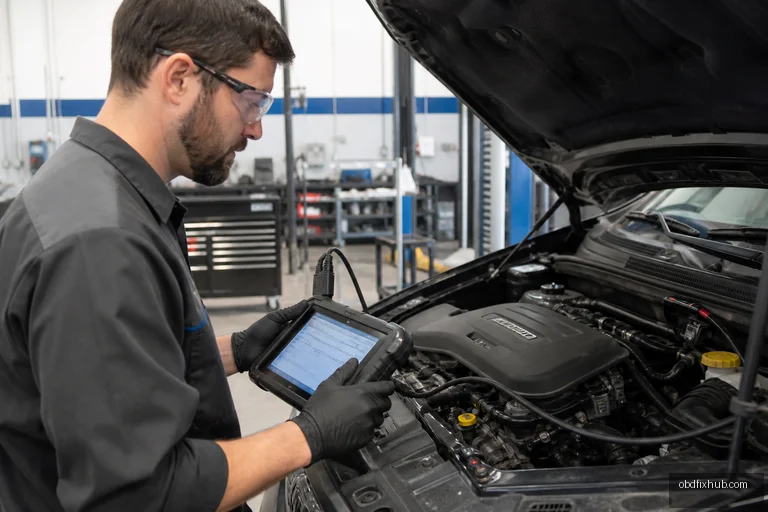
P0606 Control Module Processor Fault means the vehicle’s powertrain control module, usually called the PCM or ECM, has detected an internal processor or self-checking failure. Do not replace the computer immediately: a weak battery, charging-system fault, poor ground, corroded connector, damaged wiring, or failed software update can create the same code. The correct fix starts with verifying power and communication, then deciding whether the module truly needs programming or replacement.
What Does the P0606 Code Mean?
P0606 is a generic OBD-II diagnostic trouble code for an internal control module processor fault. The PCM is the vehicle’s main engine-management computer. It calculates fuel injection, ignition timing, throttle control, emissions functions, transmission strategy, and communication with other modules over the CAN network.
During every key cycle, the PCM runs internal checks on its processor, memory, watchdog circuits, and software execution. If those checks fail, or if the module detects that its processor is not operating within the expected parameters, it stores P0606. Some manufacturers use slightly different descriptions, but the underlying concern is the same: the control module cannot reliably perform its programmed tasks.
Common Causes of P0606
- Low system voltage: A discharged battery, failing alternator, loose battery terminal, or voltage drop during cranking can interrupt PCM operation.
- Bad grounds or power feeds: Corrosion at the engine ground strap, fuse-box connection, or PCM ground can mimic an internal computer failure.
- Water or corrosion inside the PCM connector: Windshield leaks, blocked drains, and damaged seals are common sources of intermittent processor codes.
- CAN-bus communication problems: A shorted communication wire or defective module can disrupt the PCM’s network messages.
- Software or calibration problems: A failed reflash, outdated calibration, or corrupted memory may require manufacturer-level programming.
- Actual PCM hardware failure: Internal circuit-board damage, overheating, failed memory, or a defective processor can make module replacement necessary.
- Aftermarket electrical equipment: Remote starters, alarms, poorly installed audio systems, and performance tuners can introduce voltage or communication faults.
Can a Bad Battery Cause P0606?
Yes, a bad battery can cause P0606, but it is usually an indirect trigger rather than the original processor failure. A battery with an internal short or excessive voltage drop may pull system voltage low enough during cranking to make the PCM reset or fail its self-test. The same thing can happen when jumper cables are connected incorrectly or when an alternator produces unstable voltage.
Before condemning the PCM, test the battery after the vehicle has been sitting. A healthy fully charged battery is typically close to 12.6 volts at rest, while a reading around 12.2 volts indicates a significantly discharged battery. During cranking, voltage should generally remain above approximately 9.6 volts at moderate temperatures. With the engine running, charging voltage is commonly in the 13.5 to 14.8-volt range, although exact specifications vary by vehicle and smart-charging system.
A voltage test alone is not enough. Perform a battery load test and check for voltage drop on both the positive and ground sides while cranking. A clean-looking ground strap can still have excessive resistance internally.
Symptoms of a PCM Processor Fault
P0606 symptoms range from a warning light with no obvious drivability issue to a vehicle that will not start. The symptoms depend on whether the processor fault is permanent, intermittent, or caused by low voltage.
- Check Engine Light or multiple warning lights
- Hard starting, stalling, or a complete no-start condition
- Reduced-power or limp-home mode
- Unstable idle, hesitation, misfiring, or incorrect shifting
- Throttle response problems on electronic-throttle vehicles
- Loss of communication with the scan tool or several control modules
- Random unrelated trouble codes appearing at the same time
- Cooling fans running continuously or gauges behaving abnormally
One useful diagnostic clue is the pattern of the codes. If P0606 appears alongside many low-voltage or communication codes after a dead battery, investigate the power supply first. If it returns immediately with stable voltage, clean grounds, and no network faults, an internal PCM problem becomes much more likely.
How to Diagnose P0606 Correctly
- Record all codes and freeze-frame data. Do not clear the vehicle before noting battery voltage, engine speed, temperature, and the other stored codes. The sequence often reveals whether the fault occurred during cranking or while driving.
- Inspect the battery and charging system. Check resting voltage, cranking voltage, alternator output, battery terminals, main fuses, and engine-to-body ground straps.
- Check PCM power and grounds under load. Use a wiring diagram and a multimeter to test the feeds with the ignition on and while cranking. Testing only with the connector unplugged can miss a high-resistance connection.
- Inspect connectors and the surrounding area. Look for green corrosion, pushed-back terminals, moisture, oil contamination, rodent damage, and evidence of a windshield or cowl leak.
- Check network communication. If other modules cannot communicate, diagnose CAN-bus shorts or a failed network module before replacing the PCM.
- Research technical service bulletins. Some vehicles have known software updates or specific PCM ground issues associated with P0606. Manufacturer service information is more reliable than guessing from the code alone.
- Verify the code after repairs. Clear the codes, perform the required drive cycle, and confirm that P0606 does not return. A code that disappears after battery replacement is not proof that the PCM was defective.
How Do You Fix the P0606 Code?
The repair depends on what testing finds. Replace or charge the battery if it fails a load test, repair the alternator if charging voltage is unstable, and clean or repair corroded terminals and grounds. Damaged wiring, water leaks, and PCM connector terminals must be repaired before any module is installed.
If the vehicle manufacturer has released a calibration update, a professional scan tool may be able to reprogram the original PCM. Programming requires stable external power; a voltage interruption during a reflash can permanently corrupt the module. Many vehicles also require immobilizer pairing, key registration, throttle relearn, crankshaft variation relearn, or transmission adaptation after programming.
When the PCM has a confirmed internal hardware failure, replacement is the final step. A used module is not always plug-and-play because it may contain another vehicle’s immobilizer data, calibration, or mileage-related information. The replacement must be correctly matched, programmed, and verified with a full system scan.
How Long Can You Drive With P0606?
There is no safe mileage guarantee for P0606. If the car runs normally and the code was caused by a temporary low-voltage event, you may be able to drive a short distance to a repair facility. However, an intermittent PCM fault can become a sudden stall or no-start condition without warning.
Do not continue driving if the engine stalls, the throttle becomes unresponsive, multiple systems shut down, the battery light is on, or the vehicle enters severe limp mode. In those cases, arrange a tow. Even when the vehicle seems normal, avoid long trips, heavy traffic, and remote locations until the power supply and PCM operation have been tested.
When Professional Diagnosis Is Worth It
P0606 is one of the codes most likely to be misdiagnosed by replacing expensive parts too early. A qualified technician can perform loaded circuit tests, monitor PCM resets, check CAN-bus resistance, access manufacturer-specific data, and complete security programming. That diagnostic time is usually cheaper than replacing a PCM, alternator, battery, and unrelated sensors without proof.
Key Takeaway
P0606 does not automatically mean the PCM is dead. Start with battery health, cranking voltage, charging output, grounds, fuses, connectors, wiring, and communication faults. If those checks pass and the code returns, verify software updates and then test for a genuine internal PCM failure. Repair the cause before installing a replacement module, and make sure the replacement is programmed to the vehicle.
Frequently Asked Questions
How do I fix the P0606 code?
Test the battery, alternator, PCM power feeds, grounds, connectors, and CAN-bus system first. Depending on the result, the fix may be a battery or wiring repair, a PCM software update, or a programmed PCM replacement.
Can low voltage trigger P0606?
Yes. A weak battery, poor ground, failing alternator, or excessive voltage drop during cranking can interrupt the PCM and set P0606. Confirm the electrical system before replacing the computer.
What are the symptoms of a PCM processor fault?
Possible symptoms include a Check Engine Light, stalling, no-start, limp mode, erratic shifting, throttle problems, multiple unrelated codes, loss of scan-tool communication, and abnormal gauges or cooling-fan operation.
Is it safe to drive with P0606?
Only for a short trip to diagnosis if the vehicle runs normally and has no serious warning signs. Do not drive it if it stalls, loses throttle response, shows charging-system warnings, or behaves unpredictably.




