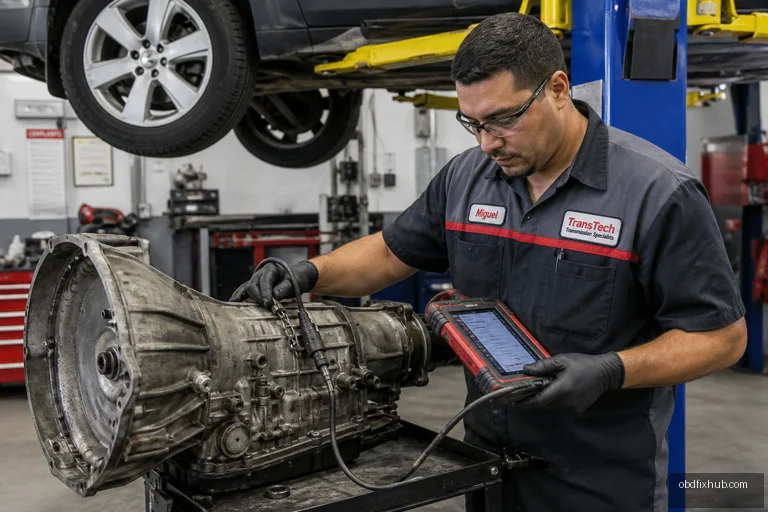
P0780 Transmission Shift Error: Meaning, Causes, Symptoms & Fix
P0780 Transmission Shift Error means the vehicle’s powertrain control system detected that an automatic transmission did not complete a commanded gear change correctly. The fault may come from a shift solenoid, contaminated or low transmission fluid, damaged wiring, a valve body problem, or an internal mechanical failure. P0780 does not automatically mean the entire transmission must be replaced; accurate diagnosis is essential before approving an expensive repair.
What Does the P0780 Code Mean?
P0780 is a generic OBD-II diagnostic trouble code defined as Shift Error. During normal operation, the engine or transmission control module commands a gear change and then checks whether the expected input speed, output speed, hydraulic pressure, and gear ratio were achieved. If the actual result does not match the commanded shift, the module stores P0780.
The exact testing strategy varies by manufacturer. On one vehicle, the code may be triggered by a slipping 2-3 shift; on another, it may indicate a failed shift-solenoid circuit or an incorrect gear ratio. That is why the factory service information, transmission data stream, and any manufacturer-specific companion codes matter more than the generic code definition alone.
P0780 Transmission Shift Error Symptoms
Some drivers notice the problem immediately, while others only see the check engine light during a cold start or highway drive. Common symptoms include:
- Harsh, delayed, or unusually soft gear changes
- Transmission slipping during acceleration
- Engine speed rising without a matching increase in vehicle speed
- Failure to shift into a particular gear
- Transmission stuck in one gear or limp-home mode
- Delayed engagement when selecting Drive or Reverse
- Reduced fuel economy and sluggish acceleration
- Illumination of the check engine or transmission warning light
A brief flare in engine rpm between gears is especially useful evidence. For example, if the engine jumps from 2,200 to 3,500 rpm during a 2-3 shift and then catches the next gear, the transmission may be experiencing clutch slip, low hydraulic pressure, or an incorrect solenoid command rather than a simple electronic warning.
Common Causes of P0780
1. Low, degraded, or incorrect transmission fluid
Automatic transmissions rely on clean fluid at the correct level to operate clutches, bands, and hydraulic valves. A low level can introduce air into the hydraulic system, while burnt or heavily contaminated fluid can restrict valve-body passages and reduce clutch holding power. Using the wrong fluid can also alter shift pressure and friction characteristics.
Check the fluid according to the manufacturer’s procedure. Some transmissions require the fluid to be measured at a specific temperature, with the engine running and the vehicle level. A dipstick reading taken under the wrong conditions can lead to an incorrect diagnosis.
2. Failed or sticking shift solenoid
Shift solenoids regulate hydraulic pressure to select different gears. A solenoid can fail electrically, stick because of debris, respond slowly, or operate correctly only when hot. Measuring coil resistance is useful, but a resistance reading within specification does not prove that the solenoid is flowing properly under pressure.
3. Damaged wiring, connectors, or grounds
Transmission wiring is exposed to heat, vibration, fluid contamination, and road splash. A corroded connector pin or broken wire inside the insulation can interrupt the solenoid signal intermittently. Inspect the transmission connector closely, check for fluid intrusion, and perform a wiggle test while monitoring the relevant data or circuit voltage.
4. Valve body or hydraulic control problem
Wear inside the valve body can allow fluid to leak past a spool valve instead of applying a clutch with the required pressure. A sticking pressure-control valve may produce a shift error even when every electrical test appears normal. In these cases, pressure testing and valve-body inspection are more informative than repeatedly replacing solenoids.
5. Internal transmission wear
Worn clutch packs, damaged bands, broken one-way clutches, or a failing pump can prevent the commanded gear ratio from being achieved. Metal debris in the pan, persistent slipping, and a burnt odor increase the likelihood of internal damage. However, fluid color alone is not enough to condemn a transmission; the shift pattern and pressure test results should support that conclusion.
6. Control module or software issue
A transmission control module, engine control module, sensor, or calibration problem can create an incorrect shift command or misinterpret the result. A software update may be relevant on some vehicles, but it should only be considered after checking power, grounds, communication, and the rest of the transmission system.
How to Diagnose P0780 Correctly
The most expensive mistake with P0780 is replacing parts before identifying which shift failed. A professional diagnostic process usually follows this order:
- Scan all modules. Record freeze-frame data and look for related codes involving input speed, output speed, solenoids, pressure control, or gear-ratio errors. Do not erase the codes before saving this information.
- Confirm the complaint. Note whether the fault occurs during a specific shift, only when cold, under heavy throttle, or after the transmission warms up. A controlled road test with live data can reveal the commanded gear and actual gear.
- Inspect fluid and leaks. Verify the level and condition using the correct procedure. Inspect the pan and fluid for excessive friction material or metal particles.
- Test the electrical circuit. Check the solenoid power supply, ground, resistance, connector terminals, harness continuity, and short-to-ground or short-to-voltage conditions. Compare readings with the service manual rather than relying on a universal resistance value.
- Check hydraulic pressure. If the electrical system is sound, a line-pressure test can separate a control problem from a weak pump, leaking valve body, or worn clutch circuit.
- Evaluate mechanical condition. If pressure and control signals are correct but the gear still slips or fails, internal inspection may be necessary.
A useful real-world clue is the relationship between temperature and the fault. A transmission that shifts normally when cold but fails after 20 minutes may have a sticking solenoid, fluid-pressure loss when hot, or an internal seal that leaks as components expand. That pattern should guide testing rather than trigger an immediate transmission replacement.
P0780 Repair Options
The correct repair depends on the confirmed cause. Possible solutions include:
- Repairing a transmission fluid leak and setting the fluid level correctly
- Replacing severely degraded fluid and the filter when appropriate for the transmission design
- Repairing damaged wiring, terminals, grounds, or transmission connectors
- Replacing a failed shift solenoid or solenoid assembly
- Cleaning, rebuilding, or replacing the valve body
- Updating control-module software when a documented calibration applies
- Repairing or rebuilding the transmission when clutch, band, pump, or gear damage is confirmed
Be cautious with a machine fluid flush on a transmission that is already slipping badly or contains significant debris. A flush may not repair worn clutches, and the wrong service procedure can create additional problems. Follow the vehicle manufacturer’s service requirements and ask the repair shop to explain the test results supporting its recommendation.
Can You Drive With P0780?
Short, gentle driving to a repair facility may be possible if the vehicle still shifts normally and the warning light is steady. Avoid towing, hard acceleration, long trips, and continued driving if the transmission is slipping, banging into gear, overheating, or stuck in limp mode. Continued slipping generates heat and friction material, potentially turning a repairable solenoid or valve-body fault into major internal damage.
Stop driving and arrange a tow if the vehicle cannot engage Drive or Reverse, loses propulsion, leaks a large amount of fluid, or produces loud mechanical noise. Transmission failures can create an unsafe loss of acceleration in traffic.
Summary: The Best Next Step for P0780
P0780 identifies a failed or incorrect shift, not a specific replacement part. Start with a complete scan, freeze-frame data, fluid inspection, wiring checks, and a road test that identifies the affected gear. If those checks do not isolate the problem, hydraulic pressure testing is the logical next step before authorizing a valve-body repair or transmission rebuild.
If your vehicle has stored P0780, ask for the exact failed shift, the measured pressure or electrical test results, and the reason the recommended repair addresses that evidence. A diagnosis based only on the code—and not on how the transmission behaves—can be unnecessarily expensive.
Frequently Asked Questions About P0780
Is P0780 a serious transmission code?
It can be serious because continued slipping creates heat and clutch damage. The severity depends on whether the cause is a low-fluid condition, electrical fault, solenoid problem, hydraulic issue, or internal wear.
Can low transmission fluid cause P0780?
Yes. Low fluid can reduce hydraulic pressure and prevent a clutch or band from applying correctly. Always check for the leak that caused the low level instead of simply adding fluid.
Will changing the transmission fluid fix P0780?
It may help if the fault is caused by incorrect level, restricted fluid flow, or contamination, but it will not repair worn clutches, a damaged solenoid, broken wiring, or a failed pump. The fluid service should follow the manufacturer’s procedure.
Does P0780 mean I need a new transmission?
No. Many P0780 repairs involve wiring, a solenoid, fluid-level correction, or the valve body. A replacement or rebuild should be recommended only when testing confirms internal mechanical damage or the unit is not economically repairable.




