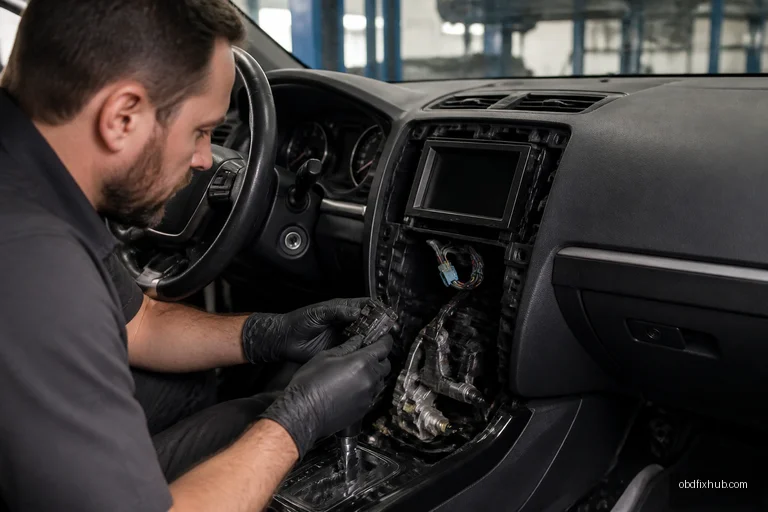
The P0790 Normal/Performance Switch Circuit code means the transmission control system has detected an electrical problem or implausible signal from the switch that selects Normal, Comfort, Sport, or Performance shifting behavior. The vehicle may still drive, but the transmission can remain in one mode, shift harshly, or enter failsafe operation. The right repair depends on testing the switch, wiring, power supply, ground, and transmission control module input—not simply replacing the switch.
What Does the P0790 Code Mean?
P0790 is a generic OBD-II diagnostic trouble code related to the transmission range or shift-mode control circuit. The exact switch name varies by manufacturer. Some vehicles use a console-mounted Normal/Power button, while others integrate the function into a gear selector, steering-wheel control, instrument-panel switch, or electronic transmission selector.
When the driver presses the button, the transmission control module (TCM), powertrain control module (PCM), or body control module sends or receives a specific electrical signal. The module compares that signal with the expected voltage, resistance, or data message. If the value is missing, stuck, intermittent, or outside the calibrated range, it stores P0790.
There is no universal voltage specification for this code. One vehicle may use a simple resistance ladder, another may use a pulled-up voltage circuit, and a newer vehicle may transmit the selection over a CAN network. Always use the wiring diagram and service information for the specific year, make, model, engine, and transmission.
P0790 Symptoms
The symptoms can be minor if the switch is the only problem, or severe if the transmission controller has placed the vehicle in a protective strategy. Common signs include:
- The Normal, Sport, Power, or Performance mode cannot be selected.
- The selected mode indicator does not illuminate or remains stuck.
- Harsh, delayed, or unusually early transmission shifts.
- The transmission stays in one shift program regardless of button input.
- Reduced acceleration or a noticeable change in shift quality.
- A flashing transmission warning, check-engine light, or service message.
- Fail-safe or limp mode, sometimes with limited gear selection.
A useful real-world clue is whether the transmission changes behavior when the mode switch is pressed. If the indicator changes but the shift strategy does not, the problem may involve module communication, software, or a related transmission input rather than the physical button alone. If neither the indicator nor the transmission response changes, begin with the switch circuit and its power or ground.
Common Causes of P0790
- Failed Normal/Performance switch: Internal contacts can wear, oxidize, or become contaminated by spilled drinks and cleaning products.
- Open or shorted wiring: Wires can break near the center console, steering column, gear selector, or transmission harness.
- Loose or corroded connectors: Moisture under the console or at a transmission connector can create high resistance and intermittent faults.
- Incorrect reference voltage or ground: A shared fuse, ground point, or reference circuit may affect several controls at once.
- Blown fuse: The switch may share a fuse with the shift indicator, console electronics, or body control module.
- Faulty TCM, PCM, or body control module: This is possible, but it should be considered only after the circuit and communication network pass testing.
- CAN communication fault: On newer vehicles, a damaged network wire or a failed module can prevent the mode request from reaching the TCM.
- Low system voltage: A weak battery, poor battery terminal, or charging problem can create misleading transmission control codes.
How to Diagnose the P0790 Normal/Performance Switch Circuit
Accurate diagnosis starts with identifying how the vehicle implements the mode switch. Do not rely on a generic online pinout or assume that every P0790 circuit uses the same test values.
1. Scan all modules, not just the engine computer
Record every stored and pending code, including transmission, body, ABS, and communication faults. Note the freeze-frame data: battery voltage, vehicle speed, engine temperature, selected gear, and whether the code appeared during a mode-switch request. A low-voltage code or a network code may be the primary fault.
2. Confirm the complaint and check live data
With the scan tool connected, press the Normal/Performance switch repeatedly while watching the relevant data parameter. Depending on the vehicle, the parameter may be called Shift Mode Request, Power Mode Switch, Performance Mode, or Transmission Program. If the scan tool shows no change, test the input circuit; if it shows a change but the transmission does not respond, investigate communication, programming, or related transmission controls.
3. Inspect the switch and connector carefully
Remove the trim only as required and look for liquid damage, bent terminals, partially backed-out pins, crushed wires, and aftermarket accessories spliced into the console harness. A switch can appear physically normal while its connector has enough corrosion to cause an intermittent high-resistance signal.
4. Test power, ground, and signal voltage
Use the manufacturer’s wiring diagram and a digital multimeter. Verify the fuse under load, confirm a clean ground, and measure the signal while pressing and releasing the switch. The voltage should move through the expected states or resistance values. A reading that never changes, jumps unpredictably, or differs from the service specification points toward the switch or wiring.
Back-probing is safer than piercing insulation, but a breakout harness or approved terminal adapter is preferable. Avoid applying battery voltage to a low-current module input unless the service procedure specifically instructs you to do so; that mistake can damage an otherwise healthy control module.
5. Check continuity with the circuit powered down
If an open circuit is suspected, disconnect the relevant modules before performing resistance checks. Test each wire end to end and check for unwanted continuity to ground or power. Move the harness gently while measuring; a broken conductor inside intact insulation may only open when the console or selector is moved.
6. Clear the code and perform a road test
After the repair, clear all codes and repeat the exact operating conditions shown in the freeze-frame data. Confirm that the mode indicator, live-data request, and actual shift behavior agree. A stationary button test is not enough if the fault occurs only during vibration, heat, or a particular gear change.
How to Fix P0790
The correct repair depends on the failed part identified during testing. Typical fixes include:
- Replacing the Normal/Performance or Sport mode switch.
- Repairing damaged wires with sealed, properly crimped automotive terminals.
- Cleaning or replacing corroded connectors and securing loose terminals.
- Repairing a poor ground or replacing the correct blown fuse after finding its cause.
- Updating or reprogramming the TCM, PCM, or body control module when a manufacturer bulletin identifies a software issue.
- Repairing CAN network wiring or replacing a failed module only after communication tests confirm the diagnosis.
Do not replace the transmission merely because P0790 is present. This code describes a mode-selection circuit, not automatic proof of internal transmission damage. If the vehicle also has gear-ratio, solenoid, pressure-control, or slipping codes, those should be diagnosed separately and may change the repair priority.
Can You Drive With P0790?
Short, careful driving may be possible when the transmission shifts normally and no warning is flashing. However, avoid towing, hard acceleration, and long trips if the vehicle is stuck in limp mode, shifting violently, or refusing to select the correct gear. Continuing to drive with harsh or delayed shifts can increase clutch and transmission wear.
Stop driving and arrange professional diagnosis if the transmission warning is flashing, the vehicle cannot move normally, fluid is leaking, or the engine speed rises without corresponding acceleration. An electrical code can coexist with a mechanical transmission problem.
Key Takeaway
P0790 indicates a fault in the electrical or data circuit used to request Normal or Performance transmission behavior. Start with a complete module scan, live-data confirmation, and a wiring-diagram-based inspection of the switch, connectors, fuse, power, ground, and signal circuit. Test before replacing parts, and verify the repair with a road test that reproduces the original fault conditions.
Frequently Asked Questions
Is P0790 a serious transmission code?
It can be serious if the vehicle enters limp mode or shifts harshly, but P0790 alone does not prove internal transmission failure. The severity depends on the symptoms and any additional codes stored in the TCM.
Can a weak battery cause P0790?
Yes. Low battery voltage or poor electrical connections can disrupt switch signals and module communication. Check battery voltage, charging output, and grounds before condemning the switch or TCM.
Where is the Normal/Performance switch located?
It may be on the center console, gear selector, dashboard, steering wheel, or integrated into an electronic shifter. The exact location and circuit design vary by vehicle.
Can I fix P0790 by clearing the code?
Clearing the code may turn off the warning temporarily, but it does not repair the fault. If the circuit remains defective, P0790 will return when the module runs its next diagnostic check.
Should I replace the transmission for P0790?
No. Diagnose the switch circuit, wiring, power supply, ground, and communication network first. Transmission replacement is not justified by P0790 alone.




