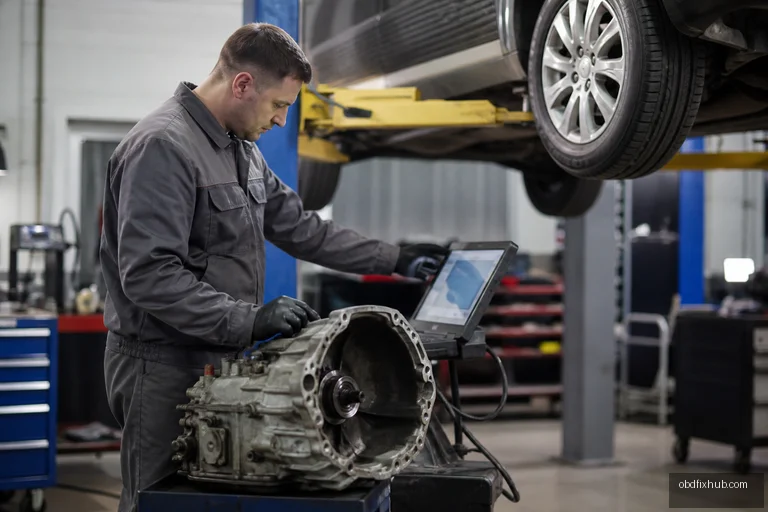
P079A Transmission Friction Element Slip Detected: Meaning, Causes, Symptoms & Fix
P079A Transmission Friction Element Slip Detected means the transmission control module has detected more slip than expected in an internal clutch pack or friction element. In practical terms, the transmission commanded a gear or clutch application, but the input and output speeds did not match the programmed ratio. The fault may be caused by low fluid pressure, worn clutch plates, incorrect transmission fluid, a failing solenoid, or an electrical and sensor problem.
This is an informational diagnostic code, not a part-replacement instruction. A vehicle can sometimes continue driving with P079A stored, but repeated slipping creates heat and rapidly damages clutch material. The most reliable repair starts with scan data, fluid inspection, and pressure testing rather than immediately replacing the transmission.
What Does the P079A Code Mean?
P079A is a generic OBD-II transmission code related to abnormal slip in a friction element. The exact clutch identified by the code varies by vehicle manufacturer. It may be described in service information as a clutch pack, clutch element, input clutch, forward clutch, direct clutch, or another numbered internal friction element.
Automatic transmissions use friction discs and steel plates to transfer engine torque. The transmission control module compares turbine speed, input speed, output speed, engine speed, gear command, and hydraulic pressure. If the calculated slip remains outside the expected range, the module stores P079A and may activate limp mode.
Because the code definition is manufacturer-dependent, the vehicle-specific repair manual is essential. On one model, P079A may relate to a particular clutch solenoid; on another, it may point toward a clutch pack or ratio-control problem. A generic code reader usually cannot identify that distinction by itself.
Common Symptoms of P079A Transmission Friction Element Slip Detected
Symptoms depend on how severe the slip is and which friction element is affected. A minor pressure-control problem may only appear during a warm highway drive, while a badly worn clutch can cause immediate loss of drive.
- Check Engine Light or transmission warning light
- Delayed engagement when selecting Drive or Reverse
- Engine speed rising without a matching increase in vehicle speed
- Harsh, flaring, or slipping shifts
- Transmission stuck in one gear or limp-home mode
- Reduced acceleration, especially uphill or under load
- Burning transmission-fluid smell
- Dark fluid containing clutch debris or metallic particles
- Intermittent symptoms that become worse as the transmission warms up
A classic field symptom is a brief RPM flare during a 2-3 or 3-4 shift. The engine revs climb, the vehicle hesitates, and then the next gear engages. That flare is more significant than a simple harsh shift because it suggests the clutch is not holding torque firmly enough.
What Causes the P079A Code?
1. Low, degraded, or incorrect transmission fluid
Automatic transmission fluid provides hydraulic pressure, lubrication, and cooling. A low level can allow the pump to draw air, while old fluid may lose friction-control properties. Using a fluid that does not meet the manufacturer specification can also change clutch engagement characteristics and trigger slip monitoring.
Check the level using the correct procedure. Some transmissions must be checked at a specified temperature with the engine running, while others have no dipstick and require a level plug. Guessing the fluid level is a common reason an otherwise simple repair becomes a transmission failure.
2. Worn or burned clutch packs
Friction discs wear over time, particularly in vehicles used for towing, frequent stop-and-go driving, aggressive acceleration, or heavy loads. Once the friction material is worn or glazed, normal hydraulic pressure may no longer hold the clutch firmly. Burned fluid and a persistent RPM flare strongly increase the likelihood of internal damage.
3. Faulty shift or pressure-control solenoid
A solenoid may stick, respond slowly, or fail electrically. This can prevent the clutch from receiving the pressure commanded by the transmission control module. A solenoid problem is more plausible when the code is intermittent, electrical codes are also present, or scan data shows abnormal commanded and actual pressure behavior.
4. Valve-body wear or hydraulic leakage
Worn valve-body bores, damaged valves, cracked separator plates, and leaking seals can reduce clutch apply pressure. These faults may produce a P079A even when the clutch plates themselves are still usable. In many cases, the transmission shifts acceptably when cold but slips after the fluid heats and thins.
5. Speed-sensor, wiring, or software problems
The module cannot calculate slip correctly if an input, turbine, or output speed sensor sends an inaccurate signal. Corroded connectors, damaged wiring near the transmission case, poor grounds, and software calibration issues can create a false slip diagnosis. Always inspect related codes and live speed data before condemning an internal clutch.
How to Diagnose P079A Correctly
- Record the freeze-frame data. Note vehicle speed, commanded gear, transmission temperature, engine RPM, and load when the code set. This often reveals whether the problem occurs only hot, during a specific shift, or under high torque.
- Scan every control module. Do not look only for P079A. Input-speed, output-speed, pressure-control, solenoid, voltage, and communication codes may identify the real starting point.
- Verify fluid condition and level. Look for a burnt odor, excessive darkness, foam, water contamination, clutch fibers, or metal. A fluid inspection cannot prove an internal failure, but it can provide valuable evidence.
- Road-test with live data. Compare engine speed, turbine speed, output speed, commanded gear, actual gear, and calculated slip. The critical question is whether slip occurs during a specific clutch application or across several gears.
- Check electrical circuits. Test solenoid resistance, power supply, ground quality, connector condition, and harness continuity according to the manufacturer’s specifications. A resistance reading alone does not prove that a solenoid works under operating temperature.
- Perform a hydraulic pressure test. Compare pressure at idle, during engagement, and under load with the factory specifications. Low pressure points toward a pump, regulator, valve-body, or leakage issue; normal pressure with continued slip raises suspicion of worn friction material.
- Carry out adaptive relearn only after the cause is corrected. Clearing the code or resetting transmission adaptations may temporarily change shift quality, but it cannot repair a worn clutch or a leaking hydraulic circuit.
How Is P079A Repaired?
The correct fix depends on the test results. If the fluid is low because of an external leak, repair the leak, set the level correctly, and evaluate the transmission for heat damage. If the fluid is merely aged and the transmission has no evidence of severe slip, a manufacturer-approved fluid service may help, but flushing a badly damaged unit will not restore worn clutch material.
A failed solenoid, damaged connector, or valve-body problem may be repaired without removing the entire transmission. Valve-body repairs require careful cleanliness and correct torque because small debris or a misplaced check ball can create new shift faults.
If the clutch pack is burned, the transmission generally must be removed and rebuilt or replaced with a properly remanufactured unit. Before approving that expense, ask the repair shop for pressure-test results, fluid photographs, freeze-frame data, and an explanation of which clutch element is slipping. A credible diagnosis should connect the measured evidence to the recommended repair.
Can You Drive With P079A?
Short-distance driving may be possible if the transmission still engages normally and the warning light is not flashing. Avoid towing, hard acceleration, steep hills, and long trips because every slip event produces heat and removes more friction material. Stop driving and arrange professional service if the vehicle loses reverse or drive, the RPM flares severely, the transmission bangs into gear, or the fluid smells burned.
A useful practical rule is this: if the code returns immediately after clearing or the transmission is already slipping, do not treat it as a harmless electronic fault. Continued driving can turn a solenoid or pressure problem into a complete rebuild.
P079A Repair Cost Considerations
Costs vary widely by vehicle and by the failed component. A diagnosis, fluid-level correction, wiring repair, or solenoid replacement is usually far less expensive than valve-body work or a complete transmission rebuild. Labor access, transmission design, local rates, and whether new or remanufactured parts are used all affect the estimate.
Do not choose a repair based solely on the lowest quoted price. Confirm whether the estimate includes fluid, filter, seals, programming, adaptation reset, warranty coverage, and a post-repair road test. Transmission repairs that omit the underlying pressure or clutch problem often result in the same code returning within days.
Final Takeaway
P079A indicates detected slip in a transmission friction element, but it does not automatically prove that the entire transmission must be replaced. Begin with the vehicle-specific code description, freeze-frame information, fluid condition, live speed data, electrical checks, and hydraulic pressure testing. If the transmission is currently slipping, limit driving and have it diagnosed promptly; protecting the remaining clutch material can make the difference between a targeted repair and a complete rebuild.
Frequently Asked Questions
Is P079A a serious transmission code?
It can be serious because continued clutch slip generates heat and damages friction material. The severity depends on whether the cause is a sensor or solenoid fault, low fluid pressure, or an already burned clutch pack.
Can low transmission fluid cause P079A?
Yes. Low fluid can reduce hydraulic pressure and allow a clutch element to slip. However, always locate the leak and use the correct level-checking procedure rather than simply adding fluid.
Will changing the transmission fluid fix P079A?
It may help when the fluid is low or badly degraded and no internal damage has occurred. A fluid change cannot repair worn clutch plates, damaged seals, a defective solenoid, or a failed pump.
Can I clear P079A myself?
You can clear the code with a suitable scan tool, but clearing it does not fix the underlying fault. Save the freeze-frame data first, because that information may disappear after the code is erased.
Does P079A mean I need a new transmission?
Not necessarily. Solenoids, wiring, sensors, valve bodies, and fluid-pressure problems can sometimes be repaired separately. A rebuild or replacement is more likely when testing confirms burned friction material or persistent internal leakage.




