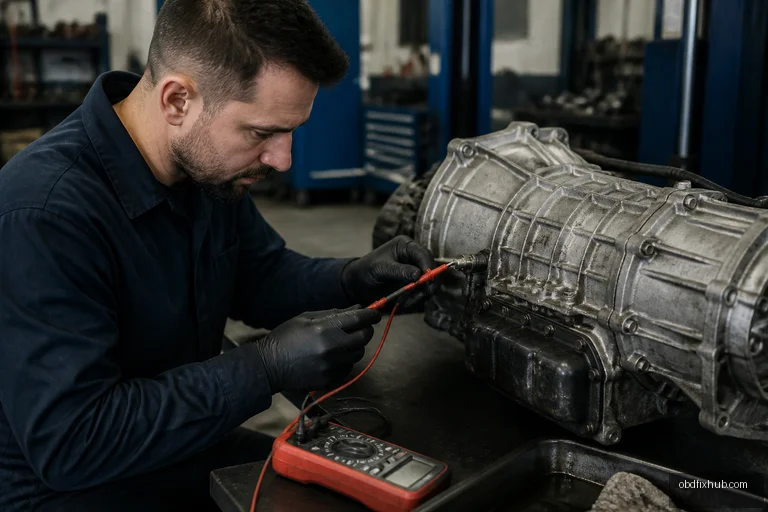
P0937 means the vehicle control module has detected a problem in the hydraulic oil temperature sensor circuit, usually a high or implausible voltage signal. The fault may come from a failed sensor, damaged wiring, poor ground, connector corrosion, or a genuinely overheated hydraulic system. Do not assume that P0937 automatically means the oil itself is too hot; an open signal wire can create the same code while the oil is still at a normal temperature.
What Does P0937 Mean?
The P0937 hydraulic oil temperature sensor circuit code is used when the transmission, hydraulic control unit, or another vehicle control module cannot trust the temperature signal. Hydraulic oil temperature data is important because the module uses it to adjust pressure, shift timing, clutch control, lubrication, and overheating protection.
On many systems, the sensor is a thermistor supplied with a reference voltage. Its resistance changes as the oil temperature changes, and the control module interprets the resulting signal voltage. The exact voltage and resistance specifications vary by manufacturer, so a generic resistance chart should never replace the factory service information.
What Does an Oil Temperature Sensor A Circuit High Code Mean?
An engine oil temperature sensor A circuit high code means the control module is seeing a higher-than-expected electrical voltage on the sensor circuit. This usually indicates an electrical fault rather than excessive oil temperature. A disconnected sensor, broken signal wire, failed sensor with an open circuit, or a missing sensor ground can all produce a high-voltage reading.
This terminology can be confusing. “Circuit high” describes the electrical signal, while “high temperature” describes the physical oil temperature. A scan tool may show a temperature such as -40°F or -40°C when the circuit is open, even though the engine or hydraulic oil is not frozen. That implausible reading is a valuable diagnostic clue.
Common Causes of P0937
- Failed hydraulic oil temperature sensor or internal thermistor
- Broken, stretched, or melted wiring near the transmission, pump, or hydraulic valve body
- Loose, oil-contaminated, or corroded sensor connector
- Open sensor ground or damaged reference-voltage circuit
- Water intrusion inside a connector or wiring harness
- Incorrect sensor installation, especially after transmission or hydraulic system work
- Low hydraulic oil level, restricted cooling, or a failing oil cooler causing genuine overheating
- Rarely, a defective transmission control module, hydraulic controller, or engine control module
In real workshop inspections, wiring damage is often more likely than a failed module. Harnesses routed beside hot exhaust components can become brittle, while off-road equipment may suffer connector damage from pressure washing, mud, vibration, and hydraulic fluid contamination.
P0937 Symptoms to Watch For
The symptoms depend on whether the fault is electrical, thermal, or intermittent. Some vehicles illuminate the check engine light or transmission warning lamp without noticeable drivability changes. Others enter a protection strategy that limits hydraulic pressure or locks the transmission into a single gear.
- Check engine, transmission, or hydraulic system warning light
- Harsh, delayed, or incorrect gear changes
- Fail-safe or limp-home mode
- Reduced hydraulic performance or slow actuator movement
- Cooling fan operating more frequently than normal
- Incorrect temperature shown on a scan tool
- Overheated oil smell, darkened fluid, or visible foaming
- Intermittent symptoms after rain, washing, vibration, or extended operation
If the scan tool temperature jumps instantly from a realistic value to -40°C, suspect an open circuit or connector problem. If the temperature rises gradually during heavy work and agrees with an infrared measurement, investigate cooling, oil level, flow restrictions, and mechanical load before replacing the sensor.
How to Diagnose the P0937 Hydraulic Oil Temperature Sensor Circuit
1. Confirm the code and operating conditions
Record all stored and pending codes, freeze-frame data, coolant temperature, hydraulic temperature, engine load, and vehicle speed. A second code for low oil pressure, transmission slipping, or a cooling fan fault may identify the underlying problem. Clear the code only after recording this information.
2. Compare scan data with reality
With the vehicle cold, the hydraulic oil temperature should generally be close to ambient temperature. Compare the scan-tool reading with an infrared thermometer aimed at a suitable metal area near the oil pan or hydraulic housing. An infrared thermometer does not measure the oil directly, but it can reveal whether the electronic reading is obviously impossible.
3. Inspect the harness before testing components
Follow the wiring from the sensor to the controller. Look for insulation rubbed through on brackets, wiring pinched by a cover, terminals pushed backward in the connector, green corrosion, and oil or water inside the plug. Gently move the harness while monitoring live data; a sudden temperature change points to an intermittent connection.
4. Test voltage, ground, and continuity
Use the wiring diagram to identify the reference, signal, and ground circuits. With the connector attached, back-probe the signal and compare the voltage with the manufacturer’s specification. Check for a stable reference voltage and a clean ground under load. With power isolated, test continuity and inspect for a short to ground or battery voltage.
Do not insert oversized test leads into delicate terminals. A terminal that has been spread during probing may create a new intermittent fault. Terminal tension, not just continuity, matters; a wire can pass an ohmmeter test and still lose contact when the vehicle vibrates.
5. Test or replace the sensor only when justified
If wiring, power, and ground are correct but the sensor reading remains implausible, compare sensor resistance at a known temperature with the factory chart. Some sensors are integral to a transmission harness or valve-body assembly, so replacement may require additional labor, fluid drainage, or a recalibration procedure.
What Happens When an Oil Temperature Sensor Goes Bad?
A failed oil temperature sensor can cause the control module to use a default value instead of the actual temperature. The system may command conservative shift pressure, alter cooling-fan operation, disable certain functions, or enter limp mode. In some cases, the vehicle drives almost normally, but fuel economy, shift quality, and long-term transmission durability can suffer.
The greatest risk is not always the sensor itself. If the sensor falsely reports a safe temperature while the hydraulic oil is actually overheating, the module may fail to apply the expected protection strategy. Continued operation with overheated oil can accelerate seal hardening, clutch wear, varnish formation, and pump damage.
How Hot Is Too Hot for Hydraulic Oil?
The correct limit depends on the oil type, machine design, pressure, duty cycle, and manufacturer specification. As a practical guideline, many hydraulic systems operate comfortably around 40–65°C (104–149°F). Temperatures around 80–90°C (176–194°F) are a warning range for many systems, while sustained operation above approximately 100°C (212°F) can rapidly shorten oil and seal life.
These figures are not universal limits. Some industrial systems are designed for higher temperatures, while compact mobile equipment may require a lower limit. Check the equipment manual and oil manufacturer’s data. If the fluid is foamy, smells burnt, changes color, or the reservoir is too hot to approach safely, shut the system down and allow it to cool before inspecting it.
P0937 Repair Cost
In the United States, replacing an accessible temperature sensor commonly costs about $120–$350, including parts and labor. A sensor buried inside a transmission pan, valve body, or integrated wiring harness can raise the bill to roughly $400–$1,000 or more. Wiring repairs may cost $100–$500 depending on access and the amount of harness damage.
Diagnostic labor is often charged separately, typically one hour or more. Ask whether the estimate includes fluid, a filter, sealing materials, programming, and post-repair temperature verification. Replacing the sensor without testing the connector is a common way to pay for a repair that does not solve P0937.
Can You Drive with P0937?
A short drive to a repair facility may be reasonable if the oil temperature is normal, the vehicle shifts normally, and no overheating warning is present. Avoid towing, steep grades, heavy hydraulic work, and extended driving until the fault is diagnosed. Stop immediately if the oil is visibly leaking, smells burnt, the transmission slips, the hydraulic system becomes unusually slow, or the temperature rises into the manufacturer’s danger range.
Frequently Asked Questions
Is P0937 always caused by a bad temperature sensor?
No. A damaged signal wire, corroded connector, missing ground, incorrect reference voltage, or real hydraulic overheating can also trigger the code. Test the complete circuit before replacing the sensor.
Can low hydraulic oil cause P0937?
Low oil can cause overheating and abnormal hydraulic operation, but it does not usually create a circuit-high signal by itself. Check the oil level and condition while also testing the electrical circuit.
How much does it cost to replace an oil temperature sensor?
Many accessible replacements cost $120–$350. Sensors inside a transmission or valve-body assembly may cost $400–$1,000 or more because of additional labor, fluid, parts, and programming.
What is a high temperature for hydraulic oil?
For many systems, sustained temperatures above 80–90°C (176–194°F) deserve investigation, and operation above about 100°C (212°F) can cause rapid oil and seal deterioration. Always follow the equipment manufacturer’s limit.
Bottom line: P0937 is a circuit-trust problem, not proof that the oil is overheated. Begin with scan data, a cold-temperature comparison, connector inspection, and circuit testing. Repair the wiring or sensor only after confirming the fault, then verify the actual hydraulic temperature under load before returning the vehicle or machine to regular service.




