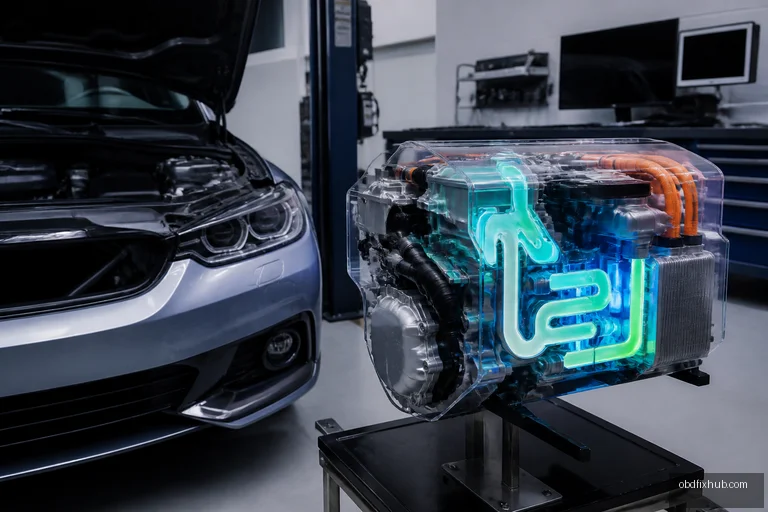
P0A3B Generator Over-Temperature: Meaning, Causes, Symptoms & Fix
P0A3B Generator Over-Temperature means the hybrid or electric powertrain control system has detected that Generator A is hotter than its permitted operating range. This is not usually a fault with a conventional 12-volt alternator; it typically concerns the motor-generator inside a hybrid transaxle, an inverter, or the high-voltage cooling system. Because excessive heat can damage expensive electrical components, the code should be diagnosed promptly rather than cleared and ignored.
What Does Code P0A3B Mean?
P0A3B is a generic OBD-II powertrain code associated with generator over-temperature. In many hybrid vehicles, the generator is one of the motor-generators that converts mechanical energy into electrical energy or assists with propulsion. Some manufacturers label the affected unit “Generator A,” while others use their own names for the same component.
The exact definition, temperature threshold, and test strategy vary by manufacturer. For that reason, a generic code reader may show only “Generator Over Temperature,” while a factory-level scan tool can reveal the actual generator temperature, inverter temperature, coolant flow command, and related manufacturer-specific codes.
Why P0A3B Generator Over-Temperature Happens
The control module does not set P0A3B simply because the vehicle worked hard for a few minutes. It normally compares temperature sensor data with operating conditions such as generator speed, electrical load, coolant temperature, and cooling-pump operation. A real overheating condition and an implausible sensor signal can both trigger the code.
Common causes
- Low hybrid cooling-system coolant: A low level caused by a leak can leave the generator or inverter without adequate heat transfer.
- Air trapped in the cooling circuit: After a coolant repair, an incorrectly bled system may show a normal reservoir level while circulation remains poor.
- Failed electric coolant pump: The pump may be seized, electrically open, noisy, or operating intermittently when hot.
- Blocked radiator, heat exchanger, or hose: Debris, scale, a collapsed hose, or restricted passages can reduce coolant flow.
- Cooling fan or control fault: A fan that does not run at the required speed can allow temperatures to rise during heavy load or hot weather.
- Defective generator temperature sensor: A biased or intermittent sensor may report excessive heat even when the assembly is not actually overheating.
- Damaged wiring or connectors: Moisture, corrosion, rodent damage, and high-voltage component vibration can affect temperature and pump circuits.
- Generator or inverter internal failure: Worn bearings, winding damage, insulation problems, or power electronics faults can create abnormal heat.
- Excessive electrical or mechanical load: A failing motor-generator, transmission issue, or abnormal regenerative-braking demand can make the generator work harder than intended.
Symptoms You May Notice
P0A3B can appear with obvious drivability problems, but early cases may be surprisingly subtle. A hybrid vehicle can drive normally until the generator reaches a critical temperature or the control module detects an unsafe trend.
- Hybrid warning light, check-engine light, or “Check Hybrid System” message
- Reduced power or limited electric-only operation
- Engine running more often than usual to protect the hybrid system
- Reduced regenerative braking or a different brake-pedal feel
- Cooling fans running loudly after a short drive
- High-voltage battery charging becoming restricted
- Overheating warnings, burning electrical smells, or unusual inverter-pump noise
- Additional codes for inverter temperature, coolant flow, motor-generator performance, or high-voltage isolation
A particularly useful clue is when the warning appears only during long climbs, sustained highway speeds, towing, or hot-weather traffic. That pattern points more strongly toward inadequate cooling or a component that overheats under load than toward a permanently failed temperature sensor.
How to Diagnose P0A3B Correctly
Do not begin by replacing the generator. The generator is often the most expensive possibility, while a weak coolant pump, low fluid level, or damaged connector can produce the same code. A disciplined diagnosis separates a genuine thermal problem from a false temperature reading.
- Record every code and freeze-frame value. Note coolant temperature, generator temperature, battery state of charge, vehicle speed, engine load, and whether the code was current or history-only.
- Check the vehicle-specific service information. Confirm which motor-generator is called Generator A and identify the correct coolant circuit. Hybrid systems may have separate engine, inverter, and battery cooling loops.
- Inspect coolant level and evidence of leakage. Look around the inverter, hoses, pump, radiator, heat exchanger, and underbody. Never open a hot cooling system.
- Verify coolant circulation. Use the manufacturer’s procedure to command the electric pump on. Listen for pump operation, check for the specified flow pattern, and bleed air using the approved method.
- Compare live temperature data. A temperature that jumps suddenly, remains implausibly high from a cold start, or disagrees sharply with nearby sensors suggests a sensor, wiring, or connector fault.
- Test the electrical circuit. Inspect reference voltage, ground, signal continuity, connector tension, and insulation as specified by the manufacturer. Do not substitute random resistance values for the factory test procedure.
- Evaluate the generator and inverter under controlled load. If cooling is correct but temperature rises rapidly, the generator, inverter, bearings, windings, or related control hardware may require specialist testing.
Hybrid vehicles contain lethal high voltage even when the engine is switched off. Orange cables, inverter covers, and motor-generator connections should be handled only by a technician trained in high-voltage disable procedures. A basic code reader is not a safe substitute for the vehicle’s service manual and proper insulated equipment.
How to Fix P0A3B
The correct repair depends on what the tests prove. A proper fix may include repairing a coolant leak, replacing and bleeding the inverter coolant pump, clearing a blocked heat exchanger, repairing wiring, replacing a temperature sensor, or repairing the cooling fan circuit. If the generator or inverter itself is producing abnormal heat, the affected assembly may need professional remanufacture or replacement.
After the repair, the system should be bled according to the manufacturer’s procedure, codes should be cleared, and the vehicle should be driven through the conditions that originally triggered the fault. A short idle test is not enough if the code appeared during a highway climb. The technician should confirm that generator temperature rises gradually and remains within the expected range under load.
Can You Drive With P0A3B?
Short-distance driving may be possible when there is no overheating warning, no burning smell, no loss of power, and the vehicle has entered a mild protection mode. However, continued driving is a poor choice if the warning is red, power is sharply reduced, coolant is leaking, or the cooling fan is constantly running. Excess heat can turn a relatively inexpensive pump or sensor repair into an inverter or motor-generator replacement.
If the vehicle displays a high-voltage system warning, stops charging, or behaves unpredictably, park it safely and arrange diagnosis. Do not repeatedly clear the code to keep using the vehicle; the fault monitor may be warning you before permanent damage occurs.
Typical Repair Cost
Costs vary widely by model and by the failed part. A diagnostic scan and cooling-system inspection may be relatively modest, while a pump, wiring repair, or sensor costs considerably less than a generator or inverter assembly. Internal hybrid-unit repairs can become expensive because they involve specialized labor, high-voltage safety procedures, and sometimes transmission removal.
- Coolant leak, hose, or bleeding issue: usually the lower-cost end of the repair range
- Electric coolant pump, fan, or temperature sensor: moderate cost depending on access
- Wiring or connector repair: highly variable, especially if corrosion or rodent damage is involved
- Generator or inverter replacement: potentially several thousand dollars on some vehicles
Ask the repair shop for the measured generator temperature, coolant-flow test result, and the reason the proposed part failed. “The code points to the generator” is not, by itself, a complete diagnosis.
Practical Tips to Prevent Repeat Overheating
- Use only the coolant type specified for the vehicle’s hybrid or inverter circuit.
- Check for small leaks after service; a minor loss can eventually introduce air into the system.
- Keep the radiator and dedicated hybrid heat exchanger free of dirt and leaves.
- Take repeated overheating during towing, mountain driving, or extreme heat seriously.
- When buying a used hybrid, scan for pending and history codes and inspect live temperature data after a road test.
Summary: What to Do Next
P0A3B Generator Over-Temperature is a warning that the hybrid generator is running too hot or that its temperature signal is not credible. Start with the cooling level, pump operation, air bleeding, sensor data, and wiring before condemning the generator. Because the system contains high voltage, the safest and most cost-effective next step is a diagnosis by a hybrid-qualified technician using manufacturer-level scan data.
Frequently Asked Questions
Is P0A3B related to the 12-volt alternator?
Usually not. In a hybrid vehicle, “generator” generally refers to a high-voltage motor-generator inside the hybrid transaxle or powertrain, not the conventional 12-volt alternator found in many gasoline vehicles.
Can low coolant cause P0A3B?
Yes. Low coolant, a leak, or air trapped after service can reduce circulation and cause genuine generator or inverter overheating. The source of the coolant loss must also be repaired.
Will clearing P0A3B fix the problem?
No. Clearing the code only removes the stored warning temporarily. If the temperature remains excessive or the sensor signal is faulty, the code will return and the vehicle may enter a more restrictive protection mode.
Is it safe to inspect the hybrid generator at home?
Basic visual checks of coolant level, leaks, and accessible connectors may be reasonable with the vehicle cold. Do not disconnect orange high-voltage cables or remove inverter covers without proper training, service information, and insulated safety equipment.




