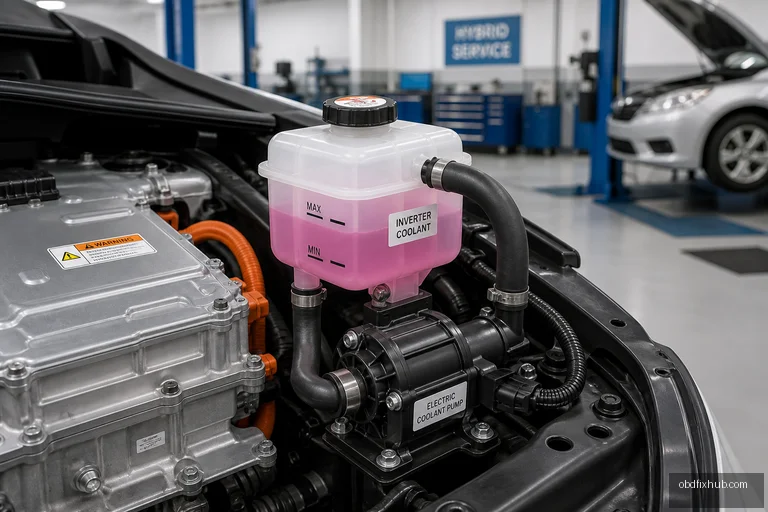
P0A93 Inverter Cooling System Performance means the vehicle’s hybrid or EV power electronics are not being cooled as expected. The most common causes are a failed inverter coolant pump, low or air-locked coolant, restricted flow, wiring faults, or an inverter temperature sensor problem. Because overheating can damage an expensive inverter, this code should be diagnosed rather than simply cleared.
This is primarily an informational and diagnostic search query: most drivers want to understand the code, identify whether the vehicle is safe to drive, and avoid replacing costly parts unnecessarily. The exact definition and test procedure can vary by manufacturer, but the underlying issue is the same—the control system has detected inadequate cooling performance.
What Does P0A93 Mean?
The inverter converts and manages high-voltage electrical power between the battery, electric motors, and other hybrid systems. During acceleration, regenerative braking, and high-load driving, it produces substantial heat. A dedicated cooling circuit removes that heat through coolant, a pump, hoses, a radiator or heat exchanger, and temperature sensors.
When the vehicle detects that inverter temperature, coolant temperature, pump operation, or temperature change does not match expected conditions, it stores P0A93. On Toyota and Lexus hybrid models, the code is frequently associated with the inverter cooling system, but the exact criteria differ between model years and manufacturers.
Common Causes of P0A93
- Failed inverter coolant pump: The electric pump may stop circulating coolant even though the reservoir appears full.
- Low coolant level: A leak at a hose, pump seal, reservoir, radiator, or inverter connection can reduce cooling capacity.
- Air trapped in the cooling circuit: After a coolant service or leak repair, an air pocket can prevent proper circulation and make the pump sound abnormal.
- Restricted flow: A blocked hose, contaminated coolant, restricted heat exchanger, or damaged passage can limit circulation.
- Electrical or wiring faults: Corrosion, loose terminals, damaged wiring, or a blown fuse can prevent the pump from operating.
- Temperature sensor or control fault: A faulty sensor may report unrealistic temperatures and trigger the code even when flow is present.
- Inverter internal overheating: Less commonly, the inverter itself may have an internal cooling passage or power-electronics problem.
Symptoms You May Notice
P0A93 does not always produce an immediate dramatic symptom. Some vehicles continue driving normally at first, while others reduce hybrid power to protect the inverter. The warning may appear during highway driving, hill climbing, heavy traffic, or repeated acceleration when the system is under the greatest thermal load.
- Check Engine, hybrid system, or master warning light
- Reduced acceleration or limited EV operation
- Cooling fan running more often than usual
- Unusual buzzing, grinding, or silent operation from the inverter pump
- Higher fuel consumption or reduced regenerative braking
- Vehicle entering limp mode or refusing to start the hybrid system
- Overheated coolant or a hot electrical smell in severe cases
A useful real-world clue is the coolant reservoir. With the vehicle inspected according to the manufacturer’s procedure, a working pump often creates visible movement or turbulence in the inverter reservoir. No movement can indicate a dead pump, air in the circuit, a blocked passage, or an electrical supply issue. Do not rely on this observation alone, because reservoir design and inspection conditions differ by vehicle.
Can You Still Drive With P0A93?
Short, gentle driving may be possible if the vehicle has no overheating warning, no loss of power, and the coolant level is correct. However, continued highway driving, towing, steep climbs, or aggressive acceleration can turn a cooling-system fault into inverter damage. If the vehicle displays a red temperature warning, shuts down, loses power, or shows no coolant circulation, stop driving and arrange professional diagnosis.
Hybrid inverter systems contain dangerous high voltage even when the engine is off. Do not disconnect orange high-voltage cables, open the inverter, or probe high-voltage components unless you are trained and equipped for hybrid service. Checking the visible coolant level and inspecting for external leaks is different from working on the electrical system.
How to Diagnose P0A93 Correctly
1. Scan all related control modules
Use a scan tool that can access the hybrid control, battery, and inverter-related modules—not only a basic generic OBD reader. Record current, pending, and history codes, along with freeze-frame data. Codes for inverter temperature, pump circuit, low coolant, or low 12-volt voltage can identify the primary fault.
2. Check the coolant level and condition
Inspect the correct inverter coolant reservoir when the system is cold and follow the owner’s manual for the proper coolant type. Look for stains, damp hose connections, cracked plastic, and evidence of previous leaks. A full reservoir does not prove that the pump is circulating fluid.
3. Confirm pump operation
Listen for pump operation and, where the service information permits, command the pump on with a bidirectional scan tool. Check the pump’s power, ground, fuse, and connector. A pump that receives the correct voltage but does not run is usually defective; a pump with no power requires circuit testing before replacement.
4. Verify actual coolant flow
After confirming safe operating conditions, inspect for movement in the reservoir or use the manufacturer’s specified bleeding and flow test. If the pump runs but flow is weak, suspect air, a blockage, a collapsed hose, or a restricted heat exchanger. Replacing a pump without removing trapped air may leave the original fault unresolved.
5. Compare temperature data
Use live data to compare inverter temperature, coolant temperature, ambient temperature, and pump command. A temperature reading that is implausibly high or fixed at one value points toward a sensor, wiring, or module issue. A steadily rising inverter temperature with little coolant-temperature change is more consistent with poor circulation.
Repair Options and Typical Fixes
The correct repair depends on the test results. A failed electric pump normally requires replacement followed by the specified coolant refill and air-bleeding procedure. If a leak is found, repair the leaking component first; otherwise, the replacement pump may fail again from low coolant or air ingestion.
Electrical faults should be repaired at the connector, fuse, ground, or wiring level rather than bypassed. If the circuit and flow are good but sensor readings remain incorrect, the temperature sensor or related component may need replacement. An inverter replacement should be the last conclusion, supported by manufacturer testing—not a guess based on the code alone.
One common mistake is clearing P0A93 immediately after installing a pump. The code may return if the system still contains air, the coolant is contaminated, or a second code was ignored. After repair, confirm stable temperatures under load, check for leaks, clear codes with the correct scan tool, and perform the manufacturer’s road test.
Practical Tips to Avoid an Expensive Misdiagnosis
- Do not assume a full reservoir means the cooling system is healthy.
- Do not replace the inverter before testing pump power, ground, flow, and temperature data.
- Check 12-volt battery voltage if several unrelated warning lights appeared together.
- Use the vehicle-specific service manual for coolant type, bleeding steps, and safety procedures.
- Save freeze-frame data before clearing the code; it can reveal whether the fault appeared under heavy load or immediately at startup.
Summary: What to Do Next
P0A93 indicates inadequate or unexpected inverter cooling performance, not automatically a failed inverter. Start with a complete module scan, coolant and leak inspection, pump electrical testing, flow verification, and live temperature data. If the vehicle is overheating or losing hybrid power, stop driving and use a qualified hybrid technician. A careful diagnosis can often turn a potentially expensive inverter problem into a pump, wiring, bleeding, or leak repair.
Frequently Asked Questions
Is P0A93 always caused by a bad inverter coolant pump?
No. The pump is a common cause, but low coolant, trapped air, a blocked circuit, wiring faults, a blown fuse, or an inaccurate temperature sensor can produce the same code.
Can low engine coolant cause P0A93?
Usually, P0A93 concerns the separate inverter cooling circuit rather than the engine cooling circuit. Some vehicles use distinct reservoirs, so identify the correct one in the owner’s manual before adding coolant.
Will clearing P0A93 fix the problem?
No. Clearing the code only removes the stored warning temporarily. If circulation or temperature performance remains outside the expected range, the code will return and the vehicle may reduce power.
How much does a P0A93 repair cost?
Cost varies widely by model and fault. A fuse, connector, or bleeding service may be relatively inexpensive, while an inverter pump, heat exchanger, or inverter assembly can cost substantially more. Testing first is the best way to control the repair bill.




