P2227 Barometric Pressure Sensor Performance: Meaning, Causes, Symptoms & Fix
P2227 means the engine computer has detected an implausible or poorly performing barometric pressure (BARO) sensor signal. The fault may come from the sensor itself, but wiring damage, a bad ground, incorrect atmospheric pressure data, or a problem inside the PCM can trigger the same code. In many cases, the vehicle will still drive, but fuel economy, cold starts, turbocharger control, and engine response may suffer.
This guide explains how to diagnose P2227 without replacing expensive parts unnecessarily, what a proper repair usually costs, and when it is safe to continue driving.
What Does the P2227 Code Mean?
Diagnostic trouble code P2227 is defined as “Barometric Pressure Sensor A Circuit Range/Performance.” The BARO sensor reports atmospheric pressure to the powertrain control module (PCM). The PCM uses that information to calculate engine load and adjust fuel delivery, ignition timing, exhaust-gas recirculation, and—in turbocharged vehicles—boost strategy.
Atmospheric pressure changes with altitude and weather. At sea level, pressure is commonly close to 100 kPa, while it is significantly lower in mountainous areas. A healthy system should provide a believable reading that matches local conditions and changes logically when the vehicle is driven to a different elevation.
Some vehicles use a dedicated BARO sensor. Others calculate barometric pressure through the MAP sensor, or integrate the BARO sensor into the MAF sensor assembly or PCM. That design difference matters: replacing a standalone sensor on one model may be impossible on another.
Common Symptoms of P2227
A vehicle with P2227 may show only a check-engine light, especially when the sensor reading is slightly out of range. More serious failures can affect how the engine runs because the PCM is working with incorrect information about air density and engine load.
- Check Engine Light or reduced-power warning
- Hard starting, particularly during cold starts
- Rough idle or intermittent stalling
- Sluggish acceleration and poor throttle response
- Unusual fuel consumption
- Black smoke from an overly rich mixture
- Turbocharger underboost or overboost symptoms
- Failed emissions testing
On a naturally aspirated engine, the symptoms may be mild. On a turbocharged or diesel engine, incorrect pressure data can interfere with boost and air-fuel control, making the fault more noticeable under load.
What Causes P2227?
The code identifies a performance problem, not automatically a defective sensor. A careful inspection should consider the entire circuit and the pressure data the PCM is receiving.
- Failed BARO sensor: The internal sensing element can drift, become contaminated, or produce a fixed voltage.
- Damaged wiring or connector: Broken wires, corrosion, loose terminals, water intrusion, and rodent damage are common causes.
- Weak sensor ground: A ground connection with excessive resistance can distort the signal even when the sensor is new.
- Incorrect reference voltage: The sensor normally relies on a stable 5-volt reference. A short in another sensor circuit can pull that voltage down.
- Restricted pressure port or hose: On designs that use a hose or pressure passage, dirt, oil, or a kink can create a false reading.
- MAP, MAF, or intake-air problems: Some vehicles calculate BARO data indirectly, so another air-measurement fault may set P2227.
- Software or PCM fault: An outdated calibration or internal control-module problem is less common but possible.
How to Diagnose P2227 Correctly
Replacing the sensor immediately is one of the most common mistakes with this code. The following process is more reliable and usually prevents paying for a part that was never faulty.
1. Check all stored codes and freeze-frame data
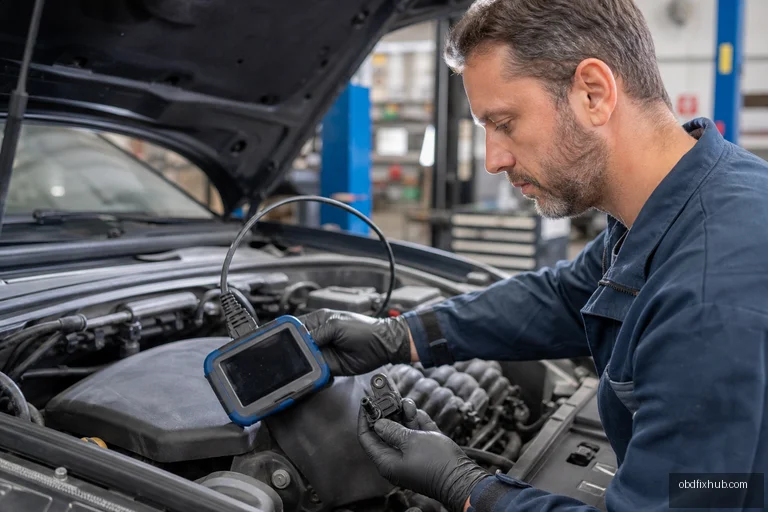
Use a professional scan tool to record every code, not just P2227. Codes related to the MAP sensor, MAF sensor, 5-volt reference, or engine power supply may identify the primary problem. Freeze-frame data shows engine speed, coolant temperature, vehicle speed, and sensor values at the moment the fault was recorded.
2. Compare the BARO reading with real conditions
With the ignition on and engine off, compare the scan-tool BARO value with a reliable local atmospheric-pressure reading, adjusted for elevation. A small difference is normal because weather stations and vehicle sensors may use different reference conditions. A reading that is fixed at an extreme value, changes randomly, or is clearly implausible deserves further testing.
A useful workshop clue is the cold-soak reading: after the vehicle has been parked for several hours, BARO and MAP should be reasonably consistent with outside pressure. If the scan tool shows an obviously impossible value before the engine starts, the issue is likely electrical, sensor-related, or software-related rather than a vacuum leak.
3. Inspect the connector and harness
Disconnect the sensor and look for green corrosion, pushed-back terminals, oil contamination, or moisture. Gently tug each wire near the connector; a conductor can break inside the insulation while looking normal from the outside. Pay special attention to harness sections rubbing against brackets, battery trays, or engine covers.
4. Test the power, ground, and signal
Using the manufacturer’s wiring diagram, verify the 5-volt reference and sensor ground with a digital multimeter. Do not assume a ground is good because it shows continuity; perform a voltage-drop test under circuit load. Then check the signal voltage or frequency against the service manual’s pressure chart.
Never apply battery voltage to a 5-volt sensor circuit. A test light can also damage low-current PCM circuits, so use a high-impedance meter or an approved automotive breakout tool.
5. Check for related air-measurement faults
If BARO data is calculated from a MAP or MAF sensor, diagnose those systems before condemning the PCM. Compare MAP, BARO, throttle position, and engine load on the scan tool. A sensor that responds slowly, remains frozen, or disagrees with the others may be the real source of the problem.
How to Fix Engine Code P2227
The correct repair depends on the test results. Common fixes include:
- Repairing an open, shorted, chafed, or corroded wire.
- Cleaning or replacing damaged connector terminals and securing the connector properly.
- Replacing the BARO sensor when its output does not match the service-manual specification.
- Cleaning a blocked pressure port or replacing a cracked pressure hose, where applicable.
- Repairing a shared 5-volt reference or sensor-ground problem.
- Updating PCM software when a manufacturer service bulletin identifies a calibration issue.
- Replacing or programming the PCM only after all wiring and sensor tests have passed.
After the repair, clear the code and perform a complete drive cycle. Confirm that the BARO value remains plausible and that the code does not return during cold start, acceleration, and steady cruising. Simply clearing P2227 without verifying the data is not a repair.
How Much Does It Cost to Fix P2227?
The cost varies widely by vehicle design and by whether the fault is electrical or mechanical. In the United States, a realistic estimate is:
- Diagnostic testing: approximately $80–$180
- Wiring or connector repair: approximately $100–$400
- Standalone BARO sensor replacement: approximately $150–$450
- MAF or MAP assembly replacement: approximately $250–$800
- PCM programming or replacement: approximately $500–$1,500 or more
Labor rates, vehicle access, aftermarket-part quality, and local taxes can change these figures. A low-cost sensor is not always the best choice: inaccurate aftermarket readings can cause P2227 to return. Use the original equipment number and verify the sensor’s calibration before installation.
Can You Drive with a Bad Barometric Pressure Sensor?
Usually, you can drive a short distance if the engine starts normally, the Check Engine Light is steady, and there is no major loss of power. However, avoid treating the vehicle as fully reliable. Incorrect BARO data can create a rich or lean mixture, reduce fuel economy, and cause poor turbocharger control.
Stop driving and arrange professional diagnosis if the light flashes, the engine stalls, the vehicle enters limp mode, the engine overheats, or acceleration becomes dangerously weak. Continued driving with an incorrect mixture can also damage the catalytic converter in some cases.
What Happens When a Barometric Pressure Sensor Goes Bad?
When the sensor fails, the PCM may misjudge how much oxygen is available in the incoming air. It can then command too much or too little fuel, alter ignition timing, or calculate engine load incorrectly. The result may be rough running, difficult starting, reduced power, increased emissions, or—in turbocharged applications—incorrect boost management.
Some vehicles use a substitute pressure value when the sensor signal is invalid. That fallback strategy may make the car appear almost normal while still reducing performance and fuel economy. This is why scan-tool data and electrical testing are more dependable than symptoms alone.
Final Takeaway
P2227 is a BARO sensor performance code, but the sensor is only one possible cause. Start with freeze-frame data, compare the pressure reading with real atmospheric conditions, inspect the connector, and test the reference voltage, ground, and signal before buying parts. If the vehicle has severe drivability symptoms, diagnose it promptly rather than continuing to drive and risking emissions or engine-control problems.
Best next step: have the BARO/MAP system tested with a scan tool and wiring diagram, then clear the code only after the live data proves the repair worked.
Frequently Asked Questions
Is P2227 a serious code?
It can be mild if the vehicle runs normally, but it may become serious when accompanied by stalling, limp mode, flashing warning lights, or turbocharger-control problems. Prompt diagnosis is recommended.
Can a vacuum leak cause P2227?
A vacuum leak does not directly damage a dedicated BARO sensor, but it can create abnormal MAP and engine-load data on vehicles that calculate pressure indirectly. Check related intake and MAP faults before replacing the BARO sensor.
Will disconnecting the battery fix P2227?
Disconnecting the battery may erase the code temporarily, but it does not correct the underlying fault. If the signal remains implausible, P2227 will return after the vehicle completes its self-tests.
Does P2227 need immediate repair?
Arrange a repair soon, especially if fuel economy or engine performance has changed. You may be able to drive carefully for a short period with a steady warning light, but do not continue if the engine stalls, loses power, or the light flashes.




