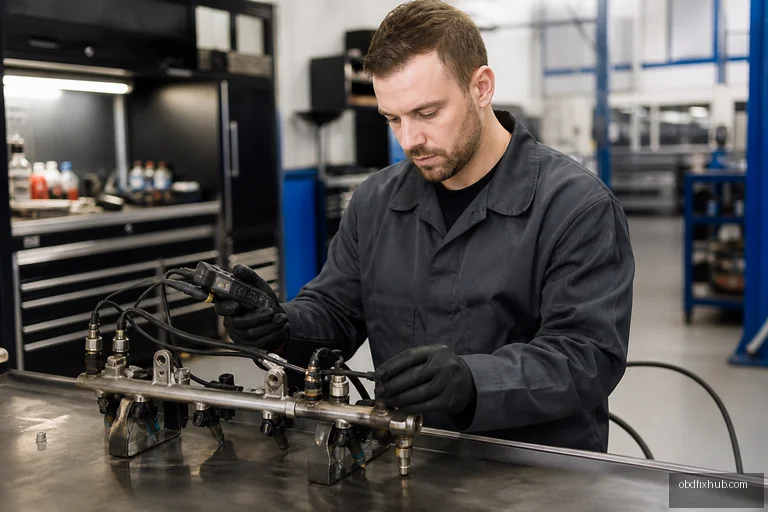
P2293 Fuel Pressure Regulator Performance: Meaning, Causes, Symptoms & Fix
P2293 means the engine computer has detected a performance problem with Fuel Pressure Regulator 2, often called Fuel Pressure Regulator B. In practical terms, the fuel pressure is not responding as expected to commanded changes. The cause may be a failing regulator, restricted fuel supply, wiring damage, a weak pump, a leaking injector, or an inaccurate pressure sensor. Do not replace the regulator based on the code alone; a fuel-pressure test and circuit checks are needed to identify the real fault.
What Does Code P2293 Mean?
P2293 is a generic OBD-II diagnostic trouble code for Fuel Pressure Regulator 2 Performance. Depending on the vehicle manufacturer, the same component may be described as Regulator B, Fuel Pressure Control Valve 2, or a high-pressure fuel regulator. The exact location also varies: it may be installed on the fuel rail, integrated into the high-pressure fuel pump, or built into the fuel tank module.
The word performance is important. This code does not necessarily mean that the regulator is electrically open or shorted. It means the powertrain control module commanded a particular fuel pressure, but the measured pressure did not follow that command quickly or accurately enough.
On a gasoline direct-injection engine, P2293 can involve the high-pressure fuel system, where rail pressure may reach several thousand psi. On other vehicles, it can relate to a lower-pressure returnless fuel system. Always use the service information for the specific year, engine, and fuel system before testing.
Common Symptoms of P2293
A vehicle with this code may still start and drive normally at light throttle, then show a serious problem during acceleration. Fuel pressure errors are often most obvious when engine load rises and the pump must supply a much larger volume of fuel.
- Check Engine Light, sometimes with reduced-power mode
- Extended cranking or hard starting, especially when hot
- Rough idle, hesitation, stumbling, or engine misfires
- Loss of power during acceleration or climbing a hill
- Engine stalling after starting or when coming to a stop
- Poor fuel economy, fuel odor, or an excessively rich exhaust
- Fuel pressure readings that are too high, too low, or unstable
- Additional codes for lean or rich mixture, misfires, or fuel pressure sensors
One useful diagnostic clue is whether the fault appears only under load. If pressure is acceptable at idle but falls sharply during a road test, suspect inadequate fuel volume, a restricted filter or pickup, a weak pump, or voltage loss at the pump. If pressure remains high at idle and does not respond to commands, a stuck regulator, blocked return path, or control fault becomes more likely.
What Causes P2293?
P2293 is a system-performance code, so several parts can create the same result. The most common causes I see during diagnosis are:
- Defective fuel pressure regulator: The valve may stick, leak internally, or respond too slowly.
- Restricted fuel filter or pickup strainer: The pump cannot deliver enough fuel when demand increases.
- Weak or failing fuel pump: A worn pump may produce acceptable pressure with no load but fail at higher volume demand.
- Damaged wiring or poor ground: Corrosion, a loose connector, chafed insulation, and voltage drop can prevent proper regulator control.
- Faulty fuel pressure sensor: The regulator may work correctly while the sensor reports an incorrect pressure to the PCM.
- Leaking injector or high-pressure pump problem: These can create pressure behavior that looks like a regulator failure.
- Contaminated fuel or debris: Dirt, varnish, water, or metal particles can make a precision valve stick.
- Software or calibration issue: A manufacturer technical service bulletin may address an incorrect pressure-control strategy.
How to Know If a Fuel Pressure Regulator Is Going Bad
Do not rely on fuel smell or a single scan-code reading. A failing regulator should be evaluated by comparing commanded fuel pressure with actual pressure under several operating conditions.
- Record all codes and freeze-frame data. Note engine speed, load, coolant temperature, fuel pressure, and battery voltage when P2293 was stored.
- Inspect the connector and harness. Look for fuel intrusion, green corrosion, broken locking tabs, rubbed wires, and wiring stretched near the fuel rail or pump.
- Check live data. Compare desired rail pressure, actual rail pressure, regulator duty cycle, and low-side fuel pressure if available.
- Perform a mechanical pressure test. Use the correct adapter and compare the reading with the manufacturer specification at key-on, idle, snap throttle, and under load.
- Check pressure retention. After shutdown, pressure should generally remain within the specified range. A rapid drop can indicate an injector leak, pump check-valve problem, or regulator leak.
- Test electrical control. Verify reference voltage, ground, continuity, and the control signal with a wiring diagram and suitable meter or oscilloscope.
A scan tool can show a plausible pressure value even when the sensor is wrong. For that reason, the most reliable approach is to verify the sensor data against a mechanical gauge where the vehicle design allows it. On a direct-injection system, do not improvise a gauge connection to the high-pressure side; use factory procedures because the pressure can cause severe injury.
How Do I Know If the Fuel Pressure Regulator Is Stuck Closed?
A regulator stuck closed restricts fuel-pressure relief or control, so pressure may remain excessively high. Typical clues include a rich-running condition, black smoke, fuel odor, rough idle, hard hot starts, poor fuel economy, and fuel trims that move strongly negative. The pressure may also stay high when the PCM reduces regulator command.
However, high pressure alone does not prove the valve is stuck closed. A blocked return line, incorrect sensor signal, wiring fault, or mechanical problem inside the high-pressure pump can produce the same pattern. Confirm the diagnosis by checking actual pressure against the specification and observing whether pressure changes when the regulator is commanded.
Never test a suspected stuck regulator by disconnecting fuel lines on a running engine. Relieve pressure using the manufacturer’s procedure, keep ignition sources away, and replace damaged seals or single-use fittings as required.
How to Fix P2293
The repair depends on the test results rather than the code description. A sound repair sequence usually looks like this:
- Repair corroded terminals, damaged wiring, poor grounds, or low-voltage supply problems.
- Replace a restricted fuel filter or contaminated pump strainer when serviceable.
- Replace the fuel pressure regulator if it fails an electrical, mechanical, or response test.
- Replace the pressure sensor if its signal does not match verified mechanical pressure.
- Test the fuel pump for pressure, volume, current draw, and voltage drop before condemning it.
- Inspect for leaking injectors or high-pressure pump faults when pressure decays after shutdown.
- Clear the code and complete a road test while monitoring commanded and actual pressure.
After installing a regulator or high-pressure fuel component, some vehicles require a fuel-pressure adaptation, pump relearn, or control-module software update. Follow the manufacturer’s bleeding, priming, and torque procedures. A small installation error, such as a pinched O-ring, can create a new pressure leak and bring P2293 back immediately.
What Happens If You Drive With a Bad Fuel Pressure Regulator?
Short trips may be possible if the engine is running smoothly and pressure is only slightly out of range, but continued driving is risky. Low fuel pressure can cause lean operation, misfires, overheating of combustion components, and loss of power during overtaking. High fuel pressure can create an excessively rich mixture, dilute engine oil with gasoline, damage the catalytic converter, and make the vehicle stall.
Stop driving and arrange a repair if you notice a strong fuel smell, visible fuel leakage, severe misfires, repeated stalling, black smoke, or a flashing Check Engine Light. Fuel-system leaks and uncontrolled pressure are safety issues, not problems to postpone until the next routine service.
Final Takeaway
P2293 indicates that Fuel Pressure Regulator 2 is not controlling pressure as the engine computer expects, but it does not identify the failed part by itself. Verify pressure with the correct test equipment, compare commanded and actual values, inspect the wiring, and account for the pump, sensor, filter, injectors, and return system. Accurate testing prevents an unnecessary regulator replacement and is especially important on high-pressure direct-injection engines.
Frequently Asked Questions
Can a bad fuel pressure regulator cause a no-start?
Yes. If the regulator causes pressure to remain too low or too high, the engine may crank without starting, start and immediately stall, or require extended cranking. Confirm fuel pressure during cranking rather than assuming the regulator is the cause.
Is P2293 the same as a low fuel pressure code?
Not necessarily. P2293 describes fuel-pressure regulator performance. The actual pressure may be low, high, or unstable, and the underlying fault may be a pump, sensor, wiring problem, restriction, or regulator.
Can I replace the fuel pressure regulator myself?
It depends on its location and system pressure. A low-pressure regulator may be a manageable repair for an experienced DIY technician, while a direct-injection regulator requires strict depressurization and specialized procedures. Never open a high-pressure fuel system without the correct service information.
Will clearing P2293 fix the problem?
No. Clearing the code only removes the stored fault temporarily. If the pressure problem remains, the PCM will usually detect it again during a drive cycle, and repeated clearing can hide symptoms that need immediate attention.




