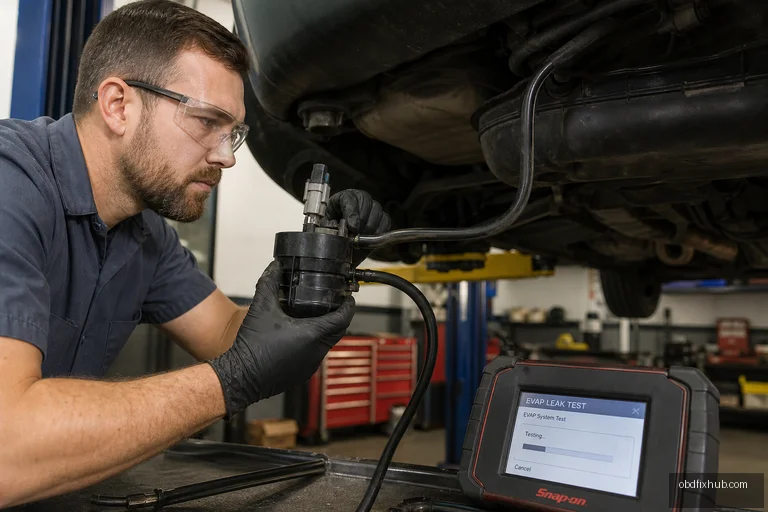
P2400 EVAP Leak Detection Pump Control Circuit Open: Meaning, Causes, Symptoms & Fix
P2400 means the engine computer has detected an open or incomplete electrical circuit to the EVAP leak detection pump. In most cases, the vehicle will still start and drive normally, but the check engine light may remain on and the emissions self-test cannot verify that the fuel system is sealed. The fault may be a failed pump, a blown fuse, corrosion in the connector, damaged wiring, or a control-module problem—not necessarily an actual vapor leak.
What Does P2400 Mean?
The evaporative emission control system, or EVAP system, prevents gasoline vapors from escaping into the atmosphere. It uses components such as the fuel tank, charcoal canister, purge valve, vent valve, pressure sensor, hoses, and, on some vehicles, a dedicated leak detection pump.
The pump creates or monitors pressure and vacuum inside the EVAP system so the vehicle can check for leaks. When the power or ground path to that pump is interrupted, the PCM or ECM stores P2400, usually described as EVAP Leak Detection Pump Control Circuit/Open. “Open” means the computer sees an electrical path that is missing, too resistant, or unable to respond as commanded.
Exact component names vary by manufacturer. BMW may refer to a leak diagnosis pump, while other manufacturers integrate the pump with the vent assembly or use a different testing strategy. Always compare the generic code with the factory service information for your specific year, engine, and market.
P2400 Symptoms You May Notice
P2400 often causes few noticeable drivability problems because the EVAP system does not control fuel delivery during normal driving. The most common symptom is a persistent malfunction indicator lamp, sometimes accompanied by an emissions-test failure.
- Check engine light or service engine soon warning
- Difficulty passing an emissions inspection
- Other EVAP codes stored with P2400, such as leak, vent, or pressure-sensor codes
- A faint clicking, buzzing, or no sound from the leak detection pump during an active test
- Occasional fuel odor if a separate vapor leak is present
- Rarely, hard starting after refueling when related EVAP components have also failed
A rough idle, severe loss of power, or stalling is not typical of P2400 alone. If those symptoms occur, diagnose fuel, ignition, intake, and purge-valve faults instead of assuming the pump code explains everything.
Common Causes of the P2400 EVAP Pump Circuit Fault
- Failed leak detection pump: The internal motor, diaphragm, pressure switch, or electronics can fail from age, heat, moisture, or contamination.
- Blown fuse or faulty relay: A fuse may open because of a shorted pump motor. Replacing the fuse without finding the short can cause the new fuse to fail immediately.
- Corroded connector: Pump connectors mounted near the fuel tank or rear wheel area are exposed to water, salt, and road debris. Green or swollen terminals are a common real-world finding.
- Broken or chafed wiring: Harnesses can rub against tank shields, suspension components, or body seams. A wire may look intact while being broken inside its insulation.
- Poor ground: A rusty ground point can allow a low-current test light to illuminate but fail when the pump is commanded under load.
- Damaged EVAP control module or PCM: This is possible, but it should be considered only after power, ground, wiring, and pump resistance or operation have been verified.
- Water or liquid fuel contamination: Overfilling the tank after the nozzle clicks off can push liquid fuel into EVAP components and shorten pump or canister life.
How to Diagnose P2400 Correctly
A good diagnosis separates an electrical circuit problem from a physical vapor leak. A smoke test is useful for finding cracked hoses, but it cannot prove that the pump has proper power or that its control circuit works. Conversely, replacing the pump will not repair a broken wire.
- Record all diagnostic trouble codes and freeze-frame data. Additional codes can show whether the issue is limited to the pump circuit or part of a wider EVAP failure. Do not erase the codes before noting the conditions under which they appeared.
- Inspect the pump and harness first. Look for loose locking tabs, water inside the connector, bent terminals, rodent damage, abrasion, and aftermarket trailer or fuel-system wiring near the rear of the vehicle.
- Check the fuse with a meter or test light on both test points. A fuse that appears visually good can still have a poor connection. If it is blown, check for a short before installing a replacement.
- Verify power and ground under load. Use the wiring diagram to identify the correct terminals. Voltage measured with the connector unplugged may disappear when the pump is connected, so voltage-drop testing is more reliable than a simple open-circuit reading.
- Use a scan tool bi-directional test. If supported, command the leak detection pump on and listen for operation while checking current draw. Do not apply battery power to an unfamiliar terminal without confirming the circuit design; some pumps are controlled by a module or pulse-width signal.
- Test the pump according to manufacturer specifications. Resistance values and expected current vary widely. A pump can show acceptable resistance yet fail mechanically, so an operational test is important.
- Perform a smoke or pressure test only when appropriate. If the pump circuit operates but another EVAP code remains, inspect the fuel cap, filler neck, hoses, canister, vent valve, and tank seals for leaks.
One practical diagnostic mistake is condemning the pump because it makes no noise during a test. Some systems run the pump in brief pulses, and others use pressure feedback rather than an obvious continuous sound. Confirm the command, power supply, ground quality, and scan-tool data before ordering parts.
P2400 Repair Options
The correct repair depends on the failed part. A damaged connector may need terminal replacement rather than electrical cleaner alone. If a wire is broken near the fuel tank, repair it with an automotive-grade sealed splice and protect the harness from the original rubbing point.
If the pump has failed internally, replacement is normally the appropriate fix. Some vehicles use a separately replaceable pump, while others require the complete vent or leak-detection assembly. After the repair, clear the code and complete the manufacturer’s EVAP monitor drive cycle; the light may not stay off until the monitor runs successfully.
How Much Does an EVAP Leak Detection Pump Cost to Replace?
In the United States, replacing an EVAP leak detection pump commonly costs approximately $200 to $700, including parts and labor. A separately sold pump may cost $100–$350, while an integrated vent or leak-detection assembly can cost more. Dealer pricing, vehicle access, rust, and regional labor rates can push the total above that range.
Diagnostic labor is often billed separately, typically around $100–$200. That expense is worthwhile when the real fault is a $20 fuse, corroded terminal, or broken harness rather than the pump itself. Ask the repair shop whether the estimate includes electrical testing, code verification, and the EVAP monitor drive cycle.
Can You Drive With P2400?
Usually, you can drive a short distance with P2400 if the vehicle runs normally and there is no fuel smell. The code generally affects emissions monitoring rather than braking, steering, or engine lubrication. However, continued driving can leave an emissions fault unresolved and may prevent the vehicle from passing inspection.
Stop driving and arrange an inspection if you smell raw fuel, see wet fuel, notice a rapidly worsening check engine light, or experience hard starting, stalling, or significant engine problems. Never ignore a strong gasoline odor, especially in an enclosed garage.
How Long Do EVAP Leaks Take to Fix?
A straightforward electrical repair or accessible pump replacement may take one to three hours. Finding an intermittent wire fault, removing a rusted fuel-tank component, or replacing an integrated assembly can take half a day or longer. A simple cracked hose may be repaired quickly, but confirming the repair often requires a smoke test and a completed EVAP monitor.
The check engine light can be cleared immediately after repair, but the computer may need several normal cold-start and driving conditions before it marks the EVAP system “ready.” If an emissions inspection is due, ask whether the required readiness monitors have completed before visiting the testing station.
Bottom Line
P2400 points to an open electrical circuit controlling the EVAP leak detection pump, not automatically to a fuel-vapor leak. Start with the fuse, connector, power supply, ground, and wiring; then test the pump and use a smoke machine only when the electrical side is proven. Driving is usually possible for a short time, but a fuel smell or drivability problem changes the safety picture. Proper testing prevents an unnecessary pump replacement and usually delivers the fastest, least expensive repair.
Frequently Asked Questions
Can I drive with code P2400?
Usually yes for limited driving when the engine runs normally and there is no gasoline odor. Schedule a diagnosis soon because the EVAP monitor will fail and the vehicle may not pass an emissions inspection. Do not drive if fuel is leaking or fumes are strong.
Can I drive with a faulty leak detection pump?
In most cases, a faulty pump will not immediately damage the engine or make the vehicle unsafe to control. It can, however, allow an emissions fault to remain active and may be accompanied by another EVAP problem. Treat raw-fuel odor, hard starting, or stalling as reasons to stop and inspect the vehicle.
How much does it cost to replace an EVAP leak detection pump?
A typical total is about $200–$700 in the United States, depending on whether the pump is separate or part of a larger assembly. Electrical diagnosis, difficult access, corrosion, and dealer labor can increase the final bill.
How long do EVAP leaks take to fix?
A visible hose or connector problem may take less than two hours, while a pump assembly or intermittent wiring fault may require several hours. The repair may be complete before the EVAP readiness monitor finishes its test cycle, so the warning light should be verified with a scan tool rather than judged only by time.




