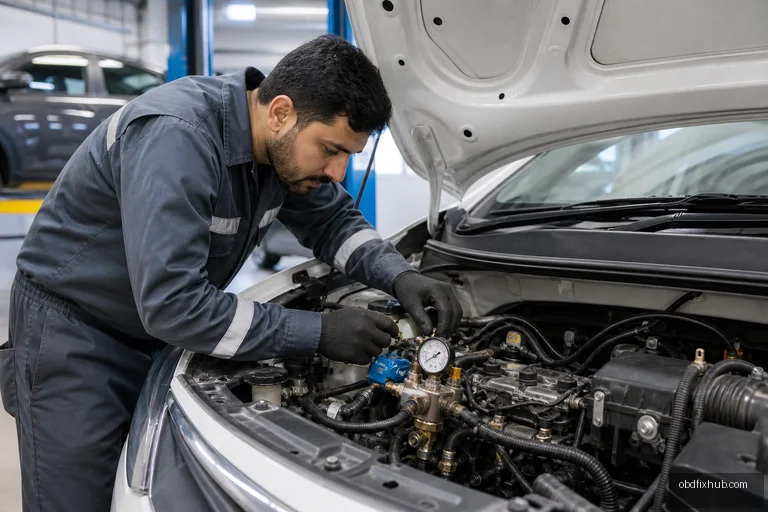
The P240D Alternative Fuel Low-Pressure System Leak code means the vehicle’s onboard diagnostic system has detected that the low-pressure portion of an alternative-fuel system is not holding the pressure expected by the manufacturer. It is most commonly associated with CNG, LPG, or other factory-installed gaseous-fuel systems. This is not automatically the same as a conventional gasoline EVAP leak, and it should not be diagnosed by randomly replacing the fuel cap.
In practice, P240D can be caused by a cracked low-pressure hose, a leaking regulator connection, a faulty shutoff or vent valve, a pressure sensor reading incorrectly, or wiring that makes the control module believe a leak exists. Because alternative-fuel systems can contain combustible gas under significant pressure, diagnosis and repair should follow the manufacturer’s safety procedures.
What Does P240D Mean?
P240D is an OBD-II diagnostic trouble code related to an alternative-fuel low-pressure system leak. The vehicle’s engine control module, fuel control module, or dedicated gas-fuel controller monitors pressure and pressure decay in the low-pressure fuel delivery circuit. If the measured pressure drops faster than the permitted threshold, the module stores P240D and usually turns on the check engine light.
The exact testing strategy varies by vehicle. Some systems perform a leak check after the engine is switched off. Others compare pressure sensor readings during startup, fuel switching, or a commanded isolation test. The code definition is therefore consistent at a high level, but the test conditions and acceptable pressure values are manufacturer-specific.
Is P240D an EVAP Leak Code?
Usually, no. Conventional EVAP codes such as P0455 and P0456 concern gasoline vapor emissions from the fuel tank and evaporative emissions system. P240D refers to an alternative-fuel circuit, typically on a vehicle designed or converted to run on CNG, LPG, or another gaseous fuel.
The systems can look similar because both use valves, pressure sensors, vapor lines, and leak-monitoring logic. However, an ordinary EVAP smoke test is not a substitute for the correct alternative-fuel diagnostic procedure. Using the wrong test equipment or applying pressure to the wrong port can damage components or create a serious safety hazard.
Common Symptoms of a P240D Code
Some vehicles store P240D without obvious drivability problems, particularly when the leak is small and the engine is running on gasoline. Other vehicles will restrict alternative-fuel operation until the leak test passes. Typical symptoms include:
- Illuminated check engine light or service-engine warning.
- Alternative-fuel mode being disabled or unavailable.
- Automatic switching from CNG or LPG to gasoline.
- Longer cranking or a difficult start after the vehicle has been parked.
- Engine hesitation, reduced power, or an unstable idle while using alternative fuel.
- A fuel odor, hissing sound, or abnormal pressure reading near the regulator or fuel rail.
- Additional codes for fuel pressure, pressure sensors, shutoff valves, or mixture correction.
A fuel smell or audible hiss should be treated as a safety issue rather than simply an emissions fault. Move the vehicle outdoors if it is safe to do so, avoid flames and electrical sparks, and have the system inspected by a technician trained in that fuel type.
Most Common Causes of P240D
1. Damaged low-pressure hose or connection
Rubber hoses can harden, split, or pull away from clamps. CNG and LPG systems also use specialized lines and fittings that may leak after improper servicing, vibration, corrosion, or an impact underneath the vehicle. A connection can appear intact but leak only when the system reaches operating pressure.
2. Leaking regulator, valve, or injector rail
The pressure regulator reduces tank pressure before fuel reaches the engine. A worn regulator diaphragm, damaged seal, faulty solenoid valve, or leaking injector rail can create a pressure decay that the control module recognizes as P240D. A regulator that is internally leaking may not leave visible evidence outside the vehicle.
3. Defective pressure sensor
A pressure sensor can report a falling pressure even when the fuel circuit is sealed. Contamination, moisture in the connector, a damaged sensing element, or a reference-voltage problem may produce a false leak indication. Replacing the sensor without comparing its signal to an accurate mechanical measurement is a common diagnostic mistake.
4. Wiring or ground fault
Open circuits, corroded terminals, poor grounds, and wiring routed too close to heat can interrupt communication between the pressure sensor, valves, and control module. In these cases, P240D may appear with sensor circuit or valve-control codes. A visual inspection of the harness near the tank, regulator, and engine bay often reveals damage that a basic code scan cannot.
5. Incorrect repair or aftermarket conversion issue
On converted vehicles, non-approved hose, fittings, filters, or calibration settings can cause leakage or incorrect pressure monitoring. A system may function normally for months before a clamp loosens or a hose degrades. The vehicle’s conversion documentation is important because the original manufacturer’s service information may not cover every added component.
How to Diagnose P240D Safely
- Confirm the code and record freeze-frame data. Use a scan tool that can communicate with the alternative-fuel controller, not only the engine ECU. Record fuel mode, system pressure, coolant temperature, battery voltage, and any companion codes.
- Check for an obvious safety concern. Look for a fuel odor, frost around a fitting, damaged lines, loose brackets, or audible leakage. Do not probe, loosen, or disconnect high-pressure fittings on a pressurized system.
- Inspect the low-pressure circuit first. Follow the manufacturer’s flow diagram from the regulator to the fuel rail or injectors. Check hose routing, clamps, quick-connect fittings, valve bodies, and the sensor connector.
- Compare sensor data with a known pressure value. A scan tool reading should be compared with the manufacturer’s specified pressure and, where permitted, a properly rated test gauge. Never use a gauge that is not approved for the fuel and pressure range.
- Perform the specified leak or pressure-decay test. The correct procedure may require closing isolation valves, allowing pressure to stabilize, and measuring decay over a defined period. Do not invent a pressure limit; the pass/fail value is vehicle-specific.
- Test the wiring and components. Verify reference voltage, ground quality, signal voltage, continuity, and valve operation according to the service manual. A pressure sensor signal that changes when the harness is gently moved can indicate an intermittent connection.
Technicians may use an approved combustible-gas detector or a compatible leak-detection solution on accessible low-pressure joints. Standard smoke machines, compressed air, open flames, and household leak-testing methods are inappropriate unless the vehicle manufacturer specifically authorizes them.
How to Fix P240D
The repair depends on what the leak test proves. A loose approved fitting may need to be reseated with the specified seal or torque. A split hose, damaged O-ring, faulty regulator, defective valve, or cracked fuel rail must be replaced with a component rated for the exact alternative fuel and pressure.
If the pressure sensor is inaccurate, repair the connector or wiring before installing a sensor. If a module has lost its learned values or requires a valve calibration, the repair may need a scan-tool relearn or manufacturer-specific initialization. After the repair, the system should be pressure-tested, checked for leaks, and driven through the conditions required for the monitor to run.
Do not clear P240D and return the vehicle to service without confirming that the system holds pressure. Clearing the code only removes the warning temporarily; it does not close a leaking valve or repair a damaged line. If the code returns immediately after clearing, inspect for an active leak, an implausible sensor signal, or a control-module communication problem.
Can You Drive With P240D?
If there is no fuel odor, no audible leak, and the vehicle is operating normally on gasoline, a short trip to a qualified repair facility may be possible. Keep the alternative-fuel mode disabled if the vehicle allows it, and avoid parking indoors until the system has been checked.
Do not continue driving if you smell gas, hear hissing, see frost around a fitting, experience repeated stalling, or notice a sudden loss of fuel pressure. In that situation, shut the vehicle down in a safe outdoor location and arrange professional assistance. The cost of a diagnostic inspection is small compared with the risk of an uncontrolled fuel leak.
Key Takeaway
P240D indicates a detected leak or pressure-loss condition in the low-pressure side of an alternative-fuel system. The root cause may be a hose, fitting, regulator, valve, pressure sensor, or wiring fault, so replacing parts based only on the code is unreliable. Have the system tested with fuel-rated equipment and manufacturer-specific pressure limits, then verify the repair with a complete leak check and drive cycle.
Frequently Asked Questions
Can a loose fuel cap cause P240D?
Usually not. A conventional fuel cap is associated with gasoline EVAP monitoring, while P240D generally concerns the low-pressure circuit of a CNG, LPG, or other alternative-fuel system. Some vehicles may use related monitoring hardware, so the service information for the exact model should be checked.
Is P240D safe to ignore if the car still runs?
No. The vehicle may continue running because it has switched to gasoline or because the leak is small, but the fault can worsen and may prevent alternative-fuel operation. Any fuel odor or hissing requires immediate attention.
Can I use an ordinary EVAP smoke machine to find the leak?
Do not assume that you can. Alternative-fuel systems have different pressure ratings, valves, and safety requirements. Use only a test procedure and equipment approved for the vehicle and fuel type.
Will disconnecting the battery fix P240D?
Disconnecting the battery may erase the stored code on some vehicles, but it does not repair the leak or correct a bad sensor signal. The warning will return when the monitor runs again if the underlying problem remains.




