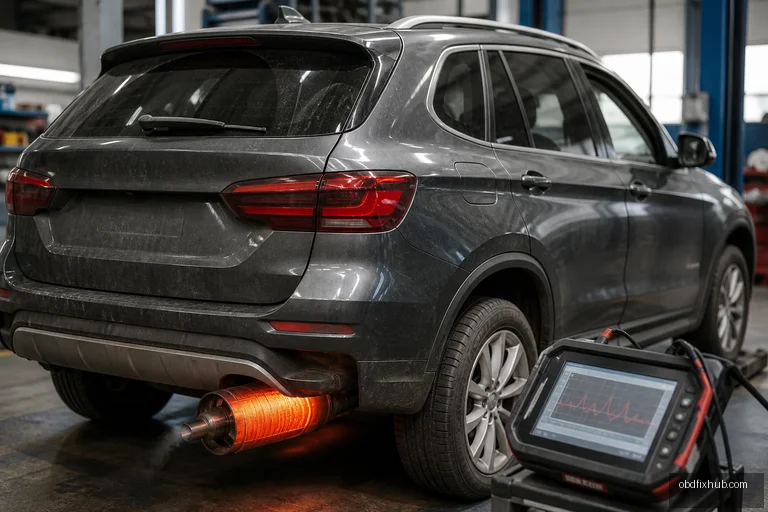
P246B Incorrect Conditions for Particulate Filter Regeneration means the engine computer has tried to start, or is preparing to start, a diesel particulate filter regeneration cycle but one or more required conditions are not satisfied. The usual causes include low exhaust temperature, short-trip driving, a faulty DPF pressure or temperature sensor, low fuel, EGR problems, or a DPF that is already too restricted to regenerate normally.
This is an informational diagnostic code, not a part number. Clearing it without finding the reason regeneration was refused often brings the warning back and can eventually lead to severe DPF restriction, reduced engine power, or an expensive filter replacement.
What Does P246B Mean?
A diesel particulate filter traps soot from the exhaust. During regeneration, the vehicle raises exhaust temperature high enough to burn accumulated soot into a small amount of ash. The powertrain control module monitors coolant temperature, exhaust gas temperature, vehicle speed, fuel level, engine load, differential pressure, and other inputs before allowing that process to begin.
P246B is set when the control module determines that the required regeneration conditions are incorrect or unavailable. The exact enable criteria vary by manufacturer, so the code description may appear slightly differently on Ford, GM, Ram, Mercedes-Benz, Volkswagen, or other diesel applications.
Common Causes of P246B
- Repeated short trips: City driving may never provide the speed, load, and exhaust heat needed for passive or active regeneration.
- Low exhaust temperature: A thermostat stuck open, a faulty coolant temperature sensor, or excessive idling can prevent the engine from reaching the required temperature.
- Incorrect DPF differential pressure readings: A blocked pressure tube, cracked hose, damaged wiring, or failed pressure sensor can make a clean filter appear restricted.
- Faulty exhaust gas temperature sensor: If an EGT sensor reports an implausible temperature, the computer may cancel regeneration as a safety measure.
- Low fuel level: Many vehicles disable regeneration below a calibrated fuel threshold because the process consumes additional fuel.
- Active engine or emissions faults: EGR, turbocharger, injector, glow plug, intake air, or fuel-pressure faults can make regeneration unsafe or ineffective.
- Excessive soot or ash loading: Soot can often be burned away, but ash from engine oil and normal operation cannot be removed by regeneration.
- Incorrect oil or fuel contamination: Low-ash oil is required on many modern diesels. Failed regeneration attempts can also raise the engine oil level through fuel dilution.
P246B Symptoms to Look For
The symptoms depend on how often regeneration has been interrupted and how restricted the DPF has become. Some drivers notice only a check engine light, while others experience obvious performance changes.
- Check engine light or diesel emissions warning
- DPF or “filter full” warning message
- Reduced engine power or limp mode
- Higher idle speed during attempted regeneration
- Cooling fan running after the engine is switched off
- Increased fuel consumption
- Hot exhaust smell or unusually high exhaust temperatures
- Frequent regeneration requests that never complete
- Hard starting, poor throttle response, or turbocharger performance concerns
A useful clue is the vehicle’s behavior before the warning appeared. For example, a delivery van used for five-minute trips may have a healthy DPF but never reaches the operating conditions needed for regeneration. In contrast, a truck that regularly travels at highway speed but repeatedly logs P246B is more likely to have a sensor, thermostat, fueling, or mechanical problem.
How to Diagnose P246B Correctly
Do not begin by forcing a regeneration. First confirm why the control module rejected it. A professional scan tool that can display manufacturer-specific data is far more useful than a basic code reader.
- Record all stored and pending codes. P246B may be secondary to EGT sensor, EGR, boost, fuel-pressure, or DPF pressure codes. Diagnose related codes first.
- Check live data with a cold engine. Coolant and exhaust temperature readings should be realistic and close to ambient temperature. A sensor showing 300°C on a cold start is immediately suspect.
- Inspect the differential pressure system. Check both pressure hoses for soot blockage, melting, cracks, water, or incorrect routing. A sensor can be electrically functional but still provide inaccurate readings because its hose is blocked.
- Verify engine operating temperature. If coolant temperature stays unusually low during normal driving, test the thermostat and coolant temperature sensor before attempting regeneration.
- Check fuel level and service requirements. Confirm the tank is adequately filled, the correct oil is installed, and the oil level is not above the maximum mark.
- Evaluate calculated soot and ash load. A high calculated soot load may permit a service regeneration, while excessive ash loading generally requires professional DPF cleaning or replacement.
- Inspect wiring and connectors. Heat near the turbocharger and exhaust can harden insulation, loosen terminals, or cause intermittent sensor faults.
How to Fix P246B
The repair depends on the failed prerequisite, not on the code itself. If the vehicle is simply used for short journeys and all sensors are accurate, a controlled drive may complete the process. Follow the manufacturer’s instructions; a common pattern is a fully warmed engine, steady road speed, and sustained load for roughly 20 to 30 minutes, but the exact requirement is vehicle-specific.
Replace a failed EGT sensor, DPF pressure sensor, thermostat, or damaged hose with the correct component. Clean blocked pressure lines only when the service procedure allows it, and never interchange pressure hoses because their routing and sensing points are calibrated.
If soot loading is moderate, a scan-tool service regeneration may be appropriate after the underlying fault is repaired. A forced regeneration should be performed outdoors or in a properly equipped workshop because exhaust components can exceed 600°C. It should not be attempted when the DPF is severely blocked, the oil is diluted, or a temperature sensor is unreliable.
When ash loading is excessive, regeneration will not restore the filter. The DPF must be removed for specialized cleaning and flow testing, or replaced if its ceramic core is cracked or melted. After the repair, clear the codes, reset learned DPF values only when the service procedure requires it, and confirm that differential pressure and temperature readings are normal during a completed regeneration.
A Practical Example
Consider a diesel SUV that logs P246B after several months of school-run driving. The owner replaces the DPF immediately, but the new filter soon develops the same warning. A technician later finds that the engine coolant temperature remains below normal because the thermostat is stuck open. Once the thermostat is replaced, the engine reaches operating temperature, regeneration completes, and the warning does not return. The expensive filter replacement was unnecessary because the original fault was temperature-related.
Can You Keep Driving With P246B?
Short, gentle driving may be possible if there is no severe power reduction, flashing warning light, overheating, or abnormal oil level. However, continued operation while regeneration is repeatedly blocked allows soot to accumulate. Stop and arrange a professional inspection if the vehicle enters limp mode, displays a full DPF warning, produces excessive smoke, or the engine oil level rises.
Key Takeaway
P246B does not automatically mean the particulate filter is defective. It means the vehicle’s regeneration prerequisites are wrong or incomplete. Start with live data, related fault codes, engine temperature, DPF pressure readings, and sensor wiring; then repair the underlying cause before carrying out a regeneration. That approach protects the engine, avoids unnecessary DPF replacement, and is usually the fastest route to a permanent fix.
Frequently Asked Questions
Is P246B a serious code?
It can become serious if ignored. The code initially indicates a regeneration problem, but continued soot accumulation can restrict the DPF, reduce engine power, and increase repair costs.
Can a highway drive clear P246B?
It may help if the only issue is repeated short-trip driving and all engine and emissions systems are healthy. Do not rely on a highway drive when other fault codes, abnormal sensor readings, or a high soot load are present.
Does P246B mean the DPF must be replaced?
No. A thermostat, exhaust temperature sensor, pressure hose, wiring fault, low fuel level, or EGR problem can prevent regeneration. Replacement is considered only after soot and ash loading, filter condition, and sensor accuracy have been verified.
Can I force a DPF regeneration with a cheap scanner?
Most basic scanners cannot safely control a service regeneration. Use a manufacturer-capable scan tool and follow the required safety checks, because exhaust temperatures can become dangerously high.




