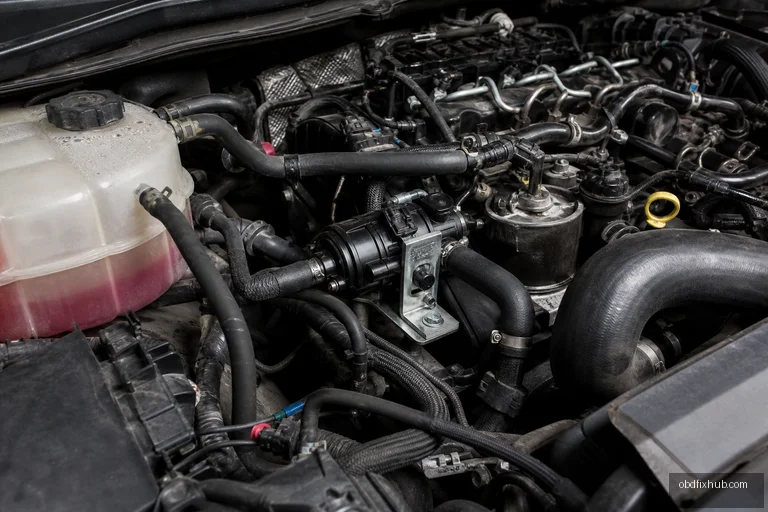
P24A8 EGR cooler coolant pump performance means the engine computer has detected that the exhaust gas recirculation cooler’s coolant pump is not producing the expected flow or operating result. The pump may be faulty, but a restricted coolant passage, trapped air, damaged wiring, low coolant level, or a failing temperature sensor can trigger the same code. Correct diagnosis matters because replacing the pump without proving the fault is a common and expensive mistake.
What Does P24A8 Mean?
P24A8 is an OBD-II powertrain code associated with the performance of the EGR cooler coolant pump. It is found most often on diesel engines equipped with an electrically driven auxiliary coolant pump and a separate low-temperature cooling circuit.
The EGR cooler reduces the temperature of exhaust gas before it returns to the intake. The auxiliary pump circulates engine coolant through that cooler, particularly during conditions where the main water pump does not provide sufficient flow. If the powertrain control module sees an implausible coolant temperature change, insufficient flow, or an incorrect pump response, it can store P24A8.
Exact code wording and test strategy can vary by manufacturer. Always compare the code with the vehicle’s service information, wiring diagram, and scan-tool data rather than relying on the generic description alone.
Common Symptoms of P24A8
Some vehicles will drive almost normally when this code first appears. Others enter reduced-power mode because the engine computer is protecting the EGR system and exhaust after-treatment components from excessive temperature.
- Illuminated check engine light
- Reduced engine power or limited boost
- Higher-than-normal EGR or exhaust temperature
- Cooling fan operation after the engine is switched off
- Unusual gurgling or humming from the auxiliary pump area
- Coolant loss, visible leakage, or a low coolant warning
- Additional EGR, turbocharger, DPF, or coolant temperature codes
- Failed emissions testing
A pump can also fail intermittently. For example, it may operate when cold but stop after its internal motor warms up. In that case, the vehicle may complete a short road test normally and set P24A8 only during towing, highway driving, or an active regeneration.
Most Likely Causes of P24A8
1. Failed EGR cooler coolant pump
The electric motor, internal impeller, or electronic control section can wear out. A pump that makes noise is not automatically good; an impeller can spin while producing very little coolant flow. Conversely, a silent pump may be normal if the control module has not commanded it on.
2. Air trapped in the cooling circuit
Air pockets are especially common after coolant service, EGR cooler replacement, hose replacement, or a cooling-system repair. Air around the pump can prevent prime, causing a performance fault even though the pump itself passes a basic electrical test.
3. Restricted hose, cooler, or passage
Collapsed hoses, contaminated coolant, sealant debris, and internal deposits can restrict the low-temperature circuit. A restriction may allow the pump to draw normal current while the cooler receives inadequate flow. This is why a simple voltage check cannot confirm a healthy system.
4. Electrical or communication fault
Inspect the pump connector for coolant intrusion, corrosion, loose terminals, and overheated pins. Depending on the design, the pump may have a power and ground circuit, a pulse-width control wire, or a network-controlled module. A broken control wire can make a good pump appear defective.
5. Low coolant or incorrect coolant mixture
A low reservoir level can introduce air into the auxiliary circuit. The wrong coolant, heavy contamination, or a recent mixture of incompatible products may also affect circulation. Do not open the cooling system on a hot engine; diesel cooling systems can remain pressurized long after shutdown.
6. Faulty temperature or flow feedback
The engine computer may judge pump performance through coolant temperature sensors rather than a dedicated flow sensor. A biased sensor, damaged harness, or poor connector can therefore set P24A8 even when coolant is moving correctly.
How to Diagnose P24A8 Correctly
- Scan all modules and save freeze-frame data. Record coolant temperature, engine speed, vehicle speed, EGR command, battery voltage, and related fault codes. Codes stored at the same time often reveal whether the problem is electrical, thermal, or mechanical.
- Check coolant level and inspect for leaks. Examine the pump housing, EGR cooler, quick-connect fittings, hoses, and reservoir. A dried coolant trail around a connector deserves particular attention.
- Use the scan tool’s actuator test. Command the auxiliary pump on and listen for a consistent operating sound. Do not treat sound as proof of flow; verify that the pump receives the correct command and that the current draw is sensible for that vehicle.
- Test power, ground, and voltage drop. Check the circuit under load, not only with a high-impedance meter. A corroded ground may show 12 volts with no load but collapse when the pump operates.
- Verify circulation and temperature change. Follow the manufacturer’s procedure for measuring hose temperature, coolant flow, or pressure. An infrared thermometer can help compare inlet and outlet temperatures, but it should support—not replace—the factory test procedure.
- Bleed the cooling system properly. Use the specified vacuum filling or bleeding method. Some vehicles require a scan-tool routine that cycles the auxiliary pump and opens electronically controlled valves.
- Recheck after repair. Clear the code, run the required pump activation test, and complete a road test under the conditions shown in the freeze-frame data. A successful short idle test does not prove the system will work during a high-load event.
How to Fix P24A8
The correct repair depends on the failed part. Replace the EGR cooler pump when it has incorrect electrical operation, excessive current draw, no commanded response, or inadequate flow after the circuit and cooling system have been verified. Do not replace it solely because the code mentions the pump.
If the system contains air, repair any leak and refill it using the manufacturer’s bleeding procedure. If a hose or EGR cooler is restricted, remove the restriction or replace the affected component. Wiring repairs should include terminal tension checks and sealed connections; simply spraying contact cleaner into a loose connector is not a lasting repair.
After installation, confirm the coolant level when cold, inspect for leaks during warm-up, and verify that the pump operates through its full commanded range. On some diesel vehicles, clearing the code alone is not enough—the monitor must run during a specific temperature and load condition before the repair can be confirmed.
Can You Drive With P24A8?
Short, gentle driving may be possible if the engine temperature is normal and no coolant is leaking, but continued operation under heavy load is risky. An ineffective EGR cooler can contribute to excessive intake or exhaust temperatures and may lead to reduced power, turbocharger-related faults, or expensive after-treatment problems.
Stop driving and arrange immediate inspection if the coolant warning appears, the temperature gauge rises, steam is visible, the engine loses substantial power, or the cooling fan runs continuously. A P24A8 vehicle used for towing or frequent DPF regeneration should be diagnosed promptly rather than monitored indefinitely.
Key Takeaway
P24A8 identifies an EGR cooler coolant pump performance problem, but it does not prove that the pump itself has failed. Check coolant level, air, flow restrictions, power and ground, control signals, and temperature feedback before authorizing parts. A proper actuator test followed by a verified flow and road test is the fastest way to avoid an unnecessary pump replacement.
Frequently Asked Questions
Is P24A8 always caused by a bad EGR coolant pump?
No. A low coolant level, airlock, blocked cooler, wiring fault, poor ground, or inaccurate temperature sensor can produce the same performance code.
Can low coolant cause P24A8?
Yes. Low coolant can allow air into the auxiliary EGR cooling circuit, preventing the pump from maintaining the flow expected by the engine computer.
How much does it cost to fix P24A8?
Cost varies widely by vehicle. A bleeding or wiring repair may be relatively inexpensive, while an auxiliary pump, EGR cooler, or difficult-access labor can cost considerably more. Diagnosis should come before a parts estimate.
Can I clear P24A8 without repairing it?
You can clear the stored code with a scan tool, but it will return if the fault remains. Clearing it also removes useful freeze-frame information, so record the data before erasing anything.
Does P24A8 affect emissions or DPF regeneration?
It can. The EGR cooler and exhaust temperature strategy are linked to emissions control, and some vehicles may restrict regeneration or engine performance until the cooling fault is corrected.




