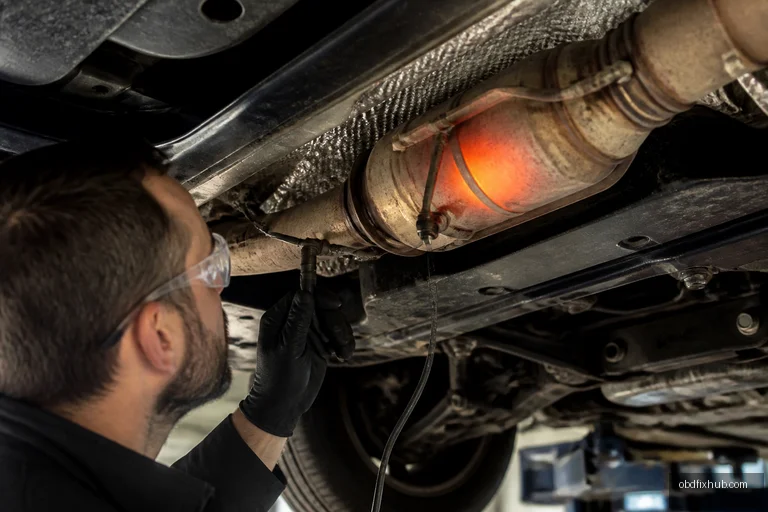
P24C2 means the engine computer has detected an implausible relationship between two exhaust gas temperature readings. It does not automatically prove that one sensor is defective. A damaged sensor, corroded wiring, an exhaust leak, incorrect sensor installation, or a diesel particulate filter regeneration problem can all produce this code. The vehicle may still drive, but continued use can prevent proper DPF regeneration and turn a relatively small electrical repair into an expensive emissions-system failure.
What Does the P24C2 Code Mean?
The diagnostic trouble code P24C2 Exhaust Temperature Sensors Correlation Fault is set when the powertrain control module compares exhaust gas temperature sensors and finds readings that do not agree within an expected range. Modern diesel systems commonly use several sensors before and after the diesel oxidation catalyst, DPF, and sometimes the selective catalytic reduction system.
The exact wording can vary by manufacturer. On one vehicle, P24C2 may refer to the correlation between two specific EGT sensors; on another, the service information may identify them by bank, sensor number, or catalyst position. Always confirm the definition using a manufacturer-level scan tool or reliable vehicle-specific repair database rather than relying only on a generic code reader.
Why Does P24C2 Set?
An exhaust temperature sensor is usually a thermistor. Its resistance changes with heat, and the engine computer converts that change into a temperature value. If one sensor suddenly reports 900°C while a neighboring sensor reports 250°C under the same operating conditions, the module recognizes that the readings are physically unlikely.
Most common causes
- Failed EGT sensor: The sensing element can drift, become slow to respond, or fail open or shorted.
- Damaged wiring: Heat near the turbocharger and DPF can harden insulation, melt connectors, or break conductors inside the insulation.
- Connector corrosion: Water, road salt, and condensation can increase resistance and distort the signal.
- Exhaust leakage: A leak near a temperature sensor can expose it to outside air and make its reading differ from the other sensors.
- Incorrect sensor position: A sensor installed in the wrong port or with the wrong part number can create a genuine correlation error.
- DPF regeneration problems: An incomplete regeneration, excessive soot loading, or abnormal fueling can produce temperature patterns the module does not expect.
- Calibration or control-module issues: Less commonly, outdated software or a fault in the engine control module causes an incorrect comparison.
Symptoms of an Exhaust Temperature Sensor Failure
The symptoms depend on whether the sensor has failed completely or is merely inaccurate. A sensor that reports an implausible temperature can be more disruptive than one that fails outright because the ECU may attempt to protect the emissions system using incorrect data.
- Check Engine or emissions warning light
- Reduced engine power or limp-home mode
- DPF regeneration that will not start or will not complete
- More frequent regeneration attempts
- Increased fuel consumption
- Cooling fan operation after shutdown
- Unusual exhaust odor or excessive exhaust heat
- Hard starting or poor drivability in severe cases
- Additional DPF, EGR, turbocharger, or temperature-sensor codes
On a scan tool, one of the most useful clues is a temperature value that is obviously unrealistic with a cold engine. After the vehicle has sat overnight, all EGT sensors should normally be close to ambient temperature. A sensor showing 300°C before the engine starts is not measuring a real exhaust condition.
Can You Drive with a Faulty Exhaust Gas Temperature Sensor?
Short, gentle driving to a repair facility is often possible, but extended driving is not recommended. The vehicle may disable automatic DPF regeneration, reduce power, or use a protective strategy that increases exhaust temperatures. Continuing to drive until the vehicle enters severe limp mode can leave the DPF overloaded with soot.
Stop driving and arrange professional assistance if the warning light is flashing, the vehicle has very low power, the exhaust or turbocharger is glowing red, the engine is overheating, or the DPF warning is also illuminated. Avoid attempting a forced regeneration until the underlying P24C2 fault has been diagnosed; forcing regeneration with unreliable temperature feedback can damage the DPF or catalyst.
Can You Drive with a Bad Particulate Matter Sensor?
A particulate matter sensor is different from an exhaust gas temperature sensor. It measures soot concentration in the exhaust, while an EGT sensor measures heat. A vehicle with a failed PM sensor may continue to run normally, but the ECU can disable emissions-monitoring functions, block regeneration strategies, or store additional fault codes.
Driving a short distance is usually less risky than ignoring the fault for weeks. The practical risk is that a PM-sensor fault can hide a real DPF problem or prevent the system from confirming that regeneration worked. Repair it promptly, especially if the vehicle is used mainly for short trips.
How to Diagnose P24C2 Correctly
Replacing the most accessible temperature sensor is a common mistake. A proper diagnosis compares sensor behavior, wiring integrity, exhaust condition, and freeze-frame data.
- Record all codes and freeze-frame data. Note engine load, vehicle speed, coolant temperature, exhaust temperatures, and whether the code appeared during regeneration.
- Check cold-soak readings. After several hours of rest, compare every EGT sensor with ambient temperature and with each other.
- Inspect the harness physically. Follow the wiring from the sensor to the main harness. Look for melted insulation, stretched wires, contact with the exhaust, and oil or water inside connectors.
- Compare live data during warm-up. The sensors should rise in a believable sequence. A value that freezes, jumps suddenly, or remains far from its neighbors is suspicious.
- Test resistance against specifications. Use the manufacturer’s temperature-to-resistance chart. Do not substitute a generic resistance value because EGT sensor designs differ.
- Check for exhaust leaks. Inspect flanges, flex pipes, sensor bosses, and DPF joints for soot marks or a ticking noise during cold start.
- Evaluate DPF operation. Check calculated soot load, differential pressure, regeneration history, and related pressure or temperature codes.
Repair Options and Typical Fixes
If testing confirms a defective EGT sensor, replacement is normally straightforward, although heat-seized threads can make removal difficult. The sensor should be replaced with the correct part for its exact location. Before installation, repair the harness and verify that the connector terminals grip properly; a new sensor will fail again if the circuit remains overheated or loose.
For wiring faults, use heat-resistant automotive wire and secure the harness away from the exhaust. Ordinary electrical tape is not a durable repair in this area. If an exhaust leak is found, repair it before clearing the code, because fresh air entering upstream of the sensor can continue to create false temperature relationships.
After the repair, clear the codes and perform the manufacturer’s required drive cycle or regeneration verification. Do not judge the repair solely because the warning light went out immediately. The ECU may need to observe several temperature changes before it completes its correlation test.
P24C2 Compared with P242C
P24C2 and P242C are not the same code. P24C2 generally identifies a correlation problem between exhaust temperature sensor signals. P242C is commonly described as an exhaust gas temperature sensor circuit low fault, often associated with a particular bank and sensor position. The precise definition is manufacturer-dependent, so the vehicle make, model, engine, and full scan-tool description matter.
This distinction is important during diagnosis. A correlation code calls for comparison between sensors and inspection of the exhaust system, while a circuit-low code points more directly toward a short to ground, low signal voltage, wiring damage, or a failed sensor. Treating both codes as simple sensor replacements can waste time and money.
Practical Tips That Prevent Repeat Failures
- Photograph the original sensor routing before removal; many sensors use location-specific wiring lengths.
- Never pull on the wires to loosen a seized sensor connector.
- Use scan-tool live data before and after repair, not just the dashboard warning light.
- Investigate repeated DPF regeneration attempts instead of replacing sensors indefinitely.
- Check for software updates when all sensor tests pass but the correlation code returns.
Summary
P24C2 indicates that the ECU does not trust the relationship between exhaust temperature sensors. The most likely causes are a failed EGT sensor, heat-damaged wiring, connector corrosion, an exhaust leak, or abnormal DPF regeneration. You can often drive carefully to a repair shop, but ignoring the fault may result in a blocked DPF, reduced power, or costly catalyst damage. Compare cold and hot live-data readings, inspect the harness thoroughly, and confirm the exact sensor location before authorizing parts replacement.
Frequently Asked Questions
What does the fault code P242C mean in a car?
P242C commonly indicates a low signal or low circuit condition in a specified exhaust gas temperature sensor circuit, often identified as Bank 1 Sensor 3. The exact sensor designation varies by vehicle, so verify it with manufacturer-specific service information.
What are the symptoms of an exhaust temperature sensor failure?
Typical symptoms include a Check Engine light, failed or incomplete DPF regeneration, reduced power, increased fuel consumption, cooling-fan operation, and additional emissions-system codes. Some failures cause no noticeable drivability change at first.
Can I drive with a faulty exhaust gas temperature sensor?
Short-distance driving to a repair facility is often acceptable if the vehicle runs normally and no severe warnings are present. Avoid long trips, towing, or forcing a regeneration until the sensor system has been tested.
Can I drive with a bad particulate matter sensor?
Usually, the vehicle will continue to run, but the ECU may disable or mismanage DPF monitoring and regeneration. Have the fault diagnosed soon, particularly if the DPF warning, reduced power, or frequent regeneration is also present.




