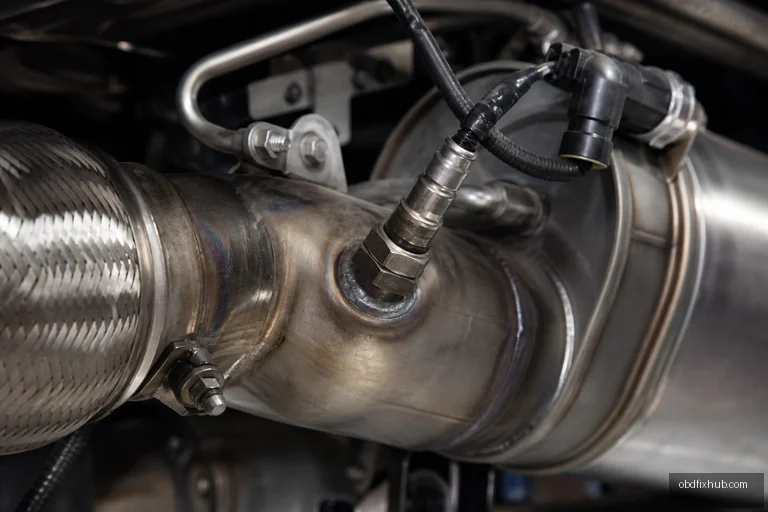
P24E2 Ammonia Sensor Circuit Performance: Meaning, Causes, Symptoms & Fix
P24E2 ammonia sensor circuit performance means the engine control system has detected an implausible, unstable, or out-of-range signal from the NH3 sensor in the diesel aftertreatment system. The sensor itself may be faulty, but damaged wiring, poor electrical power, an exhaust leak, incorrect DEF dosing, or an SCR system problem can trigger the code as well. A proper diagnosis should test the complete system before anyone replaces the sensor.
What Does P24E2 Mean?
On most diesel vehicles, P24E2 refers to NH3 sensor circuit range or performance. NH3 is ammonia, and the sensor is usually installed around the SCR catalyst to monitor ammonia slip. The powertrain control module uses this information to judge whether the selective catalytic reduction system is dosing DEF correctly and cleaning nitrogen oxides efficiently.
The exact wording and test strategy can vary by manufacturer. Some vehicles use a heated ammonia sensor with an integrated control module and CAN communication, while others use a sensor assembly that reports data through a dedicated circuit. For that reason, the factory service information and vehicle-specific wiring diagram are more reliable than a universal voltage chart.
Common Symptoms of P24E2
P24E2 does not always cause an immediate drivability problem. The engine may run normally because the fault is located in the emissions system rather than the fuel or ignition system. However, ignoring it can lead to an emissions warning, reduced power, or a starting restriction on some diesel platforms.
- Check Engine Light or service emissions warning
- DEF, AdBlue, or SCR system warning
- Reduced engine power or limited torque
- Increased DEF consumption or unusually low DEF consumption
- Failed emissions inspection
- Inaccurate range or countdown messages on the driver display
- Stored companion codes for NOx sensors, DEF dosing, SCR efficiency, or CAN communication
A useful real-world clue is the timing of the warning. If P24E2 appeared immediately after exhaust or DEF-system work, inspect disturbed connectors, harness routing, and sensor installation before assuming the sensor failed internally.
Most Likely Causes of P24E2
1. Failed or contaminated ammonia sensor
The NH3 sensor operates in a hot, chemically aggressive exhaust environment. Aging, thermal shock, soot, condensation, or deposits from poor-quality DEF can cause slow response or readings that do not match the expected exhaust conditions. Do not clean the sensing element with solvent or compressed air unless the manufacturer specifically permits it; many sensors are easily damaged.
2. Wiring, connector, or ground problems
Heat-damaged insulation, corrosion inside the connector, loose terminals, and a poor ground can all create a performance fault. Harnesses near the SCR catalyst often look intact from above but are brittle or rubbed through underneath. A voltage-drop test under load is more informative than simply checking continuity with the connector unplugged.
3. Exhaust leaks near the sensor
An exhaust leak upstream of the NH3 sensor can pull in outside air and distort the measured gas concentration. Leaks at clamps, flex sections, sensor threads, or SCR joints may be small enough to escape visual inspection. Soot tracks, a ticking noise during cold start, or a leak that changes with engine load are important clues.
4. DEF dosing or SCR catalyst problems
P24E2 can be a symptom rather than the original failure. A restricted DEF injector, crystallized dosing nozzle, incorrect DEF pressure, contaminated fluid, or a damaged SCR catalyst can create ammonia levels that do not fit the control module’s expected model. If related reductant or SCR efficiency codes are present, diagnose them together.
5. Software or communication faults
Some ammonia sensor assemblies communicate digitally with the vehicle. Low system voltage, a failed sensor controller, CAN wiring faults, or outdated control-module software can make a valid sensor appear implausible. Check for communication codes and technical service bulletins before ordering a replacement assembly.
How to Diagnose P24E2 Correctly
- Record all codes and freeze-frame data. Note engine speed, exhaust temperature, vehicle speed, DEF level, battery voltage, and whether the fault is current or stored. Companion codes often reveal the first failure.
- Confirm the code with a capable scan tool. A basic code reader may display P24E2 but cannot show NH3 sensor temperature, calculated ammonia concentration, heater status, or communication data. Use a scan tool that supports the vehicle’s aftertreatment system.
- Inspect the sensor and harness. Look for melted loom, stretched wiring, water intrusion, green corrosion, missing heat shields, and a sensor that has been installed at the wrong angle. Never unplug a hot sensor or force a seized exhaust fitting.
- Check power, ground, and communication circuits. Compare measurements with the OEM specifications. Test voltage while the circuit is loaded, verify the ground voltage drop, and check CAN resistance or signal integrity only according to the manufacturer’s procedure.
- Check exhaust temperature and dosing conditions. An ammonia sensor cannot be evaluated properly if the exhaust never reaches the temperature required for its monitor. Confirm that exhaust temperature sensors, DEF pressure, injector operation, and SCR operating conditions are plausible.
- Look for an exhaust leak and DEF crystallization. White deposits around the injector or pipe joints can indicate DEF leakage or poor atomization. Repair the underlying issue before installing a new NH3 sensor, or the replacement may fail again.
- Perform the required reset and drive cycle. After the repair, clear the code only after documenting the fault. Many vehicles require an aftertreatment relearn, sensor initialization, or a specific road test before the monitor can run.
Repair Options: What Usually Fixes P24E2?
The correct repair depends on the test results. A corroded terminal may require connector repair and harness protection. An exhaust leak needs a proper gasket, clamp, or pipe repair. A blocked DEF injector may need cleaning or replacement, followed by a dosing-system test. If the sensor fails its heater, internal plausibility, or communication tests, replacing the complete NH3 sensor assembly is normally the appropriate repair.
Use an OEM or proven OE-quality sensor whenever possible. Cheap universal replacements may have incorrect calibration, connector pinouts, or software compatibility. On vehicles with a separate ammonia sensor module, confirm whether the module and sensor must be programmed or initialized after installation.
Can You Drive With P24E2?
Short-distance driving is often possible if the vehicle has no severe power reduction, overheating, or active exhaust warning. It is not a code to ignore for weeks. Some diesel vehicles begin a mileage countdown or impose a no-start condition after the emissions fault remains unresolved, and continued operation with incorrect DEF dosing can damage the SCR catalyst.
If the warning is accompanied by severe loss of power, excessive white vapor, a strong ammonia smell, or multiple aftertreatment codes, arrange diagnosis promptly. Do not bypass the system or disconnect the sensor; that can create additional faults and may violate emissions regulations.
Key Takeaway
P24E2 identifies an ammonia sensor circuit performance problem, but it does not automatically prove that the NH3 sensor is bad. Start with the complete fault-code picture, inspect the hot-side wiring and exhaust for leaks, verify sensor power and communication, and then evaluate DEF dosing and SCR operation. This approach prevents an expensive sensor replacement from masking the real cause.
Frequently Asked Questions
Is P24E2 the same as an ammonia sensor failure?
No. It means the signal or sensor performance is outside the expected range. The cause may be the sensor, wiring, power supply, exhaust leakage, DEF dosing, SCR catalyst, or software.
Can low-quality DEF cause P24E2?
Yes. Contaminated, diluted, or incorrect DEF can affect dosing and SCR chemistry, leaving ammonia levels that do not match the control module’s expected values. Test the fluid and dosing system before replacing the sensor.
How much does a P24E2 repair cost?
Cost varies widely. A wiring repair or exhaust clamp may be relatively inexpensive, while an NH3 sensor assembly, programming, or SCR-related repair can cost substantially more. Diagnosis is essential because the code alone does not identify the failed part.
Will clearing P24E2 fix the problem?
Clearing the code only removes the stored warning temporarily. If the fault remains, the monitor will usually fail again after the required temperature and driving conditions are met.




