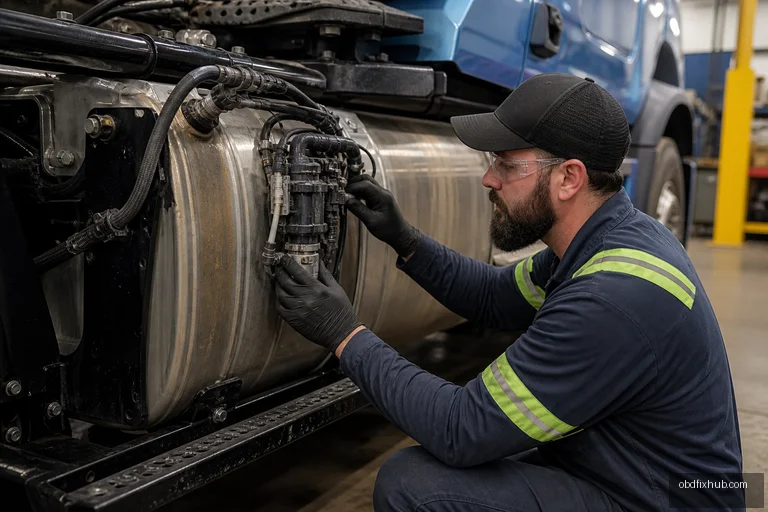
P24F6 exhaust aftertreatment fuel air purge valve stuck open means the engine control system detects that the valve used to purge fuel from the aftertreatment dosing circuit is allowing air flow when it should be closed. On a heavy-duty diesel, this fault is usually related to the hydrocarbon injector, also called the AHI or fuel doser, rather than the gasoline-engine EVAP system. The truck may still run, but regeneration can fail, fuel dosing can become inaccurate, and continued driving may lead to more expensive aftertreatment damage.
This is an informational diagnosis topic rather than a parts-shopping problem: the correct repair depends on confirming whether the valve, wiring, air supply, actuator, or AHI module is actually at fault.
What P24F6 Means
The aftertreatment fuel air purge valve controls compressed air used to clear residual diesel fuel from the hydrocarbon injector and its delivery passage. The control module commands the valve closed or open at specific times, particularly around regeneration and post-injection purge routines. When the valve is reported as stuck open, the measured position or system response does not match the requested state.
On some trucks, P24F6 appears with a manufacturer-specific suffix such as P24F600 or P24F700. The additional digits can identify the failure type or diagnostic status, so always read the complete code with a heavy-duty scan tool and check the OEM service information.
Common P24F6 Symptoms
The symptoms depend on how far the valve is open and whether the engine controller disables dosing as a protective measure. A truck with this code may show only a warning lamp at first, while another may experience repeated failed regenerations.
- Check Engine, emissions, or aftertreatment warning light
- Regeneration that will not start, stops early, or repeatedly requests a parked regen
- Low exhaust temperature increase during an active regeneration
- Incorrect or unstable hydrocarbon injector operation
- Excessive white smoke or an unusual diesel odor during attempted regeneration
- Reduced engine power or an inducement countdown on emissions-controlled vehicles
- Additional AHI, dosing, exhaust temperature, or NOx-related fault codes
A useful field clue is the timing of the problem. If the fault appears only when regeneration begins, suspect the purge circuit, doser, or its control strategy before condemning the entire aftertreatment system.
Why the Purge Valve Gets Stuck Open
Carbon, soot, or fuel contamination
The purge valve operates in a harsh environment. Oil mist, diesel residue, moisture, and carbon can contaminate the valve or restrict its moving pintle. A doser that has been leaking or coking can contaminate the purge passage, making a valve appear electrically healthy but mechanically unable to seal.
Damaged air lines or fittings
A cracked, incorrectly routed, or oil-soaked pneumatic line can change the pressure reaching the actuator. Loose fittings may create a constant air leak, while a blocked line can prevent the valve from returning to its commanded position. Inspect the line from the regulated air source to the valve, not just the connector at the valve.
Electrical and control faults
Common electrical causes include corroded terminals, a shorted control wire, poor ground, water intrusion, and a failed solenoid or position sensor. Harness damage is particularly common near the frame, exhaust shielding, and aftertreatment brackets where vibration and heat are severe.
AHI module or actuator failure
On some Mack and Volvo applications, the purge function is integrated with or mounted close to the AHI module. If an internal actuator fails, replacing an external hose or clearing the code will not solve the problem. Manufacturer-specific diagrams are essential because valve placement and testing procedures vary by engine and model year.
How to Diagnose P24F6 Correctly
- Record every code and freeze-frame value. Look for related air pressure, doser, temperature, and regeneration faults. A second code may identify the root cause.
- Confirm the complaint with a capable scan tool. Check commanded valve state, actual position if available, regeneration status, and aftertreatment air pressure.
- Perform the OEM actuator test. Listen for the valve or solenoid operating and verify that the pressure or position changes. Do not rely on sound alone; a clicking solenoid can still have a stuck mechanical valve.
- Inspect the harness and air circuit. Look for melted insulation, green terminals, rubbed wires, blocked hoses, and leaks. Wiggle-testing the harness while monitoring scan data can reveal an intermittent fault.
- Check the fuel doser and purge passage. A restricted or leaking hydrocarbon injector can create the conditions that caused the valve to stick.
- Verify the repair under operating conditions. Clear the code only after the fault is corrected, then run the appropriate service regeneration or road test and confirm that dosing and exhaust temperatures behave normally.
Never probe an active exhaust component casually during a regeneration. Exhaust surfaces can exceed several hundred degrees Celsius, and fuel or cleaning chemicals near the doser can create a fire risk. Follow the truck manufacturer’s lockout, pressure, and temperature precautions.
What Happens If the Valve Is Stuck Closed?
If the exhaust aftertreatment fuel air purge valve is stuck closed on a Mack truck, the system may be unable to purge residual fuel from the AHI injector and delivery passage. The engine controller can detect inadequate purge flow, cancel regeneration, set a different purge-related diagnostic code, or eventually derate the truck.
A stuck-closed valve is not the same fault as P24F6, which describes a stuck-open condition. However, both failures can produce similar symptoms: failed regeneration, abnormal doser operation, and aftertreatment warnings. The commanded state and measured air-flow response are what separate the two conditions.
Where Is the Aftertreatment Purge Air Actuator Located?
The aftertreatment purge air actuator is normally located on or near the exhaust aftertreatment fuel doser/AHI module, with a small pneumatic line and an electrical connector attached. The AHI injector is installed in the exhaust pipe upstream of the diesel oxidation catalyst, but the actuator may be mounted on the dosing module, on a nearby bracket, or remotely along the air supply circuit.
Its exact location differs between Mack, Volvo, and engine configurations. Follow the small air line from the AHI or fuel doser and use the vehicle’s wiring and component-location diagram. Do not confuse this actuator with the gasoline EVAP purge valve or with the DEF injector; they perform different jobs.
Can You Drive With a Related EVAP Vent Valve Stuck Closed?
A gasoline EVAP vent valve stuck closed is a separate issue from P24F6. It can prevent the fuel tank from venting correctly, cause a difficult refueling condition, create excessive tank vacuum or pressure, and trigger an EVAP warning light. Short-distance driving to a repair facility may be possible if the engine runs normally and there is no fuel odor, but extended driving is not advisable.
If the tank collapses, fuel leaks, the vehicle stalls, or you smell raw fuel, stop driving and arrange professional assistance. Also avoid substituting EVAP parts on a diesel aftertreatment system simply because the words purge valve appear in both descriptions.
Can You Drive With P24F6?
Driving a short distance to a qualified repair shop is often possible when there is no active derate, severe smoke, fuel leak, or overheating. Do not keep postponing the repair. Repeated failed regeneration can load the diesel particulate filter, contaminate the oxidation catalyst, and turn a relatively contained valve or wiring repair into a complete aftertreatment service.
Repair Options and Typical Fixes
The repair may involve cleaning or replacing a contaminated doser, replacing the purge valve or actuator, repairing wiring, correcting an air-line leak, or replacing the AHI module. Parts should not be selected from the code alone. First confirm the valve command, air pressure, electrical integrity, and doser condition.
After installation, many trucks require an actuator calibration, dosing test, or service regeneration with the OEM diagnostic software. A code that returns immediately after replacement usually points to an unresolved wiring, air-supply, control, or contamination problem rather than a defective new part.
Key Takeaway
P24F6 identifies a problem in the diesel aftertreatment fuel purge circuit, most commonly around the AHI/hydrocarbon injector system. Start with the complete code set, inspect both the electrical and pneumatic circuits, and verify operation with an OEM actuator test. Repairing the actual cause early can prevent failed regenerations, derate events, and costly catalyst or DPF damage.
Frequently Asked Questions
What does P24F6 mean on a Volvo or Mack truck?
It indicates that the exhaust aftertreatment fuel air purge valve is being detected as stuck open or not responding as commanded. The exact test criteria vary by engine, software version, and manufacturer.
What does an EVAP purge valve stuck open cause?
On a gasoline vehicle, it can cause rough idle, hard starting, stalling after refueling, lean fuel trims, and an EVAP warning code. That system is different from the diesel AHI purge circuit involved in P24F6.
Where is the aftertreatment purge air actuator?
It is generally on or near the AHI fuel doser and the upstream aftertreatment exhaust pipe, although some configurations use a nearby remote actuator. Use the OEM component-location diagram for the specific truck.
Can I drive with an EVAP vent valve stuck closed?
Usually only for a short trip to a repair facility if the vehicle runs normally and there is no fuel smell, leak, stalling, or tank deformation. A persistent venting problem should not be ignored.
Should I replace the AHI module immediately?
No. Test the wiring, actuator command, air supply, purge passage, and hydrocarbon injector first. A contaminated hose or damaged harness can set the same general fault and make an expensive module replacement unnecessary.




