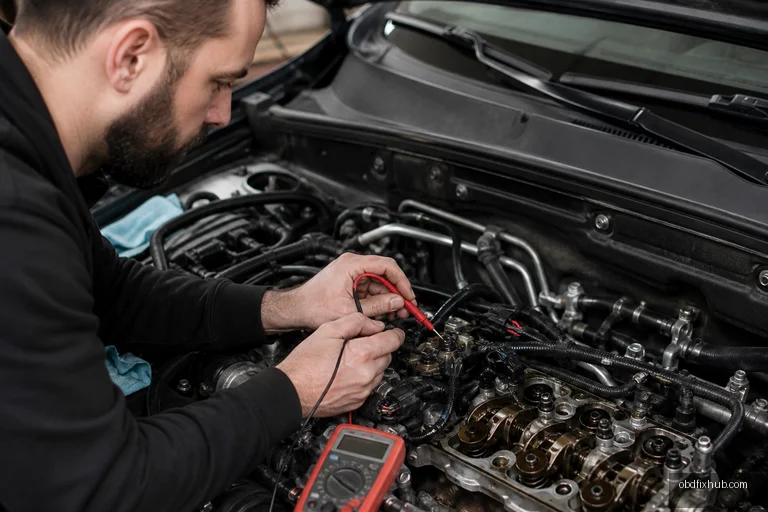
Search intent: informational. Drivers searching for P2645 Rocker Arm Actuator Control Circuit Open usually want to know whether the problem is a failed solenoid, damaged wiring, or a serious engine fault. P2645 normally indicates an electrical open in the rocker arm actuator control circuit, while P2646 is generally a performance or stuck-off code. The vehicle may still run, but it should be diagnosed promptly because continued driving can cause poor valve timing, reduced power, and additional engine faults.
What Does Code P2645 Mean?
OBD-II code P2645 means the powertrain control module, or PCM, has detected an open circuit in the rocker arm actuator control system. This system changes valve lift or valve timing so the engine can balance power, fuel economy, emissions, and low-speed drivability. Depending on the vehicle, it may be called a rocker arm oil control solenoid, VTEC solenoid, variable valve lift actuator, or rocker arm actuator.
“Open circuit” is an important detail. The PCM expects to see a specific electrical load from the actuator and its wiring. If voltage cannot reach the solenoid, the ground side is interrupted, the connector is unplugged, or the solenoid coil is internally broken, the module can set P2645.
The exact definition can vary by manufacturer. Some vehicles identify a bank or actuator position in the factory service information, so always verify the code description for the specific engine rather than relying only on a generic scan-tool label.
P2645 vs. P2646: What Is the Difference?
P2645 generally points to an electrical circuit that is open. P2646 usually means the rocker arm actuator system is not performing as commanded or is stuck off. In practical terms, P2645 is more likely to lead you toward a connector, broken wire, fuse, power supply, or failed solenoid coil. P2646 can involve those parts too, but it more often requires checking oil pressure, oil passages, mechanical movement, and the actuator’s response.
It is possible for both codes to appear together. For example, a connector with oil intrusion may intermittently disconnect the solenoid, set P2645, and later cause a performance fault such as P2646. Replacing the actuator without repairing the connector will not solve that problem.
Common Causes of P2645
- Failed rocker arm actuator solenoid: An open or burned-out internal coil prevents current from flowing through the actuator.
- Broken or rubbed-through wiring: Harnesses near the cylinder head can become brittle, chafe against brackets, or break internally from vibration.
- Loose, corroded, or oil-filled connector: Oil can travel through some solenoid connectors and contaminate the terminals or harness.
- Blown fuse or missing power supply: A shorted actuator may blow the circuit fuse, leaving the replacement solenoid without power.
- Poor ground or damaged PCM driver circuit: This is less common, but a failed control driver can interrupt the circuit.
- Low, dirty, or incorrect engine oil: Oil quality usually contributes more directly to P2646, but it can prevent proper actuator operation and create related codes.
- Restricted oil passages or a sticking rocker mechanism: Sludge may limit hydraulic movement even when the electrical circuit is intact.
Symptoms You May Notice
The symptoms depend on whether the actuator is permanently inoperative or only failing intermittently. Some vehicles show only a check engine light, while others enter a reduced-power strategy to protect the engine and maintain emissions control.
- Check engine light or malfunction indicator lamp
- Reduced acceleration, especially at higher engine speed
- Rough idle or occasional hesitation
- Lower fuel economy
- Engine that feels restricted or unwilling to rev
- Cold-start noise or valve-train clicking in some applications
- Additional variable valve timing or rocker arm actuator codes
A useful real-world clue is a code that returns immediately after clearing, even before a road test. That pattern strongly suggests an electrical fault such as an open solenoid coil or missing circuit power. A code that returns only after the engine warms up or reaches a certain RPM deserves a broader inspection of oil pressure and mechanical operation.
How to Diagnose P2645 Correctly
Do not begin by replacing the rocker arm actuator based on the code alone. The actuator is often blamed because it is easy to access, but a damaged two-inch section of harness can produce exactly the same fault.
- Confirm the code and record freeze-frame data. Note engine speed, coolant temperature, battery voltage, and whether other codes are present. Low system voltage can create misleading actuator faults.
- Check the oil level and condition. If the oil is low, heavily sludged, or the wrong viscosity, correct that issue before judging the mechanical system.
- Inspect the actuator connector and harness. Look for bent terminals, green corrosion, oil inside the plug, broken locking tabs, heat damage, and wires stretched tightly around the cylinder head.
- Check the fuse and power feed. With the ignition switched on, verify that the actuator receives the expected supply voltage. A test light or multimeter should be used according to the wiring diagram.
- Test the control circuit under load. A wire may show continuity with an ohmmeter but fail when current flows. Voltage-drop testing is more reliable for finding high-resistance connections.
- Measure the solenoid coil resistance. Compare the reading with the manufacturer’s specification. An infinite reading commonly indicates an open coil, but do not condemn the part using a generic resistance value from another engine.
- Use an actuator command test when supported. A professional scan tool may command the solenoid on and off. Listen for a click, monitor current draw, and confirm that the PCM sees the expected response.
- Test oil pressure and mechanical movement if needed. If the circuit passes but P2645 or P2646 returns, inspect the oil control passages, rocker mechanism, and engine oil pressure.
How Do You Fix P2645?
The repair depends on the failed part. A corroded connector may need terminal replacement rather than simple cleaning. If the actuator coil is open, replace the correct solenoid or actuator assembly using the vehicle-specific procedure. If the fuse is blown, find the short that caused it before installing another fuse.
Repair damaged wiring with properly sized automotive wire, sealed splices, and protected routing. Avoid twisting wires together and covering them with ordinary household tape; heat, oil, and vibration will eventually expose that repair. After the repair, clear the code, perform the required actuator relearn if the manufacturer specifies one, and complete a drive cycle under the conditions stored in the freeze-frame data.
If the engine contains sludge or the oil is badly contaminated, an oil change may be necessary, but it is not a substitute for electrical testing. Repeatedly flushing the engine without proving oil-flow restriction can waste money and delay the actual repair.
Is It Safe to Drive With a P2646 Code?
A vehicle with P2646 may be safe for a short, gentle trip to a repair facility if the engine is running smoothly, the oil level is correct, and there is no flashing check engine light, severe loss of power, or abnormal valve-train noise. However, it is not a fault to ignore for weeks. The actuator may remain in the wrong position, affecting combustion and placing extra stress on the valve train or catalytic converter.
Stop driving and arrange a tow if the check engine light flashes, the engine misfires badly, oil pressure is low, the engine rattles, or the vehicle enters a dangerous reduced-power condition. P2646 is not automatically an emergency, but its symptoms and companion codes determine the risk.
What Causes a Rocker Arm Actuator to Go Bad?
The most common causes are heat, oil contamination, internal coil failure, vibration, and prolonged operation with dirty or incorrect oil. Electrical terminals can lose tension over time, while harness insulation becomes hard near hot cylinder-head components. In systems that use oil pressure to move the rocker mechanism, sludge or restricted passages can make a healthy solenoid appear ineffective.
Vehicle-specific service bulletins are particularly valuable here. Some engines have known connector oil-leak paths, harness routing problems, or updated actuator designs. Checking technical service information before buying parts can prevent a repeat failure.
Final Takeaway
P2645 identifies an open rocker arm actuator control circuit, not proof that the actuator itself is defective. Start with the fuse, power supply, connector, wiring, and coil resistance; then investigate oil flow and mechanical operation if the electrical tests pass. For P2646, use the same disciplined approach but give greater attention to oil pressure, passages, and actuator performance. A proper circuit test is usually faster and cheaper than replacing parts by guesswork.
Frequently Asked Questions
What does code P2645 mean?
P2645 means the PCM has detected an open electrical circuit in the rocker arm actuator control system. The cause may be a failed actuator, broken wiring, poor connector contact, blown fuse, or—in rare cases—a PCM fault.
How do you fix code P2646?
Diagnose the circuit first, then check engine oil level and condition, oil pressure, oil passages, and rocker arm movement. Repair the wiring or connector, replace the faulty actuator if testing confirms it, and complete any required relearn procedure.
Can a bad oil change cause P2645?
Incorrect, low, or heavily contaminated oil is more commonly associated with actuator performance codes such as P2646. It can still contribute to related faults, so oil condition should always be checked before replacing electrical components.
Can I drive with P2645?
Short-distance driving may be possible if the engine runs normally and the check engine light is steady. Avoid driving if there is a flashing light, severe misfire, low oil pressure, loud valve-train noise, or major power loss.




