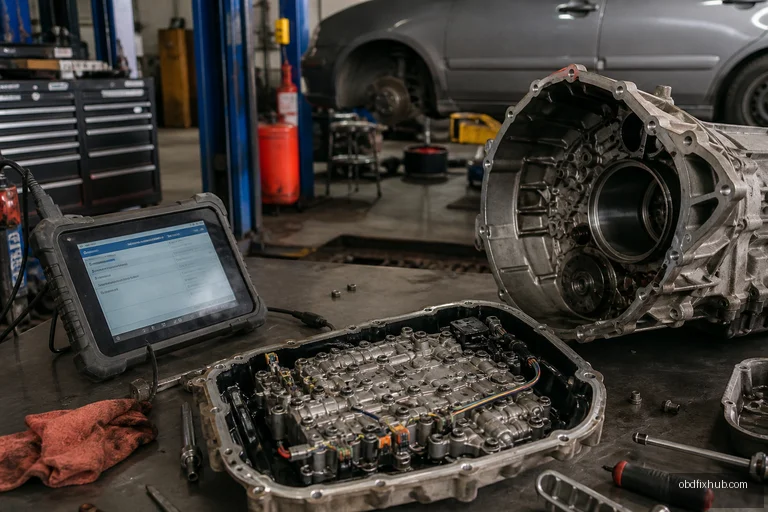
P2700 Transmission Friction Element Apply-Time Performance: Meaning, Causes, Symptoms & Fix
P2700 means the transmission control module has detected that a friction element—usually an internal clutch or brake band—did not apply within the expected time. In practical terms, the transmission is seeing a delay, slip, or abnormal pressure response during a gear change. The code does not automatically mean the entire transmission must be replaced; a restricted valve body passage, weak solenoid, low fluid level, wiring fault, or worn clutch can create the same result.
What Does P2700 Mean?
Automatic transmissions use friction elements to connect different gearsets. Depending on the transmission design, these elements may be clutch packs, a band, or a brake clutch. The transmission control module, or TCM, commands a solenoid to build hydraulic pressure and watches input and output speed sensors to confirm that the intended element applies correctly.
When the element applies too slowly, too quickly, or fails to hold the expected speed relationship, the TCM stores P2700. The exact wording and the element identified can vary by manufacturer, so the vehicle-specific service manual is essential. A generic scan tool may display only the broad code, while factory-level software can identify the affected clutch, gear, or shift event.
Common Symptoms of P2700
Drivers often notice a shift-quality problem before the check-engine light appears. A vehicle may still move normally when cold and become noticeably worse after the transmission reaches operating temperature, because hot fluid has lower viscosity and exposes pressure losses more clearly.
- Delayed engagement when selecting Drive or Reverse
- Harsh, flaring, or slipping gear changes
- Engine speed rising between shifts without matching acceleration
- Transmission stuck in one gear or limp mode
- Shuddering during a particular upshift or downshift
- Reduced fuel economy and poor acceleration
- Burnt-smelling, dark, or contaminated transmission fluid
A short delay followed by a hard engagement is especially useful diagnostic evidence. It can indicate that pressure is initially insufficient, then rises abruptly when a solenoid, valve, or clutch finally responds.
P2700 Transmission Friction Element Apply-Time Performance: Main Causes
1. Low, incorrect, or degraded transmission fluid
Low fluid can allow the pump to draw air, while the wrong fluid can alter clutch friction and solenoid response. Old fluid may contain clutch material that restricts small valve-body passages. Always check fluid level using the manufacturer’s temperature and inspection procedure; many modern transmissions have no traditional dipstick.
2. Faulty shift or pressure-control solenoid
A sticking solenoid may respond slowly even when its electrical resistance appears normal. Internal contamination, a damaged pintle, or a weak coil can cause an apply-time error. A resistance check is useful, but it cannot prove that the solenoid is hydraulically performing correctly under operating pressure.
3. Valve-body wear or restricted hydraulic passages
Valve-body bores can wear over time, allowing pressurized oil to leak past a spool valve. The result is delayed clutch application, particularly when the fluid is hot. A professional diagnosis may include line-pressure testing, solenoid current analysis, or removal and inspection of the valve body.
4. Internal clutch or band wear
Worn friction material, a damaged piston seal, or a cracked clutch drum can prevent the element from applying firmly. If the transmission shows excessive slip in one specific gear and the fluid contains significant friction material, internal wear becomes more likely than a simple electrical fault.
5. Wiring, sensor, or software problems
Corroded connectors, poor grounds, damaged wiring, or inaccurate input and output speed signals can make a correctly functioning transmission appear slow to the TCM. A software update may also be required for certain vehicles with known shift-calibration problems. Do not overlook other stored codes, because a speed-sensor or system-voltage fault may be the primary problem.
How to Diagnose P2700 Correctly
The most expensive mistake is replacing a transmission based on the code alone. A disciplined diagnosis separates an electrical control problem from a hydraulic or mechanical failure.
- Record every code and freeze-frame detail. Note fluid temperature, vehicle speed, commanded gear, engine load, and whether the code is current or history.
- Check the fluid and service history. Look for the correct level, unusual odor, metallic debris, and evidence of an incorrect fluid or recent repair.
- Inspect the harness and connectors. Pay particular attention to transmission-case connectors, grounds, fluid intrusion, and wiring routed near exhaust components.
- Road-test with live data. Compare commanded gear, turbine speed, output speed, slip speed, and solenoid command. A delayed change in actual speed relative to the command helps identify the failing event.
- Test electrical circuits and solenoids. Check power, ground, resistance, and circuit continuity against factory specifications. Use an oscilloscope or bidirectional scan tool when available.
- Measure hydraulic pressure if necessary. Pressure testing can reveal a weak pump, leaking valve body, or clutch circuit problem that electronic testing cannot confirm.
- Recheck after repair. Clear the code only after recording baseline data, then perform the required adaptive relearn or transmission drive cycle.
Adaptive values matter. Some TCMs learn clutch fill time over many shifts, so disconnecting the battery or replacing a solenoid without completing the relearn procedure can leave the transmission shifting poorly even after the original fault is repaired.
How Is P2700 Fixed?
The correct repair depends on the confirmed cause. A low-fluid condition may require fixing a leak and filling with the specified fluid. A contaminated solenoid can sometimes be replaced or serviced, while a damaged valve body may require refurbishment or replacement. If pressure testing and teardown confirm a worn clutch pack or failed piston seal, an internal transmission rebuild may be necessary.
A fluid flush is not a universal cure. On a severely worn transmission, aggressive flushing can loosen debris or change the symptoms without repairing the worn friction element. The safer approach is to diagnose first, inspect the fluid, and follow the vehicle manufacturer’s service procedure.
Can You Drive With P2700?
Short-distance driving may be possible if the vehicle shifts normally, but continued driving while the transmission is slipping can turn a solenoid or valve-body repair into a clutch and drum rebuild. Stop driving and arrange a professional inspection if the transmission flares between gears, loses Drive or Reverse, overheats, or enters limp mode.
Do Not Confuse This Automotive “Element” With Element Messenger
The word “element” in P2700 refers to a mechanical transmission friction element. It has no connection with Element, the messaging application built on the Matrix communication protocol. Searches for this code sometimes produce unrelated results because “Element” is also used as a technology and software brand.
What is the Element matrix used for?
Matrix is an open, decentralized protocol for real-time communication. It is used for messaging, group rooms, voice and video calls, file sharing, and connecting different Matrix servers through federation. Element is one of the best-known applications used to access Matrix, but Matrix itself is the underlying communication network and protocol.
What is the Element app?
Element is a cross-platform Matrix client available for desktop, web, iOS, and Android. People use it for one-to-one chats, communities, team collaboration, voice calls, and video meetings. Organizations can use the public service or host their own Matrix homeserver for greater control over accounts, data, and administration.
How secure is Element?
Element supports end-to-end encryption for compatible private conversations and encrypted rooms, which means the service should not be able to read message content in transit. Security still depends on device protection, account recovery settings, room configuration, identity verification, server administration, and whether a particular room is actually encrypted. Sensitive users should verify device keys and enable strong account security rather than assuming every conversation has identical protection.
Is Element Messenger free?
The Element app is generally free for personal use, and anyone can use the public Matrix network without buying a transmission-related product or service. Paid plans may apply to hosted homeservers, business administration, support, or enterprise features. Those costs are completely unrelated to diagnosing or repairing the P2700 automotive trouble code.
Quick Summary
- P2700 indicates abnormal apply timing or performance in a transmission friction element.
- Likely causes include fluid problems, solenoids, valve-body leakage, wiring faults, sensor errors, and internal clutch wear.
- Live transmission data, pressure testing, and a proper adaptive relearn are often more valuable than simply clearing the code.
- Do not approve a complete transmission replacement until electrical, hydraulic, and fluid-related causes have been tested.
- The “element” in P2700 is a transmission component, not the Element Matrix messaging application.
Best next step: record all scan-tool data, verify the fluid correctly, and have a transmission specialist perform a manufacturer-specific diagnosis before authorizing major repairs.
Frequently Asked Questions
Is P2700 a serious transmission code?
It can be serious because continued clutch slip creates heat and friction material, but the code does not prove catastrophic failure. Prompt diagnosis can sometimes identify a solenoid, wiring, fluid, or valve-body issue before internal damage spreads.
Can low transmission fluid cause P2700?
Yes. Low or aerated fluid can delay hydraulic clutch application and produce the apply-time error. Check the level using the exact temperature and procedure specified for the vehicle.
Will changing the transmission fluid fix P2700?
It may help when the fluid is low, incorrect, or badly degraded, but it will not repair a worn clutch, failed piston seal, defective solenoid, or worn valve body. Diagnosis should come before a fluid service decision.
Can I clear P2700 with a scan tool?
You can erase the stored code, but clearing it does not correct the cause. If the TCM detects the same apply-time problem during another drive cycle, the code and symptoms will return.




