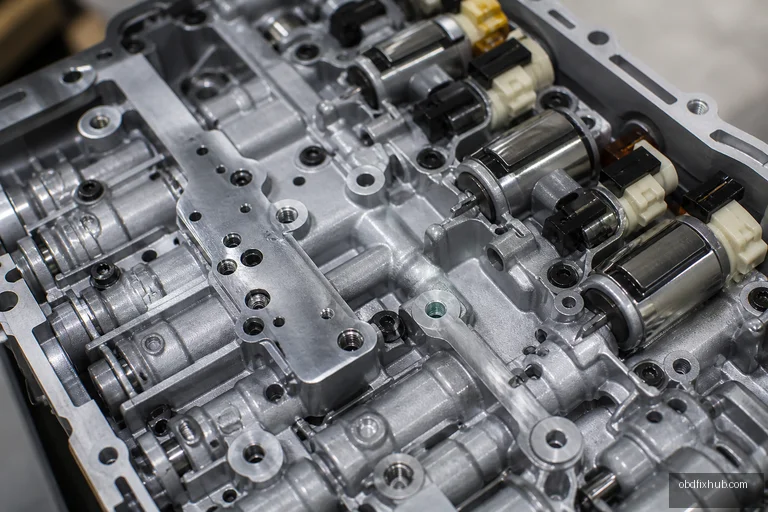
P2707 Shift Solenoid F Performance or Stuck Off means the transmission control module has detected that solenoid F is not responding as expected, or is not allowing the commanded hydraulic flow. The fault may come from the solenoid itself, its wiring, contaminated transmission fluid, a valve-body problem, or an internal transmission issue. You may be able to drive a short distance, but continued driving can turn a relatively contained electrical or hydraulic repair into expensive transmission damage.
What Does P2707 Mean?
Automatic transmissions use electrically controlled solenoids to direct pressurized transmission fluid through the valve body. The control module switches these solenoids on and off, or varies their duty cycle, to apply specific clutches and bands during gear changes. When the expected pressure, current, or gear response does not match the command, the module may store P2707.
The letter F identifies a particular solenoid circuit, but its physical position and function vary by transmission design. On one vehicle, solenoid F may control an upshift clutch; on another, it may influence a different gear or pressure circuit. Always use the vehicle-specific wiring diagram and service information rather than assuming that solenoid F has the same location across brands.
P2707 Symptoms to Watch For
A failed shift control solenoid can create both electrical and drivability symptoms. Some vehicles will enter a fail-safe strategy and remain in one gear, while others continue shifting but show harsh or delayed changes.
- Harsh engagement when selecting Drive or Reverse
- Delayed, missing, or erratic upshifts and downshifts
- Transmission slipping or engine speed flaring during a gear change
- Reduced-power or limp mode, often with the transmission locked in second or third gear
- Transmission warning light, check engine light, or flashing gear indicator
- Unexpected downshifts, shuddering, or a sensation that the vehicle is stuck in one gear
- Higher fuel consumption caused by incorrect shift timing
One useful diagnostic clue is the difference between a clean, repeatable failure and an intermittent one. A fault that appears after the transmission warms up often points toward fluid contamination, coil resistance changing with temperature, or a valve that begins sticking as components expand.
What Causes a Shift Solenoid to Perform Poorly or Stick Off?
Electrical faults
An open circuit, short to ground, short to voltage, damaged connector, or corroded terminal can prevent the module from controlling solenoid F. Harnesses near the transmission are exposed to heat, oil, vibration, and road debris. A connector may look acceptable externally while its terminal tension is too weak to maintain a reliable connection.
Dirty or incorrect transmission fluid
Worn clutch material and varnish can restrict the small filter or spool inside a solenoid. Low fluid level can also create unstable hydraulic pressure, while the wrong fluid may affect friction characteristics and valve operation. Do not treat a fluid change as a guaranteed cure if the fluid contains metal or has a strong burnt odor; those signs can indicate internal wear.
Valve-body or hydraulic problems
A sticking valve, worn bore, damaged separator plate, or restricted passage can mimic a failed solenoid. In that situation, replacing the electrical component alone may not solve the code because the commanded pressure still cannot reach the correct clutch circuit.
Internal transmission damage
A worn clutch pack, broken return spring, damaged accumulator, or leaking seal can cause the module to report a solenoid performance problem even when the solenoid passes an electrical test. This is why a proper diagnosis compares the solenoid command with actual gear operation and, where required, line-pressure readings.
How to Diagnose P2707 Correctly
Professional diagnosis starts with more than clearing the code and installing a solenoid. Record all stored, pending, and manufacturer-specific transmission codes before repairs. Codes related to fluid pressure, gear-ratio errors, or supply voltage may identify the primary fault.
- Check the fluid and service history. Verify the level using the manufacturer’s exact procedure and inspect the fluid for burnt smell, excessive debris, or water contamination.
- Inspect the harness and connector. Look for oil intrusion, pushed-back pins, broken insulation, and wiring that has rubbed against the case or exhaust.
- Measure solenoid resistance. Compare the reading with the factory specification at the correct temperature. A resistance test alone cannot prove that a solenoid is hydraulically healthy.
- Test power and control signals. A scan tool, multimeter, or oscilloscope can reveal missing voltage, an incorrect ground path, or a command that drops out when the harness is flexed.
- Verify hydraulic operation. If electrical tests pass, pressure testing and valve-body inspection may be necessary. Some transmissions require a dedicated adapter or a scan-tool output test.
- Perform a road test and relearn. After repair, clear the code, complete the required shift-adaptation procedure, and confirm that commanded and actual gears agree under different temperatures and loads.
A particularly valuable practical test is a wiggle test while monitoring solenoid data. If the commanded state or current changes when the harness is moved, replacing the solenoid will not repair the underlying wiring fault.
How Do You Fix a Shift Solenoid Stuck On or Stuck Off?
The repair depends on the confirmed failure. A damaged connector may require terminal repair and harness replacement rather than a new transmission component. If solenoid F has an open coil, incorrect resistance, or mechanical blockage, it may be replaced individually or as part of a solenoid pack, depending on the transmission design.
- Repair corroded terminals, broken wires, poor grounds, or damaged connectors.
- Replace the failed solenoid or solenoid assembly using the correct part for the transmission code.
- Remove and service the valve body when varnish, debris, or a sticking valve is confirmed.
- Correct fluid level and use only the specified fluid and filter.
- Repair internal clutch, seal, accumulator, or pressure problems when testing proves they are present.
After installation, many modern transmissions require a fluid-temperature check, code reset, clutch-volume index reset, or adaptive relearn. Skipping that step can leave harsh shifts or cause the original code to return even after a good mechanical repair.
Can You Still Drive With a Bad Shift Solenoid?
Only for a short, cautious trip to a repair facility if the vehicle engages normally and is not slipping. Avoid towing, hard acceleration, steep hills, and long journeys. Stop driving if the transmission bangs into gear, remains stuck in one gear, loses Reverse or Drive, overheats, leaks fluid, or produces a burning smell. Continued slipping generates heat and clutch debris, which can damage the valve body and torque converter.
Final Takeaway
P2707 is not automatically proof that solenoid F must be replaced. It is a performance fault that can be electrical, hydraulic, fluid-related, or mechanical. Begin with code documentation, fluid and wiring checks, then confirm resistance, control signals, and hydraulic operation before authorizing major transmission work. A disciplined diagnosis is usually cheaper than repeated parts replacement.
Frequently Asked Questions
What does shift solenoid A performance or stuck off mean?
It means the transmission controller believes solenoid A is not creating the expected hydraulic effect or is not operating when commanded. The same principle applies to solenoid F in P2707, although the circuit and transmission function are different.
Can I still drive with a bad shift solenoid?
Possibly for a short distance if the vehicle shifts safely and does not slip, but driving should be limited. Limp mode, harsh engagement, overheating, or loss of a gear means the vehicle should be inspected or towed.
How do you fix a shift solenoid stuck on?
First confirm whether the solenoid is electrically stuck, mechanically stuck, or being held on by a wiring fault. The repair may involve wiring repair, solenoid replacement, valve-body service, fluid correction, or an internal transmission repair.
What are the symptoms of a faulty shift control solenoid?
Common symptoms include delayed or harsh shifts, slipping, missing gears, unexpected downshifts, limp mode, poor fuel economy, and warning lights. Symptoms vary according to the gear or clutch controlled by that solenoid.




