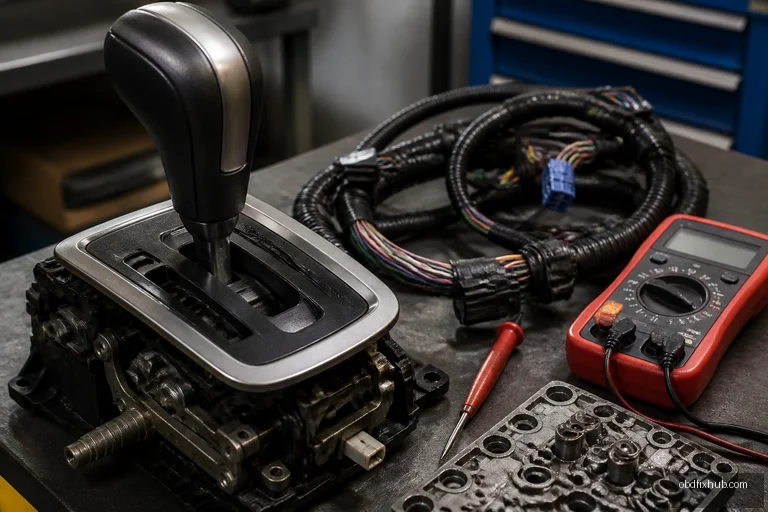
P2790 means the transmission control system has detected a fault in the gate selection direction circuit. This circuit helps the vehicle identify or control the direction of movement within the transmission selector gate. The problem may be caused by a damaged wire, poor connector contact, a failed gate-select sensor or solenoid, a mechanical shifter problem, or—less commonly—a transmission control module fault.
Although the vehicle may still move, P2790 should not be ignored. An incorrect selector signal can cause delayed engagement, unexpected gear selection, limp mode, or difficulty selecting Park, Reverse, or Drive.
What Does P2790 Gate Selection Direction Circuit Mean?
Modern automatic and automated transmissions use more than a simple mechanical gear lever. A range sensor, selector position sensor, switches, and transmission control electronics work together to confirm where the driver wants the transmission to operate. The gate selection direction circuit is part of that system.
When the powertrain control module receives a signal that is missing, implausible, outside its expected voltage range, or inconsistent with other selector signals, it stores P2790. The exact wording and system design can vary by manufacturer, so the vehicle-specific service manual remains the final authority.
This code does not automatically prove that the complete transmission has failed. In many real-world cases, the fault is found in the external selector wiring, a wet connector, an incorrectly adjusted shift cable, or a position sensor mounted outside the transmission.
Common Symptoms of P2790
The symptoms depend on whether the circuit has failed permanently or only becomes unreliable under certain conditions, such as vibration, heat, or moisture. Typical signs include:
- Check Engine Light or transmission warning lamp
- Delayed engagement when selecting Reverse or Drive
- Transmission stuck in one gear or limp-home mode
- Incorrect gear indication on the instrument panel
- Difficulty selecting Park, Neutral, Reverse, or Drive
- Harsh shifting caused by an incorrect range signal
- Engine cranking problems because the module cannot confirm Park or Neutral
- Intermittent loss of movement after the vehicle warms up
If the displayed gear does not match the actual selector position, avoid relying on the dashboard alone. Apply the parking brake firmly and have the vehicle inspected before continuing to drive.
What Causes the P2790 Code?
A useful diagnosis starts with the circuit, not with an expensive transmission replacement. The most frequent causes are:
- Open, shorted, or chafed wiring near the transmission or shift mechanism
- Corroded, loose, oil-contaminated, or water-damaged electrical connectors
- Failed gate selection direction sensor, switch, or solenoid
- Misadjusted shift cable or selector linkage
- Sticking or damaged internal transmission selector components
- Low system voltage or an unstable battery connection
- Incorrect software, calibration, or a control module communication problem
- Rarely, a defective transmission control module
Low voltage deserves special attention. A weak battery can create several transmission codes at once, but it should not be blamed automatically. Confirm battery voltage, charging performance, grounds, and connector integrity before clearing the code.
How to Diagnose P2790 Correctly
1. Confirm the code and record related data
Use a scan tool that can access transmission data, not only a basic engine-code reader. Record freeze-frame information and check for related range sensor, communication, low-voltage, or shift-solenoid codes. If P2790 appears with multiple voltage or communication faults, diagnose the power supply first.
2. Check the selector operation
Move the selector slowly through every position while watching the scan tool’s range or gate-direction data. The reported position should change smoothly and agree with the physical lever position. A signal that flickers, skips, or changes before the lever reaches the detent strongly suggests a sensor, adjustment, or wiring problem.
3. Inspect the external wiring
Follow the harness from the transmission selector area toward the main body harness. Look for rubbing against brackets, crushed sections, stretched wires, melted insulation, and previous repair work. Pay particular attention to areas exposed to road salt, splash water, and transmission fluid.
Do not judge a connector by appearance alone. Disconnect it with the battery isolated where the manufacturer requires it, then check for pushed-back terminals, green corrosion, moisture, and poor terminal tension. A terminal can look clean yet lose contact when the harness moves.
4. Test power, ground, and signal circuits
Use the wiring diagram for the exact vehicle. Verify reference voltage, sensor ground, signal voltage, and continuity under load. A resistance check with the connector unplugged may show a good wire even when it fails during operation, so a voltage-drop test and a wiggle test are often more revealing.
Never apply battery voltage to a sensor or control circuit unless the service information specifically instructs you to do so. A wrong test method can damage a transmission control module.
5. Check mechanical adjustment
Inspect the shift cable, selector lever, mounting bushings, and transmission manual lever. If the cable is stretched or the linkage is misadjusted, the electronic position signal may disagree with the actual transmission position. Correct the adjustment before replacing electronic parts.
Repair Options for P2790
The proper repair depends on the failed part identified during testing. Common repairs include:
- Repairing or replacing damaged wiring with sealed, correctly sized terminals
- Cleaning or replacing a corroded connector and securing the harness
- Replacing the gate selection direction sensor, range sensor, or selector solenoid
- Adjusting or replacing the shift cable and linkage components
- Repairing a damaged external transmission selector mechanism
- Updating or programming the transmission control module when a manufacturer bulletin supports it
After the repair, clear the code and perform the required selector or range-sensor relearn. Then road-test the vehicle while monitoring live data. A repair is not confirmed simply because the warning light goes out; the signal must remain stable through cold starts, hot operation, and repeated gear selections.
Can You Drive With P2790?
Short-distance driving may be possible if the vehicle selects every gear correctly and the warning is not accompanied by slipping, severe harshness, or an incorrect gear display. However, driving is risky if the transmission enters limp mode, refuses Reverse, cannot confirm Park, or engages a different gear than selected.
If the vehicle cannot be placed securely in Park, use the parking brake and arrange professional recovery. Continuing to drive with an unreliable range signal can create a safety hazard and may cause additional transmission damage.
How to Avoid Misdiagnosis
Replacing a transmission because of P2790 alone is a costly mistake. Ask for the scan data, wiring test results, and confirmation that the selector linkage was checked. A competent diagnosis should identify whether the fault is electrical, mechanical, or software-related before parts are installed.
One practical clue is when the code appears after rain, washing the engine bay, or driving through standing water. That pattern points toward moisture intrusion or a harness problem. If it appears only when the vehicle is hot, heat-sensitive wiring, a failing sensor, or an expanding connector terminal deserves closer inspection.
Summary: The Best Next Step for P2790
P2790 identifies a problem with the transmission gate selection direction circuit, but it does not automatically mean the transmission itself must be replaced. Start with a full scan, inspect the selector harness and connectors, compare live data with the actual lever position, and test power, ground, and signal circuits using the correct wiring diagram.
If the gear display is wrong or the vehicle selects gears unpredictably, stop driving and have it diagnosed. Accurate circuit testing is usually faster and less expensive than guessing with sensors, solenoids, or a complete transmission.
Frequently Asked Questions
Is P2790 a serious transmission code?
It can be serious because an incorrect selector signal may cause limp mode or unintended gear selection. The severity depends on the symptoms and whether the vehicle can reliably identify Park, Neutral, Reverse, and Drive.
Can a weak battery cause P2790?
Low voltage can trigger transmission control faults, especially during starting. Test the battery, alternator, grounds, and related voltage codes, but do not assume the battery is the only cause without checking the selector circuit.
How much does it cost to fix P2790?
Cost varies widely. A wiring repair or selector adjustment may be relatively inexpensive, while a range sensor, solenoid, internal selector component, or module can cost considerably more. Diagnosis should come before a quote for parts.
Will clearing P2790 fix the problem?
No. Clearing the code only removes the stored warning temporarily. If the circuit fault remains, P2790 will return, often when the selector is moved or the vehicle reaches the same operating conditions.
Can I diagnose P2790 with a basic OBD scanner?
A basic scanner can confirm the code, but transmission live data and manufacturer-specific tests are usually needed for an accurate diagnosis. A professional scan tool and the correct wiring diagram provide much better results.




