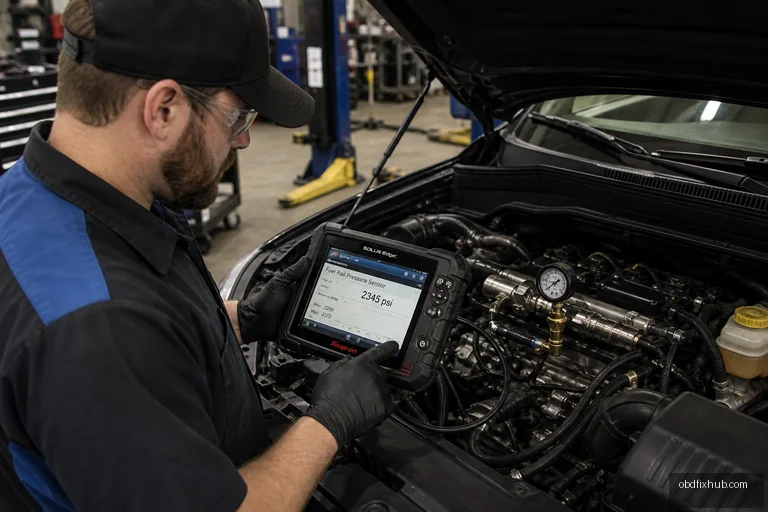
P2A69 means the engine control module has detected a problem in the alternative fuel rail inlet pressure sensor circuit. On vehicles powered by CNG, LPG, LNG, hydrogen, or another factory-approved alternative fuel, this sensor reports pressure entering the fuel rail. The fault may be caused by the sensor itself, wiring, power or ground problems, or pressure that does not match the expected signal. Because alternative-fuel systems can operate at very high pressure, diagnosis should be handled carefully and according to the manufacturer’s service procedure.
What Does P2A69 Mean?
The diagnostic trouble code P2A69 is commonly defined as Alternative Fuel Rail Inlet Pressure Sensor Circuit. The sensor is usually installed on or near the alternative-fuel rail, regulator, or inlet plumbing. Its job is to convert fuel pressure into a voltage signal that the powertrain control module can monitor.
The control module uses this information to calculate fuel delivery, control injectors, detect pressure loss, and protect the engine from an unsafe fueling condition. P2A69 does not automatically prove that the fuel pressure is wrong. It indicates that the electrical signal or the pressure reading is outside the expected range, intermittent, implausible, or missing.
This code should not be confused with gasoline fuel-rail pressure codes or with similarly numbered codes such as P02A6. The exact component location and acceptable voltage range vary by vehicle, so the factory wiring diagram and technical service information are essential.
Symptoms of a P2A69 Fault
Some vehicles will continue running on alternative fuel with reduced performance, while others will switch automatically to gasoline or shut down the alternative-fuel system. The symptoms depend on whether the signal is too high, too low, or intermittently lost.
- Illuminated Check Engine Light or alternative-fuel warning light
- Hard starting, extended cranking, or failure to start on alternative fuel
- Rough idle, hesitation, misfire, or reduced engine power
- Automatic changeover from CNG or LPG to gasoline
- Poor fuel economy or an inaccurate fuel-pressure reading
- Engine entering reduced-power or fail-safe mode
- The code returning immediately after it is cleared
Common Causes of P2A69
- Failed alternative fuel rail inlet pressure sensor
- Open, shorted, or corroded wiring in the sensor circuit
- Loose, contaminated, or damaged electrical connector terminals
- Missing sensor reference voltage or poor sensor ground
- Fuel pressure that is genuinely too high or too low because of a regulator, filter, valve, or supply problem
- Moisture, road salt, vibration, or heat damage near the fuel rail
- Incorrect sensor installation or a damaged sealing surface
- Faulty powertrain control module, although this is considerably less common
A useful practical clue is the timing of the failure. If P2A69 appears after rain, refueling, or an engine-bay wash, inspect the connector and harness before replacing the sensor. If it appears only during acceleration or when the tank is nearly empty, the problem may be actual fuel supply pressure rather than an electrical fault.
How to Diagnose P2A69 Correctly
Do not begin by replacing the sensor. A pressure sensor can be expensive, and many repeat repairs are caused by a broken wire several inches away from the connector.
- Record all codes and freeze-frame data. Additional codes for low system voltage, fuel pressure, communication, or regulator performance can identify the root cause.
- Confirm the vehicle’s fuel system. Identify whether it uses CNG, LPG, hydrogen, or another fuel and locate the rail inlet pressure sensor using the factory diagram.
- Perform a visual inspection. Look for rubbed-through insulation, bent pins, corrosion, fuel-system damage, loose mounting, and wiring stretched tightly across the engine.
- Check reference voltage, ground, and signal. Many sensors use a 5-volt reference, sensor ground, and a variable signal wire, but the exact arrangement is vehicle-specific. Compare the readings with the service manual rather than guessing.
- Compare scan-tool data with actual pressure. A pressure gauge or approved diagnostic equipment may be required. Never loosen a high-pressure fuel line to test pressure.
- Test the harness under movement. Monitor the sensor signal while gently flexing the harness. A voltage drop or sudden change can reveal an intermittent open circuit.
- Check for software or calibration updates. Some manufacturer bulletins address false pressure readings caused by control-module logic, connector revisions, or updated sensor calibration.
High-pressure alternative-fuel components can remain pressurized after the engine is switched off. Do not pierce, disconnect, or heat a CNG, hydrogen, or LPG line unless you have the required training, equipment, and manufacturer-approved depressurization procedure.
How to Fix the P2A69 Code
The repair depends on the failed part. A damaged connector may need terminal repair rather than a complete harness replacement. If the reference voltage and ground are correct but the sensor signal is implausible compared with measured pressure, replacing the sensor is often appropriate. If actual pressure is incorrect, replacing the sensor alone will not solve the problem; the regulator, filter, shutoff valve, or supply system must also be tested.
- Repair or replace damaged wiring and terminals.
- Clean electrical corrosion only when the terminals remain mechanically sound; badly spread terminals should be replaced.
- Replace the pressure sensor with the correct part for the vehicle’s alternative-fuel system.
- Replace damaged seals or O-rings using the specified fuel-compatible parts.
- Correct regulator, filter, or fuel-supply faults when measured pressure is outside specification.
- Clear the code, run the required leak and pressure checks, and complete a road test using the correct fuel mode.
Can I Still Drive With a Bad Fuel Rail Pressure Sensor?
It may be possible to drive a short distance if the vehicle runs smoothly and has automatically switched to gasoline, but it is not wise to ignore P2A69. Avoid driving if there is a fuel smell, visible damage, hard starting, stalling, severe misfire, warning messages about a fuel leak, or abnormal pressure behavior.
Continuing to drive can leave you without reliable alternative-fuel control and may cause poor combustion, catalytic-converter damage, or an unexpected loss of power. For a CNG, LPG, or hydrogen vehicle, arrange professional diagnosis rather than repeatedly restarting or forcing the system back into alternative-fuel operation.
How to Reset the Alternative Fuel Rail Pressure Sensor Code
There is no separate button that resets the pressure sensor. After the fault is repaired, use an OBD-II scan tool to read and clear P2A69, then cycle the ignition and perform the manufacturer’s drive cycle. Some vehicles will clear the code automatically after several successful self-tests, but a scan tool is the quickest method.
Disconnecting the battery is not a proper repair and may erase learned settings, radio security information, or fuel-system adaptations. If P2A69 returns immediately, the control module is still detecting the fault and further diagnosis is required.
Fuel Rail Pressure Sensor Repair Cost and Time
In the United States, a typical diagnostic charge is about $100–$180. Replacing a pressure sensor may cost approximately $250–$900 in total, including parts and labor. A wiring repair can be less expensive, while a high-pressure regulator, specialized fuel-system component, or control module can push the bill beyond $1,000. CNG, hydrogen, and factory LPG parts are often more costly than conventional gasoline sensors.
A straightforward sensor replacement usually takes one to three hours, including safety checks, code clearing, and verification. Wiring faults, difficult access, pressure-system depressurization, or the need for a leak test can extend the repair to half a day or longer. Ask the workshop whether the estimate includes diagnosis, pressure testing, replacement seals, and post-repair leak inspection.
Bottom Line
P2A69 is a circuit and plausibility fault involving the alternative fuel rail inlet pressure sensor. The correct fix is not always a new sensor: inspect the connector, verify the 5-volt reference and ground, compare live data with actual pressure, and check the regulator and fuel supply. Because alternative-fuel rails can store dangerous pressure, use a qualified technician whenever the repair involves opening the fuel system.
Best next step: record every stored code and freeze-frame value, avoid clearing the code before diagnosis, and have the sensor circuit tested with the manufacturer’s wiring diagram.
Frequently Asked Questions
Can a bad fuel rail pressure sensor cause a no-start condition?
Yes. If the control module receives no usable pressure signal, it may disable alternative-fuel injection or prevent the system from enabling. A no-start can also be caused by low actual fuel pressure, so testing the circuit and the fuel supply is necessary.
Will P2A69 clear itself?
It may disappear after several fault-free drive cycles, but the underlying issue remains if the code returns. Clearing it with a scan tool without repairing the circuit only hides the warning temporarily.
Is P2A69 caused by low fuel?
Low fuel can create a pressure problem on some systems, but it does not normally prove a sensor-circuit failure. Check the fuel level, live pressure data, wiring, and regulator operation before condemning the sensor.
Can I replace the sensor myself?
Electrical testing may be suitable for an experienced DIY technician, but removing a CNG, LPG, hydrogen, or other high-pressure component requires approved depressurization equipment and procedures. Incorrect handling can cause fire, injury, or a dangerous leak.




