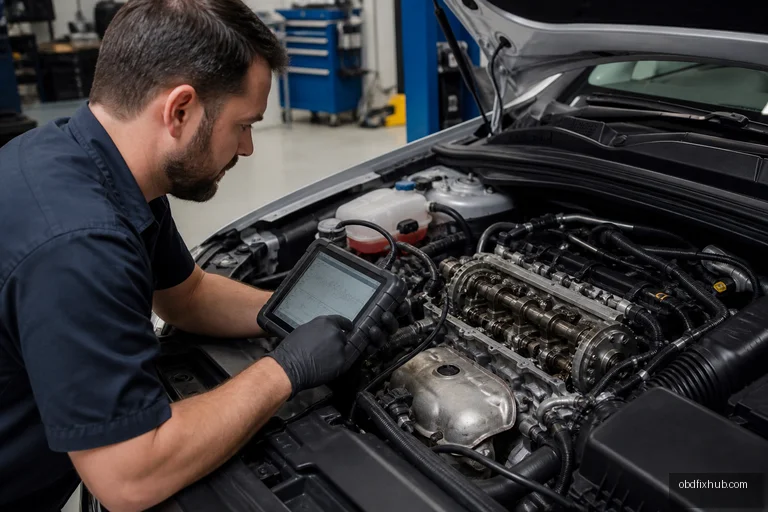
P2B4F camshaft profile actuator performance means the engine computer has detected that a camshaft profile actuator is not responding as expected. In practical terms, the actuator may be unable to switch the camshaft between valve-lift profiles, or the ECU may be seeing a commanded position that does not match the actual result. The exact wording, actuator identification, and bank assignment can vary by manufacturer, so the factory service information for the specific vehicle matters.
This is not a code that automatically proves the actuator itself is defective. Low engine oil, restricted oil passages, damaged wiring, a weak electrical supply, mechanical timing problems, or a failed camshaft profile mechanism can all produce the same fault. A disciplined diagnosis is usually faster and cheaper than replacing the actuator on guesswork.
What Does the P2B4F Code Mean?
P2B4F is a powertrain diagnostic trouble code related to camshaft profile control. Some vehicle manufacturers describe it as a camshaft profile actuator “B” performance fault, while others use a different actuator or bank designation. The letter and location should always be verified with a manufacturer-capable scan tool or repair database rather than assumed from a generic code list.
A camshaft profile system changes how far or how long the intake or exhaust valves open. It is different from ordinary variable valve timing, although some engines use both systems together. The profile actuator may use engine oil pressure, an electric motor, a solenoid, or a combination of these to move a rocker arm, sliding cam, or locking mechanism.
Common Symptoms of P2B4F
The symptoms depend on whether the actuator is stuck in the low-lift or high-lift position and whether the ECU has entered a fail-safe strategy. A vehicle can sometimes drive almost normally with the warning light on, while another may have a noticeable loss of power.
- Illuminated check engine light
- Reduced acceleration, especially at higher engine speed
- Rough idle or an uneven transition between camshaft profiles
- Engine hesitation, stumbling, or an occasional misfire
- Higher fuel consumption
- Reduced maximum engine speed or limp-home operation
- Rattling or abnormal noise from the valve train on some engines
- Additional camshaft timing or actuator circuit codes
One useful clue is when the fault appears. If the engine runs well below a particular RPM but loses power precisely when the system should switch profiles, the actuator may be failing under command rather than suffering from a simple open circuit. That distinction helps separate an electrical problem from an oil-pressure or mechanical problem.
Most Likely Causes
1. Incorrect, low, or contaminated engine oil
Many profile-switching systems depend on clean oil at a specific pressure. Oil that is too thick, overdue for replacement, aerated, or contaminated with sludge can prevent the actuator from moving fully. A low oil level can be enough to create an intermittent fault during cornering or high-RPM operation.
2. Failed camshaft profile actuator or solenoid
The actuator can develop an internal electrical failure, a sticking plunger, a weak return spring, or excessive mechanical wear. Do not rely on resistance testing alone: a solenoid can measure correctly with a multimeter yet fail when hot or when commanded under load.
3. Wiring, connector, or power supply problems
Oil-soaked connectors, corroded terminals, broken wires near the cylinder head, and poor engine grounds are common causes of performance codes. A connector may look clean but lose tension when vibration or heat is applied. Voltage-drop testing under load is more informative than simply checking for battery voltage with the circuit disconnected.
4. Restricted oil passages or a damaged filter screen
A small screen in the actuator oil circuit can become blocked by sludge or sealant debris. On engines that have recently had timing work, excessive gasket maker is a particularly important clue. Cleaning or replacing the external actuator will not solve a restriction deeper in the cylinder head.
5. Mechanical timing or valve-train damage
A stretched timing chain, incorrect cam timing, worn cam lobes, damaged rocker hardware, or a sticking profile-switching mechanism can prevent the commanded change from occurring. If the actuator command is present but the camshaft response remains incorrect, mechanical inspection becomes essential.
How to Diagnose P2B4F Correctly
- Record all codes and freeze-frame data. Note engine speed, coolant temperature, oil temperature, vehicle speed, and battery voltage when the code was set. Companion codes often reveal whether the primary issue is electrical, hydraulic, or mechanical.
- Confirm the code with a capable scan tool. Read the manufacturer-specific description and identify the correct actuator, bank, and connector. Clear the code only after saving the data.
- Inspect oil level and condition. Use the specified viscosity and check for fuel dilution, sludge, metallic particles, or an incorrect filter. If the oil is badly contaminated, an oil change alone may not remove debris from the actuator circuit.
- Perform a visual wiring inspection. Follow the harness from the ECU to the actuator. Look for chafing, melted insulation, oil inside the connector, bent pins, and a loose ground strap.
- Test the circuit under load. Verify power, ground, control duty cycle, and voltage drop while the actuator is commanded. Follow the OEM pinout; never apply power directly to an actuator unless the service procedure specifically allows it.
- Use active tests and live data. Command the profile actuator through the scan tool and compare commanded versus actual camshaft or profile-position data. A delayed, incomplete, or absent response is more meaningful than a stored code by itself.
- Check oil pressure and mechanical timing when required. If electrical tests pass, measure oil pressure with a mechanical gauge and verify timing marks. A compression or relative-compression test can also expose valve-train problems.
A practical workshop tip is to reproduce the fault at the same operating conditions shown in the freeze-frame data. For example, if P2B4F sets at 4,200 RPM with the engine fully warm, a cold-idle test may falsely suggest that the system works correctly.
Repair Options for P2B4F
The correct repair depends on the failed part. Possible solutions include correcting the oil level and viscosity, performing an oil and filter service, cleaning a restricted screen, repairing terminals or wiring, replacing the actuator or solenoid, restoring a damaged ground, or repairing the camshaft profile mechanism. If timing is incorrect, the timing chain or related components must be repaired before condemning the actuator.
After the repair, clear the code and complete the manufacturer’s relearn procedure if one is required. Some systems need an actuator position reset, camshaft variation relearn, or a specific drive cycle. Confirm the repair with live data and a road test that reaches the temperature, load, and engine speed where the original fault occurred.
Can You Drive With This Code?
Short-distance driving may be possible if the engine is smooth, oil pressure is normal, and there is no loud valve-train noise. However, continued driving is risky when the vehicle has severe power loss, flashing misfire warnings, engine knocking, or low oil pressure. A profile actuator stuck in an aggressive position can also increase emissions, fuel consumption, and mechanical stress.
Final Takeaway
P2B4F identifies a camshaft profile actuator performance problem, not a guaranteed actuator replacement. Start with the oil and freeze-frame data, verify the exact manufacturer definition, test the wiring and actuator under command, and then investigate oil flow and mechanical timing. This sequence prevents one of the most common diagnostic mistakes: replacing an expensive actuator when the real fault is a blocked passage, weak power supply, or timing problem.
Frequently Asked Questions
Is P2B4F always caused by a bad camshaft profile actuator?
No. The actuator is only one possibility. Oil pressure, contaminated oil, wiring faults, restricted passages, and mechanical timing problems can all create a performance mismatch.
Can low engine oil cause P2B4F?
Yes. If the profile system uses oil pressure, a low level or aerated oil supply can stop the mechanism from moving correctly, especially during acceleration or high engine speed.
Is P2B4F the same as a variable valve timing code?
Not necessarily. Camshaft profile control changes valve lift or operating profile, while variable valve timing changes camshaft phase. Some engines use both systems, so related timing codes may appear together.
How much does it cost to fix P2B4F?
Cost varies widely. An oil service or wiring repair may be relatively inexpensive, while actuator replacement, cylinder-head work, or timing-chain repair can be substantially more costly. Accurate testing should come before estimating parts and labor.




