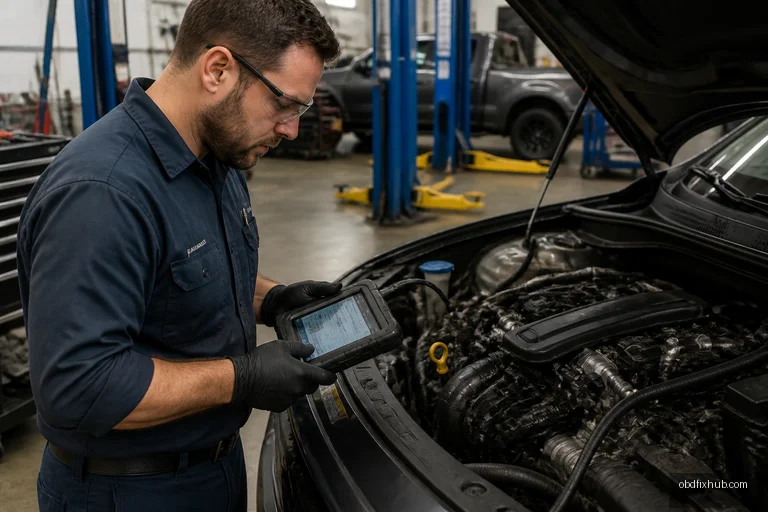
P2C21 Engine Oil Temperature Sensor Correlation means the engine computer has detected that two oil-temperature readings, or a sensor reading and the expected oil temperature, do not agree. The usual causes are a failing oil temperature sensor, damaged wiring or connectors, an incorrect reading caused by a calibration or mechanical problem, and occasionally a control-module issue. You can often drive a short distance if the engine is running normally, but the code should be diagnosed promptly because incorrect oil-temperature data can affect fueling, emissions, cooling strategy, and engine protection.
What Does P2C21 Mean?
P2C21 is a powertrain diagnostic trouble code related to engine oil temperature sensor correlation. The exact wording varies by manufacturer. On some vehicles, the computer compares two oil temperature sensors; on others, it compares an oil temperature sensor with a calculated value based on coolant temperature, engine load, operating time, and ambient temperature.
The word correlation is important. This code does not automatically prove that the sensor itself is defective. For example, after an overnight cold soak, engine oil temperature and coolant temperature should usually be reasonably close to ambient temperature. If the oil sensor reports 140°F while the coolant sensor reports 48°F, the computer sees an implausible relationship and stores P2C21.
Common Symptoms of P2C21
Some drivers notice no major change in performance, especially when the fault is intermittent. Others experience symptoms because the powertrain control module uses temperature data to adjust engine operation and protection strategies.
- Check Engine Light or Service Engine Soon warning
- Hard starting, rough running, or an unstable idle
- Reduced fuel economy or unusual fuel-trim readings
- Cooling fans running longer than expected
- Reduced-power or engine-protection mode on certain vehicles
- Incorrect oil-temperature information on a scan tool or dashboard
- Delayed warm-up behavior or unusual cold-start enrichment
An oil temperature sensor that is going bad may also show a reading that suddenly jumps from cold to extremely hot, remains fixed at one value, or changes when the wiring harness is moved. These clues are more useful than replacing the sensor based only on the stored code.
Three Common Causes of Oil Temperature Sensor Failure
1. Internal sensor failure
Most oil temperature sensors use a thermistor whose resistance changes as temperature changes. Age, repeated heat cycles, oil contamination, and vibration can cause the sensor to drift, go open-circuit, or develop an intermittent internal connection. A sensor may test normally at room temperature but fail once the engine bay becomes hot.
2. Wiring or connector damage
Oil-temperature circuits commonly run near hot exhaust components, oil filters, turbochargers, or moving brackets. Chafed insulation, oil-soaked terminals, corrosion, loose pins, and a broken conductor inside the insulation can all create a false correlation fault. In practice, inspecting the connector is often more revealing than immediately installing a new sensor.
3. An implausible engine operating condition or control issue
Low oil level, incorrect oil viscosity, severe sludge, abnormal cooling-system behavior, or an engine that genuinely overheats can make the sensor data disagree with the expected model. A software calibration issue or rare PCM fault is possible, but it should be considered only after the sensor, wiring, power, ground, and actual engine temperature have been verified.
How to Diagnose P2C21 Correctly
- Record freeze-frame data. Note engine coolant temperature, oil temperature, intake-air temperature, engine speed, vehicle speed, and load when the code was set. This shows whether the fault occurred during a cold start, warm-up, or heavy operation.
- Compare temperature readings with the engine cold. After the vehicle sits for several hours, oil temperature, coolant temperature, and intake-air temperature should generally be close. A large difference points toward a biased sensor or circuit fault.
- Watch live data during warm-up. The oil temperature should rise gradually. A reading that instantly reaches an extreme value, freezes, or drops when the harness is touched indicates an electrical problem.
- Inspect the connector and harness. Look for oil inside the connector, green corrosion, pushed-back terminals, melted insulation, and wiring stretched tightly across a bracket. Repair the wiring properly rather than relying on a temporary twist-and-tape fix.
- Test voltage and resistance using the service manual. Many sensors use a 5-volt reference and a return signal, but resistance specifications differ by sensor design. Do not substitute a generic resistance value for the vehicle manufacturer’s temperature chart.
- Verify the repair. Clear the code, perform a complete cold-start and warm-up drive cycle, and confirm that the readings remain plausible under load.
A practical workshop tip is to compare scan-tool data with an infrared thermometer at the oil pan or oil filter housing. This is not a replacement for the manufacturer’s test procedure, because surface temperature is not identical to oil temperature, but a large mismatch can help identify a biased sensor quickly.
Can You Drive With a Bad Oil Temperature Sensor?
Short, gentle driving is often possible when the engine has normal oil pressure, no overheating warning, no severe misfire, and no reduced-power condition. However, avoid towing, high-rpm operation, track driving, and long trips until the fault is fixed. The PCM may use incorrect temperature information to alter fuel delivery, fan operation, emissions control, or engine-protection logic.
Stop driving if the oil-pressure warning light appears, the engine overheats, the engine starts knocking, the Check Engine Light flashes, or the vehicle enters a severe limp mode. P2C21 itself does not prove that the engine is being damaged, but ignoring an inaccurate temperature signal can hide a real lubrication or overheating problem.
What Sensor Tells the Transmission to Shift?
There is not usually one single sensor that directly commands every gear change. The transmission control module or powertrain control module calculates shift timing using transmission input and output speed sensors, throttle position, engine speed, engine load, vehicle speed, and transmission fluid temperature. On some vehicles, engine torque information from the engine computer is also essential.
The transmission fluid temperature sensor, often called the TFT sensor, helps determine shift pressure, converter-clutch operation, warm-up strategy, and overheat protection. The engine oil temperature sensor involved in P2C21 is different from the transmission fluid temperature sensor. Replacing the oil sensor will not correct a transmission shift problem unless the vehicle’s control strategy specifically uses that data and the fault is affecting it.
Repair Options and Typical Mistakes
If testing confirms that the sensor is out of specification, replacement is normally straightforward, although some applications require draining oil or removing a component for access. Use the correct sensor for the vehicle and install a new sealing washer or O-ring when specified. Avoid overtightening a sensor threaded into an aluminum housing.
If the wiring is damaged, repair it with sealed crimp connections or solder-and-seal methods suitable for an engine compartment. Do not condemn the PCM until the reference voltage, ground, signal circuit, connector tension, and sensor response have all passed testing. Clearing P2C21 without identifying why the readings disagreed may only make the warning disappear temporarily.
Key Takeaway
P2C21 points to an implausible relationship between engine oil temperature readings, not automatically to a bad sensor. Start with cold-soak live data, inspect the connector and harness, test the sensor against the vehicle-specific specifications, and confirm the repair with a complete drive cycle. If overheating, low oil pressure, or severe engine symptoms are present, stop driving and have the vehicle inspected immediately.
Frequently Asked Questions
What are the signs that my oil temperature sensor is going bad?
Common signs include an implausible oil-temperature reading, a Check Engine Light, poor fuel economy, rough starting, cooling fans running unexpectedly, and a temperature value that jumps or remains fixed. Intermittent changes when the harness is moved strongly suggest wiring or connector damage.
What are the three common causes of sensor failure?
The three most common causes are internal thermistor failure, damaged or corroded wiring and connectors, and an actual engine condition or control issue that makes the reading appear implausible. Testing should distinguish among these causes before parts are replaced.
Can you drive with a bad oil temperature sensor?
Usually, a short low-load trip is possible if oil pressure and engine temperature are normal. Avoid extended, high-load driving and repair the fault soon. Stop immediately for an oil-pressure warning, overheating, knocking, a flashing Check Engine Light, or severe power loss.
What sensor tells the transmission to shift?
Shift decisions are based on several inputs, including transmission input and output speed sensors, throttle position, engine load, vehicle speed, and the transmission fluid temperature sensor. The engine oil temperature sensor is not normally the primary shift sensor.




