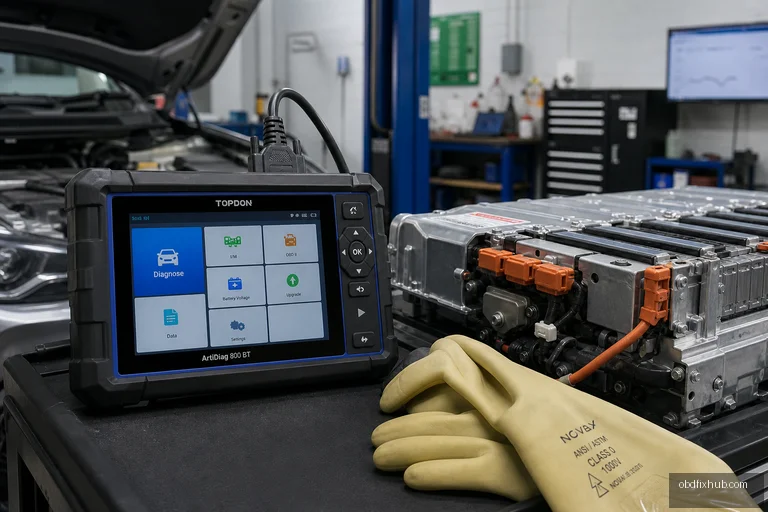
P2C45 Battery Isolation and Voltage Stabilization Circuit usually indicates that the vehicle control module has detected a lower-than-expected signal in the battery isolation or voltage stabilization control circuit. The exact definition can vary by manufacturer, but the fault is commonly associated with a hybrid or electric vehicle battery control system. It should not be treated as a simple low-battery warning: diagnosis may involve both the 12-volt electrical system and high-voltage battery safety components.
What Does P2C45 Mean?
P2C45 is a powertrain diagnostic trouble code related to battery isolation and voltage regulation. In practical terms, the vehicle is reporting that a control circuit is not delivering the voltage, feedback, or switching behavior expected by the battery management system.
The phrase battery isolation generally refers to the system that separates the high-voltage battery from the rest of the vehicle when the car is switched off, during a crash, or when a serious electrical fault is detected. Voltage stabilization may involve a battery control module, isolation monitoring circuit, contactor control, pre-charge circuit, or a related power electronics assembly.
Because P2C45 is not interpreted identically across every brand, the manufacturer-specific service information is essential. A code description from a generic scanner may be technically correct but still too broad to identify the failed component.
Common Symptoms of P2C45
Some vehicles will continue to drive with limited functionality, while others will refuse to enter READY mode. The symptoms depend on whether the fault is intermittent, caused by low 12-volt power, or linked to a genuine high-voltage isolation problem.
- Check Engine, hybrid system, or EV system warning light
- Vehicle will not enter READY mode or will not start
- Reduced power or limited-performance mode
- Battery charging interrupted or refused
- Cooling fans running longer than normal
- Multiple communication or low-voltage codes appearing at the same time
- Intermittent warning that disappears after the vehicle is restarted
A particularly useful clue is the presence of several unrelated low-voltage codes. When P2C45 appears alongside communication faults, sensor reference errors, or module reset codes, test the 12-volt battery and its connections before condemning a high-voltage component.
Most Likely Causes of the P2C45 Code
1. Weak 12-volt battery or poor power supply
Hybrid and electric vehicles still depend on a conventional 12-volt battery to wake up control modules, operate relays, and command the high-voltage system. A battery that drops sharply during startup can create misleading isolation and voltage-stabilization codes. Loose battery terminals, a poor chassis ground, or a faulty DC-DC converter can produce the same effect.
2. Damaged wiring or corroded connectors
Inspect the wiring between the battery control module, isolation monitoring circuit, contactors, and power electronics. Water intrusion under the battery cover, rodent damage, terminal fretting, and corrosion can increase resistance or interrupt the feedback signal. A connector that looks clean externally may still have a pushed-back terminal or weak pin tension.
3. Failed battery contactor or pre-charge circuit
High-voltage battery packs use contactors to connect and disconnect the pack safely. A pre-charge resistor and relay typically raise inverter-side voltage gradually before the main contactor closes. If the pre-charge circuit does not behave as expected, the control module may report a low or unstable isolation-control signal.
4. Isolation fault inside the high-voltage system
Moisture, coolant leakage, damaged orange cables, a compromised battery case, or a failing inverter can allow unwanted leakage between the high-voltage circuit and the vehicle chassis. Some systems set a dedicated isolation-resistance code as well, but P2C45 may appear first when the control circuit cannot verify safe separation.
5. Faulty battery management or voltage monitoring module
A defective battery energy control module, isolation monitor, voltage sensor, or power management module can generate P2C45 even when the wiring is intact. Module failure should be considered only after power, grounds, connectors, software updates, and measured circuit values have been verified.
How to Diagnose P2C45 Correctly
Do not begin by replacing the high-voltage battery. A structured test usually prevents an expensive and unnecessary repair.
- Record all codes and freeze-frame data. Use a scan tool that can access hybrid or EV modules, not only the engine computer. Note battery state of charge, system voltage, temperature, and whether the code is current or historical.
- Test the 12-volt battery under load. Resting voltage alone is not enough. Check voltage during vehicle wake-up and inspect the negative cable, body ground, and battery terminals. A significant voltage collapse points toward the low-voltage supply.
- Check technical service information. Confirm the exact P2C45 definition, connector locations, circuit pin numbers, and required test conditions for that vehicle. Different manufacturers may use the same code number for different control strategies.
- Inspect accessible wiring and connectors. Look for water, green corrosion, damaged insulation, loose terminals, and signs of previous battery or inverter work. Never probe orange high-voltage wiring with ordinary test equipment.
- Review live data and commanded states. Compare isolation status, contactor feedback, pre-charge voltage, battery voltage, and DC-link voltage. A command that is present but lacks feedback suggests a circuit, relay, or sensor problem.
- Follow the high-voltage isolation procedure. If testing requires opening the battery pack or disconnecting high-voltage components, use the factory service procedure, insulated PPE, a verified absence-of-voltage process, and properly rated equipment.
How to Fix P2C45
The correct repair depends on the failed part rather than the code alone. Common successful repairs include charging or replacing a weak 12-volt battery, cleaning and tightening low-voltage grounds, repairing damaged wiring, replacing a corroded connector terminal, or updating the battery control module software.
If testing proves that a contactor, pre-charge relay, isolation monitor, or voltage sensor is defective, replace the component according to the manufacturer’s procedure. Some vehicles require battery initialization, contactor relearning, software configuration, or a state-of-charge calibration after repair.
When an isolation fault is confirmed, do not bypass the warning or install a fuse with a higher rating. The repair may involve locating moisture inside the battery enclosure, replacing a damaged cable, repairing an inverter, or addressing coolant contamination. High-voltage battery work should be performed by a trained technician with EV-rated safety equipment.
Can You Still Drive With P2C45?
If the vehicle remains in READY mode and only stores an intermittent code, a short trip to a qualified repair facility may be possible. However, avoid driving if the vehicle will not enter READY mode, displays a high-voltage battery warning, loses power, smells of overheated insulation, shows visible cable damage, or reports an isolation fault.
Repeatedly clearing P2C45 without finding the cause is risky. The control module may disable charging or propulsion to protect occupants and the vehicle, and the next occurrence may leave the car unable to start.
How to Prevent the Code From Returning
- Keep the 12-volt battery fully charged and replace it when its load-test results are poor.
- Repair water leaks around the battery, trunk, floor, and inverter areas.
- Do not pressure-wash high-voltage components or connectors.
- Use the correct battery type and follow the required registration or initialization procedure.
- After repairs, verify that the code does not return during a complete drive cycle and charging session.
Final Takeaway
P2C45 points to a low or unreliable battery isolation and voltage stabilization control signal, but the root cause may be as simple as a weak 12-volt battery or as serious as a high-voltage isolation failure. Start with system voltage, grounds, scan-tool data, and connector inspection. Because the precise definition is manufacturer-dependent and high-voltage systems can be lethal, use factory specifications and qualified EV service procedures before replacing expensive battery components.
Best next step: scan every available module, save the freeze-frame data, test the 12-volt supply under load, and obtain the exact wiring diagram for the vehicle before attempting circuit repairs.
Frequently Asked Questions
Is P2C45 a serious code?
It can be. The code may result from a weak 12-volt battery, but it can also indicate a high-voltage isolation or contactor-control problem. The vehicle’s warning messages and ability to enter READY mode determine how urgently it should be inspected.
Can a bad 12-volt battery cause P2C45?
Yes. Low 12-volt voltage can prevent battery modules, relays, and isolation monitors from operating correctly. Test the battery during startup or vehicle wake-up rather than relying only on its resting voltage.
Will clearing P2C45 fix the problem?
No. Clearing the code only removes the stored warning temporarily. If the control module still detects low voltage, poor feedback, or an isolation problem, P2C45 will return and the vehicle may enter a protection mode.
Can I test the high-voltage battery myself?
Do not open or probe a high-voltage battery without proper EV training, insulated tools, personal protective equipment, and the manufacturer’s shutdown procedure. A qualified technician should perform isolation-resistance and contactor testing.




