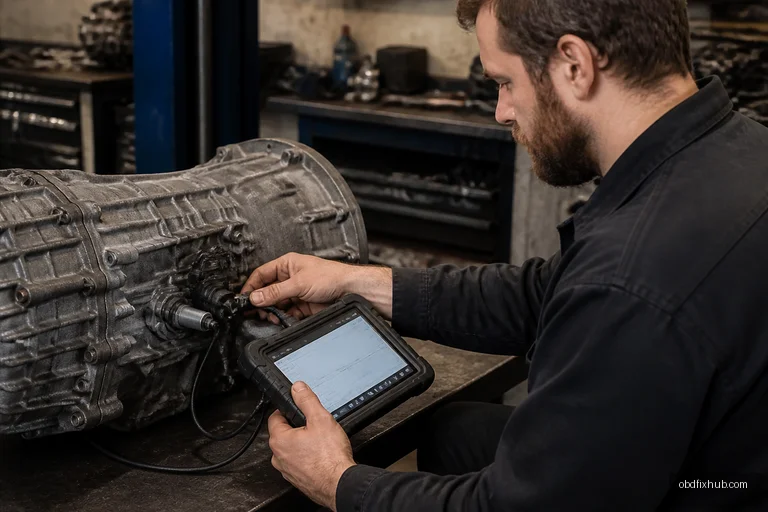
P2C50 Clutch Pedal and Actuator Position Correlation means the vehicle computer has detected that the clutch pedal position and clutch actuator position do not agree as expected. In practical terms, the control module sees an implausible relationship between the driver’s pedal command and the mechanism that operates the clutch. The fault may be caused by a sensor, wiring, calibration, low voltage, or a genuine mechanical clutch problem—not necessarily by a failed clutch assembly.
What Does the P2C50 Code Mean?
P2C50 is a powertrain diagnostic trouble code related to clutch position correlation. Depending on the vehicle, the PCM, TCM, hybrid control module, or automated manual transmission controller may compare two separate signals:
- The clutch pedal position sensor or switch, which reports the driver’s request.
- The clutch actuator position sensor, which confirms how far the clutch release mechanism has actually moved.
When those signals are outside their expected relationship, the module stores P2C50. The exact voltage ranges, naming, and test procedure are manufacturer-specific, so a factory service manual or vehicle-specific diagnostic database is important. Do not assume that every P2C50-equipped vehicle uses the same sensor design or actuator location.
What Happens When a Driver Depresses the Clutch Pedal?
In a conventional manual transmission, pressing the clutch pedal moves a pushrod or hydraulic master-cylinder piston. Hydraulic pressure travels through the clutch line to the slave cylinder, which moves the release fork or concentric release bearing. The pressure plate then separates the clutch disc from the flywheel, temporarily disconnecting the engine from the transmission so the driver can change gear.
In an automated manual transmission or electronically controlled clutch system, the pedal signal is interpreted by a control module. An electric or electro-hydraulic actuator then moves the clutch. The controller watches actuator position, motor current, travel speed, and sometimes clutch touch-point data to verify that the commanded movement actually occurred.
Common Symptoms of P2C50
A vehicle with this code may still drive normally at first, especially if the disagreement occurs only during a particular pedal position or temperature range. Symptoms often become more obvious during starting, shifting, or stop-and-go traffic.
- Clutch engagement that is abrupt, delayed, or inconsistent.
- Difficulty selecting first gear or reverse.
- Grinding during gear changes or failure to complete an automated shift.
- Intermittent no-crank or a requirement to press the clutch pedal unusually hard.
- Engine stalling when stopping or pulling away.
- Transmission, clutch, or drivetrain warning messages.
- Reduced-power mode or a transmission stuck in neutral.
- Illuminated check-engine, transmission, or service warning light.
A faulty clutch pedal position sensor can also disable cruise control, prevent remote starting, or cause the stop-lamp and clutch interlock systems to behave incorrectly. These secondary symptoms are valuable clues because they may point to the pedal sensor or its wiring rather than the clutch actuator.
Most Likely Causes of P2C50
1. Defective clutch pedal position sensor
The sensor may have a worn internal track, a dead spot, an incorrect mounting position, or contamination around the pedal bracket. A sensor can report a stable value at rest but drop out while the pedal is moving. That is why a basic resistance check may miss the fault; live-data movement is usually more informative.
2. Faulty clutch actuator or actuator position sensor
An electric motor, hydraulic actuator, release mechanism, or built-in position sensor may be worn or sticking. If the actuator reaches its physical limit before the control module expects it to, P2C50 can appear even though the electrical wiring is intact.
3. Wiring, connector, or ground problems
Look for loose terminals, corrosion, water intrusion, damaged insulation, and wiring stretched near the pedal assembly or transmission. A shared sensor ground can create several apparently unrelated codes. Wiggle-testing the harness while watching live data can reveal an intermittent open circuit that a static inspection misses.
4. Incorrect clutch or actuator adjustment
After clutch replacement, actuator removal, or transmission work, the system may require a clutch kiss-point, travel, or position relearn. An incorrectly adjusted pushrod, bent release fork, air in a hydraulic circuit, or excessive clutch wear can also produce a genuine position mismatch.
5. Low voltage or control-module software issues
A weak battery, poor ground strap, or charging fault can distort sensor readings and interrupt actuator movement. Check battery voltage and charging performance before condemning an expensive actuator. In some models, a software update or revised calibration addresses false correlation faults.
Where Is the Clutch Pedal Position Sensor Located?
The clutch pedal position sensor is normally mounted under the dashboard, attached to the upper section of the clutch pedal bracket. It may be positioned at the pedal pivot, operated by a small plunger, or integrated into a dual-switch assembly. One circuit may tell the engine computer that the pedal is pressed, while another provides a graduated position signal for transmission control.
Access is usually possible from the driver’s footwell, but the sensor may be hidden above the trim panel. Before removing it, note its adjustment and connector orientation. A sensor installed too far from the pedal can show a plausible reading at rest but fail to reach the required full-travel value.
Where Is the Transfer Case Position Sensor Located?
The transfer case position sensor is generally mounted directly on the transfer case, near the shift motor, range actuator, or selector shaft. It reports whether the transfer case is in two-wheel drive, four-wheel drive, neutral, low range, or another manufacturer-defined position.
This sensor is separate from the clutch pedal position sensor and is normally found on four-wheel-drive vehicles. Its location varies considerably by model. If P2C50 appears alongside four-wheel-drive range or transfer-case codes, inspect shared wiring and grounds, but do not replace the transfer-case sensor solely because it is easier to reach. Use the vehicle wiring diagram and live data to identify which module is reporting the fault.
How to Diagnose P2C50 Correctly
- Record all codes and freeze-frame data. Note battery voltage, engine speed, vehicle speed, clutch position, and transmission state when the fault occurred.
- Identify the reporting module. A code stored in the TCM may require a different test sequence from the same-looking code stored in the PCM.
- Check the basics first. Inspect battery voltage, grounds, fuses, connectors, and visible pedal or hydraulic damage.
- Watch live data while moving the pedal slowly. The pedal signal should change smoothly without sudden drops, spikes, or a flat section.
- Compare command with actual actuator position. A commanded movement with no actual movement suggests an actuator, mechanical, hydraulic, or power-supply problem.
- Perform the required relearn. After repairs, use a capable scan tool to complete clutch position, touch-point, or actuator calibration if the manufacturer specifies it.
- Clear the code and verify under the original conditions. A short idle test is not enough; road-test the vehicle through cold starts, repeated shifts, and stop-and-go operation when safe.
A useful diagnostic shortcut is to separate electrical disagreement from mechanical failure. If the pedal sensor data is erratic before the actuator moves, start at the pedal circuit. If the pedal signal is smooth but the actuator position stops, lags, or overshoots, inspect actuator power, hydraulic pressure, clutch travel, and mechanical binding.
How Is P2C50 Fixed?
The correct repair depends on the test results. Possible fixes include repairing a damaged wire, cleaning or replacing a corroded connector, replacing the clutch pedal position sensor, correcting pedal-sensor adjustment, repairing a hydraulic leak, replacing an actuator, or carrying out a clutch and actuator relearn.
If the clutch disc, pressure plate, release bearing, or flywheel is worn, replacing the sensor alone will not solve the correlation problem. Conversely, replacing the entire clutch for a sensor that has an intermittent signal wastes time and money. Confirm the signal and mechanical travel before authorizing major transmission work.
Can You Drive With P2C50?
Short-distance driving may be possible when the vehicle shifts normally and the code is intermittent, but the fault can worsen without warning. A car that cannot reliably disengage the clutch may stall in traffic, refuse to select a gear, or become stuck in neutral. Avoid towing, heavy traffic, and continued use if shifting is difficult, the clutch remains engaged, or a transmission warning is flashing.
Key Takeaway
P2C50 indicates a mismatch between the clutch pedal command and the clutch actuator’s reported position. Begin with live data, voltage, grounds, connectors, and sensor adjustment before replacing expensive components. Because the code is manufacturer-dependent, the vehicle’s wiring diagram, actuator calibration procedure, and service specifications should guide the final repair.
Frequently Asked Questions
What are the symptoms of a faulty clutch position sensor?
Typical symptoms include difficult starting, inconsistent clutch engagement, gear-selection problems, cruise-control cancellation, a no-crank condition, warning lights, and an engine that stalls when the clutch is released. Some failures are intermittent and occur only while the pedal is moving.
Where is the clutch pedal position sensor located?
It is usually under the dashboard, mounted on or beside the upper clutch pedal bracket. It may use a plunger or be integrated into a dual-switch assembly. Exact access and adjustment vary by vehicle.
Where is the transfer case position sensor located?
It is normally installed on the transfer case near the range-shift motor or selector shaft. This is a separate component from the clutch pedal sensor and is found only on vehicles equipped with a transfer case.
Does P2C50 always mean the clutch itself is bad?
No. A pedal sensor, actuator sensor, wiring fault, low battery voltage, incorrect adjustment, failed calibration, or software issue can all create the code. Mechanical clutch wear should be confirmed with inspection and travel measurements.




