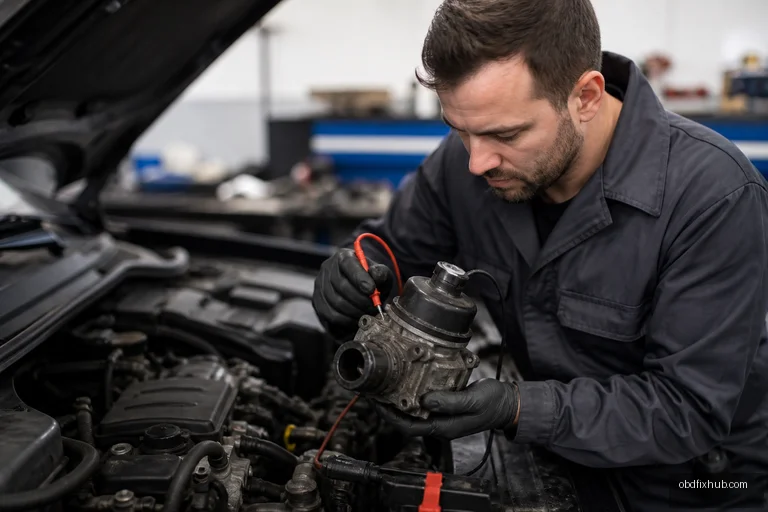
P2C80 Secondary Air Injection Pump Overspeed means the engine control module has detected that the secondary air injection pump is running faster than expected or reporting an implausible speed. The usual causes are a disconnected air hose, restricted or damaged air plumbing, a failing pump, water contamination, or an electrical control problem. Although the vehicle may drive normally, ignoring the code can damage the pump and cause an emissions inspection failure.
What Does P2C80 Mean?
The secondary air injection system adds fresh air to the exhaust during a cold start. This extra oxygen helps the catalytic converter heat up quickly and allows the engine computer to reduce cold-start emissions.
On vehicles equipped with pump-speed monitoring, the powertrain control module checks how fast the electric air pump is operating. Depending on the design, the module may use an internal speed signal, motor-current behavior, voltage feedback, or a calculated pump-load value. P2C80 is set when the reported or calculated speed exceeds the expected range.
The exact diagnostic wording can vary by manufacturer. Always compare the code with the vehicle’s factory service information, especially if another fault code is stored at the same time.
Common Symptoms of P2C80
P2C80 often appears without a major drivability complaint because the system operates mainly during the first moments after a cold start. A driver may notice only the malfunction indicator lamp, while a technician hears the pump operating abnormally.
- Check Engine Light or Service Engine Soon warning
- A loud whirring, whining, grinding, or unusually high-pitched pump noise
- Secondary air pump runs longer than normal after a cold start
- Rougher cold-start emissions behavior or an occasional extended warm-up period
- Failed emissions testing
- Additional secondary-air codes, such as flow, valve, relay, or circuit faults
In most cases, P2C80 does not directly cause loss of power. If the engine is running poorly, stalling, or misfiring, scan for other codes rather than blaming the air pump alone.
What Causes a Secondary Air Pump to Overspeed?
1. Disconnected, split, or incorrectly routed air hose
An air pump can spin faster when it is operating with little or no load. A hose that has fallen off, a cracked inlet duct, or an open connection can create an unloading condition that the control module interprets as overspeed. Inspect the entire hose path, not just the short rubber section next to the pump.
2. Restricted or damaged air injection plumbing
Carbon deposits can restrict the passage between the pump and the exhaust ports. A crushed hose, blocked fitting, or damaged valve can alter pump pressure and airflow enough to trigger a speed plausibility fault. A restriction does not always make the pump quiet; some pumps become noisy as the motor repeatedly changes load.
3. Failing secondary air injection pump
Worn bearings, damaged impeller blades, brush wear, or an internal speed-sensor fault can produce an incorrect speed signal. A pump may sound normal for a few seconds and then become loud as it warms up. If the pump draws abnormal current or has visible shaft play, replacement is usually more reliable than attempting an internal repair.
4. Water or exhaust condensation inside the pump
Water intrusion is a frequent reason for repeated secondary-air failures. A leaking combination valve or check valve can allow condensation or exhaust moisture to travel back toward the pump. The result may be corrosion, frozen components in cold weather, bearing damage, or erratic speed readings.
A useful workshop clue is rust or water staining inside the pump outlet. Installing a new pump without correcting the leaking valve often leads to the same code returning within days or weeks.
5. Electrical or control-side problems
A weak ground, high-resistance power connection, damaged wiring, stuck relay, or poor connector contact can change pump speed and feedback. Battery voltage should be checked during the commanded pump test, not only with the ignition switched off. A pump that receives unstable voltage may falsely appear to overspeed.
How to Diagnose P2C80 Properly
- Scan all stored codes and freeze-frame data. Note coolant temperature, battery voltage, engine speed, and the time after startup when the code was set. Related valve or circuit codes can point to the root cause.
- Listen during a cold-start activation. A healthy pump commonly produces a strong, smooth airflow noise for a limited period. A siren-like whine, grinding sound, or rapidly changing pitch is suspicious.
- Inspect the intake and outlet plumbing. Look for disconnected ducts, collapsed hoses, cracked fittings, rodent damage, and evidence of water. Check that the pump inlet is not blocked by a dirty filter or debris.
- Check the valves. The combination or switching valve should open when commanded and seal when the pump is off. A valve that leaks exhaust backward can destroy a replacement pump.
- Perform an active test with a professional scan tool. Command the pump on and compare actual speed, calculated speed, current draw, and airflow with the manufacturer’s specifications.
- Test power and ground under load. Voltage-drop testing is more useful than a simple continuity check. A wire can show continuity yet fail when the motor draws substantial current.
- Clear the code and verify a cold-start monitor. After repairs, the system may not retest until the engine has cooled to the required temperature. Confirm the repair with a complete drive cycle and a rescan.
Repair Options for P2C80
The correct fix depends on the failed component. A disconnected hose may require only a secure connection or replacement clamp. A damaged pump requires replacement, but the technician should also test the check valve and air passages before fitting the new unit.
- Replace split, collapsed, or incorrectly routed air hoses.
- Repair corroded connectors, grounds, relay circuits, or damaged wiring.
- Replace a leaking combination valve or check valve that allows exhaust moisture into the pump.
- Clean or replace blocked air injection components where permitted by the manufacturer.
- Replace the pump if its speed signal, bearings, impeller, or motor is defective.
Do not run the pump continuously from a direct battery connection as a substitute for diagnosis. The motor can overheat, and bypassing the vehicle’s control circuit may hide a relay or wiring fault.
Can You Drive With P2C80?
Short-distance driving is usually possible if the engine starts and runs normally, but the vehicle may fail an emissions test and the pump can deteriorate further. Avoid repeated cold-start testing if the pump is grinding or if water is present in the housing. Arrange diagnosis promptly, particularly in regions where the check-engine light prevents inspection approval.
Final Takeaway
P2C80 is not a simple instruction to replace the secondary air pump. It is a speed or load plausibility fault, and the root cause may be an open hose, restricted passage, leaking valve, electrical supply problem, or damaged pump. The most dependable repair combines a cold-start listening test, hose and valve inspection, loaded voltage testing, and scan-tool verification. Fix the cause of water or exhaust intrusion before installing a replacement pump.
Frequently Asked Questions
Is P2C80 a serious code?
It is usually not an immediate engine-damage code, but it should not be ignored. The vehicle may fail emissions testing, and a noisy or water-damaged pump can become more expensive to repair.
Can a bad check valve cause P2C80?
Yes. A leaking check or combination valve can allow exhaust moisture to enter the pump, damaging its motor or speed-monitoring components. The valve must be tested whenever a pump is replaced.
Will disconnecting the secondary air pump solve the problem?
No. Disconnecting it normally creates additional circuit or flow codes and leaves the emissions fault unresolved. The system should be diagnosed and repaired as designed.
How long does a secondary air pump run?
It typically runs briefly after a cold start, although the exact time depends on coolant temperature, ambient conditions, and the vehicle calibration. A pump that runs unusually long should be checked for valve, temperature, or airflow problems.
Can P2C80 clear itself?
The warning light may turn off after several successful monitoring cycles, but the underlying fault can remain stored. Clear the code only after the repair and verify that the secondary air monitor completes without returning P2C80.




