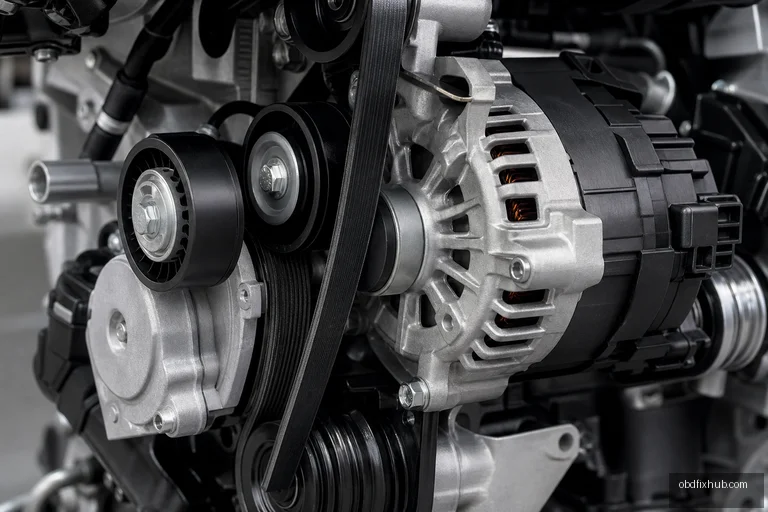
The P2CFA code indicates a fault in the belt-integrated starter generator tensioner circuit, usually within a 48-volt mild-hybrid system. In practical terms, the vehicle has detected an electrical, control, or performance problem with the actuator that maintains the correct tension on the BISG belt. The fault may be caused by damaged wiring, a weak low-voltage battery, a failed tensioner actuator, a belt problem, or a required software calibration—not necessarily by the generator itself.
What Does the P2CFA Code Mean?
P2CFA is a powertrain diagnostic trouble code associated with the belt-integrated starter generator, commonly abbreviated as BISG. This unit is driven by the engine accessory belt and can perform several jobs: restarting the engine, assisting acceleration, recovering energy during deceleration, and supporting the vehicle’s electrical system.
The tensioner is more sophisticated than a conventional spring-loaded belt tensioner. Depending on the vehicle design, it may use an electric actuator, position sensor, control module, or electronically managed mechanism to keep the belt tight during engine starts, torque reversals, and regenerative braking. The exact P2CFA definition and test procedure can vary by manufacturer, so the vehicle-specific service information matters.
P2CFA Symptoms You May Notice
A vehicle can store P2CFA with very few noticeable symptoms, especially if the system temporarily disables hybrid assistance. However, repeated or active faults usually produce clues that are useful during diagnosis.
- Check Engine or hybrid system warning light
- Auto stop-start no longer operating
- Reduced electric torque assist during acceleration
- Lower fuel economy than normal
- Slow, rough, or delayed engine restarts
- Accessory belt squeal, slap, flutter, or visible vibration
- Charging-system or battery-management warnings
- Reduced-power mode in more serious cases
A short belt chirp immediately after an engine restart is particularly important. It can indicate that the tensioner is not applying or releasing tension at the correct time. Continuing to drive while the belt is slipping can damage the belt, pulleys, or BISG unit and may eventually cause loss of charging or auxiliary functions.
Common Causes of P2CFA
1. Tensioner actuator or position sensor failure
The electronically controlled tensioner can fail internally, seize mechanically, or report an implausible position. A failed sensor may make the controller believe that the tensioner is not responding even when the belt appears tight by eye. Some systems require a learned position, so replacing the assembly without running the relearn procedure may leave the code active.
2. Damaged wiring, connectors, or grounds
Wiring near the front of the engine is exposed to heat, oil, water, and constant vibration. Look for rubbed insulation, loose terminals, bent pins, corrosion, and harness sections pulled tight against a bracket. A connector can look clean externally while having a spread terminal that loses contact when the engine moves under load.
3. Weak 12-volt or 48-volt battery
Low system voltage can prevent an actuator from completing its movement or cause communication errors between the engine control module and hybrid components. This is a commonly missed cause. A battery that starts the engine normally can still have excessive voltage drop during a BISG command, particularly in cold weather.
4. Belt, pulley, or alignment problems
A stretched, glazed, contaminated, or incorrectly routed belt can create a tensioner performance fault. Worn pulley bearings, a misaligned crank pulley, or debris lodged in the belt ribs may also make the actuator work outside its expected range. Do not judge belt condition solely by its appearance; a belt can look acceptable and still slip under regenerative or starting torque.
5. Software, calibration, or communication faults
Some vehicles need a control-module update or a tensioner calibration after battery replacement, belt service, or component installation. Network communication faults can also set P2CFA alongside other codes. If several modules report communication or voltage faults, repairing the shared power or ground supply should come before replacing the tensioner.
How to Diagnose P2CFA Correctly
Professional diagnosis should identify why the controller set the code rather than simply clearing it. The following sequence is efficient and avoids unnecessary parts replacement.
- Record all codes and freeze-frame data. Note engine speed, system voltage, vehicle speed, temperature, and whether the code is current, pending, or stored. Related battery, communication, belt, or generator codes can change the diagnostic direction.
- Check the vehicle’s service information. Confirm the manufacturer-specific definition, connector pinout, voltage specifications, actuator commands, and required calibration procedure. P2CFA is not guaranteed to use identical thresholds across every brand.
- Inspect the belt drive with the engine off. Check belt routing, rib damage, contamination, pulley alignment, tensioner mounting, and signs of rubbing. Never place hands near the belt while the engine is running.
- Test the 12-volt supply and grounds. Measure battery condition and voltage drop under load. Inspect engine grounds and the power supply to the relevant control module. Do not assume a recently replaced battery is fully charged or correctly registered.
- Inspect the tensioner circuit. With the battery disconnected where required by the service procedure, check for terminal damage, continuity, short circuits, and poor connector fit. A circuit that passes a static continuity test can still fail under load, so voltage-drop testing is valuable.
- Use a capable scan tool for active tests. Command the tensioner if the manufacturer allows it and compare commanded position, actual position, current draw, and response time. A generic code reader may display P2CFA but cannot perform this bidirectional test.
- Complete calibration or relearn. After repair, clear the code and run the specified belt-tensioner, BISG, or battery-management initialization. Confirm that the code does not return during a controlled road test.
How Is P2CFA Fixed?
The repair depends on the failed part. A loose connector may need terminal repair and harness protection, while a damaged belt requires replacement and verification of pulley alignment. If the actuator or tensioner assembly fails its commanded-position or current-draw test, replacing the complete approved assembly is usually more reliable than attempting an improvised repair.
Software updates and relearn procedures are easy to overlook. A vehicle can still set P2CFA after installing a good tensioner if the control module has not learned its end positions. Always follow the manufacturer’s sequence for belt installation, battery isolation, torque specifications, and initialization.
Important Safety Note for 48-Volt Systems
A BISG system may contain high current and significant stored energy even though it is not a conventional high-voltage electric vehicle system. Do not probe orange or clearly marked hybrid wiring, bypass safety interlocks, or rotate the belt drive while the system is enabled. Battery isolation and capacitor discharge procedures must follow the factory service manual.
If you do not have a scan tool capable of hybrid-system diagnostics, a current wiring diagram, and the required safety equipment, this is a job for a qualified technician. The cost of professional diagnosis is often lower than damaging a BISG unit or creating an unsafe electrical short.
Can You Keep Driving With P2CFA?
Short-distance driving may be possible if the engine runs normally and no battery, charging, overheating, or red warning light is present. Nevertheless, the vehicle may disable stop-start and regenerative functions, and a slipping belt can deteriorate quickly. Stop driving and arrange an inspection if you hear belt noise, smell burning rubber, see a loose belt, or receive a charging-system warning.
Summary: The Fastest Path to a Reliable Fix
P2CFA points to a BISG belt-tensioner circuit or performance problem, not automatically to a failed starter generator. Start with complete code scanning, voltage checks, belt inspection, and connector testing. Then use the correct bidirectional test and perform the required calibration after repair. Avoid replacing expensive hybrid components based only on the code description; the wiring, battery supply, and belt drive often provide the real answer.
Frequently Asked Questions
Is P2CFA a serious code?
It can become serious if the belt is slipping or the tensioner is unable to control belt load. The vehicle may initially only lose hybrid assistance, but continued operation can damage the belt drive or affect charging functions.
Can a weak 12-volt battery cause P2CFA?
Yes. Low 12-volt voltage or excessive voltage drop can interrupt actuator operation and module communication. Test battery condition and grounds before condemning the BISG tensioner.
Will clearing P2CFA fix the problem?
No. Clearing the code only removes the stored fault temporarily. If the circuit or mechanical problem remains, the code will return when the control module repeats its self-test.
Can I replace the belt myself?
On some vehicles, belt replacement is straightforward; on BISG systems, the correct belt position and tensioner calibration are critical. Follow the factory procedure and use the specified belt, tools, and initialization routine.




