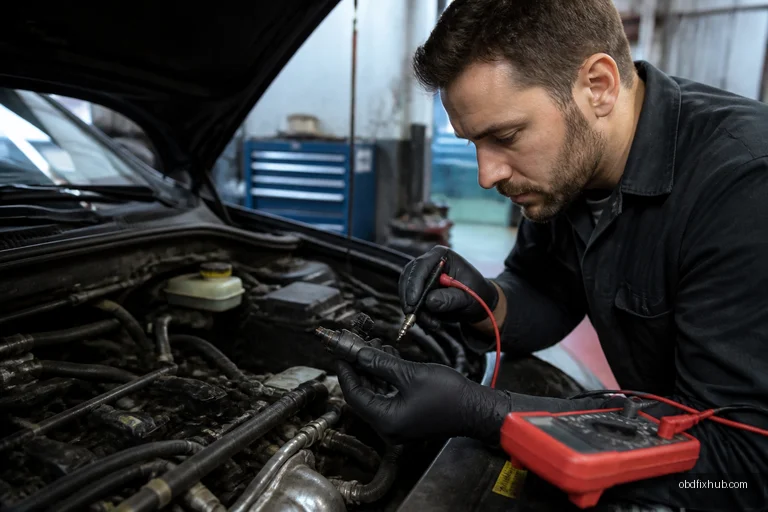
P2E83 Fuel Rail Pressure Performance with Engine Off means the engine computer detected fuel rail pressure that did not match the expected value while the engine was not running. The most common causes are a faulty fuel rail pressure sensor, damaged wiring, trapped pressure, a leaking injector, a weak high-pressure pump, or a low-pressure fuel supply problem. Do not replace the sensor immediately: a pressure reading captured during a key-on, engine-off test must be compared with actual pressure using the correct mechanical gauge or scan-tool data.
This is primarily an informational and diagnostic search. The code points to a fuel-pressure plausibility problem, not automatically to one failed component. Correct testing can prevent an expensive high-pressure pump or injector replacement that does not solve the fault.
What Does P2E83 Mean?
With the ignition switched on and the engine off, the powertrain control module performs a plausibility check. It compares the fuel rail pressure sensor signal with the pressure it expects to see under that operating condition. If the value is too high, too low, stuck, or changes in a way that does not make physical sense, the module can store P2E83.
The exact pressure specification depends on the vehicle. Gasoline direct-injection systems, common-rail diesel systems, and port-injected engines use different fuel systems, so there is no universal “normal” engine-off rail pressure. Some systems should quickly lose pressure after shutdown, while others are designed to retain residual pressure for several minutes.
Common Causes of P2E83
- Faulty fuel rail pressure sensor: The sensor may report pressure that is higher or lower than reality, especially when its internal electronics fail intermittently.
- Connector or wiring damage: Corrosion, loose terminals, oil contamination, a rubbed-through wire, or a poor ground can distort the sensor signal.
- Fuel pressure that does not hold: A leaking injector, pressure regulator, pump check valve, or fuel-system connection can allow pressure to bleed off after shutdown.
- Excessive residual pressure: A regulator that is stuck closed or a restricted return path can leave pressure above the expected key-on, engine-off value.
- Weak fuel supply: A failing tank pump, restricted fuel filter, blocked pickup, or inadequate voltage to the pump can starve the high-pressure pump.
- High-pressure pump or metering valve fault: On direct-injection and diesel systems, a sticking inlet metering valve or worn pump may create unstable pressure.
- Incorrect previous repair: A replacement sensor, pump, or injector that is incorrect for the vehicle can produce a believable-looking but inaccurate reading.
- Low battery voltage or software issues: Voltage drops during key-on testing and outdated control-module software can sometimes create implausible sensor data.
P2E83 Symptoms to Watch For
Some vehicles store P2E83 without obvious drivability symptoms. Others will show symptoms because the same pressure problem affects starting and fuel delivery. Common signs include an extended crank, hard starting after the vehicle sits, stalling, hesitation, reduced power, poor fuel economy, or an illuminated check-engine light.
Pay attention to when the fault occurs. A vehicle that starts normally cold but needs several seconds of cranking after a hot soak may have pressure bleed-down. A vehicle that loses power under load may have a restricted filter, inadequate low-side pressure, or a high-pressure pump that cannot maintain demand. Fuel odor, wet fittings, or visible leakage require immediate attention.
How to Diagnose P2E83 Correctly
1. Check the vehicle-specific data first
Record all stored and pending trouble codes, freeze-frame data, battery voltage, commanded pressure, and actual rail pressure. Look for related codes such as P0087, P0088, P0191, P0192, P0193, or manufacturer-specific fuel-pressure faults. The service manual’s key-on, engine-off pressure specification matters more than a generic internet number.
2. Inspect the sensor circuit
With the ignition off, examine the sensor connector for bent pins, moisture, fuel contamination, and terminals that have lost tension. Check the reference voltage, sensor ground, and signal circuit according to the wiring diagram. A signal that remains fixed at an extreme value often indicates an open circuit, short, or failed sensor rather than a genuine pressure condition.
3. Compare electronic data with real pressure
Use an approved mechanical test gauge where the manufacturer permits it, or use a suitable pressure transducer. Compare the measured pressure with the scan-tool value during key-on, engine-off and after shutdown. If mechanical pressure is normal but the scan reading is wrong, focus on the sensor and circuit. If both readings show abnormal pressure, investigate the pump, regulator, injector leakage, filter, and check valve.
4. Test pressure retention
Prime the system, switch the ignition off, and observe the pressure decay for the time specified by the manufacturer. Rapid pressure loss can come from an injector that is not sealing, a leaking pressure regulator, a pump check valve, or an external leak. On a common-rail diesel system, never loosen a high-pressure line to “check” pressure; the fuel can penetrate skin and cause a medical emergency.
How Do You Fix Low Fuel Rail Pressure?
The repair depends on where the pressure is being lost. Replace a restricted fuel filter with the correct part, repair wiring or terminals, restore proper pump voltage, and repair any leak before condemning the high-pressure pump. If the sensor fails the circuit and plausibility tests, replace it using the correct torque and sealing procedure.
For low pressure on the supply side, measure pump delivery and voltage under load rather than relying only on sound from the fuel tank. A pump can run quietly and still fail to provide sufficient volume. On diesel and gasoline direct-injection systems, diagnose the low-pressure circuit before replacing the high-pressure pump; inadequate inlet supply can damage a replacement pump.
If an injector is leaking internally, an injector balance or leak-off test may identify it. Some vehicles also require a fuel-pressure sensor calibration, pump adaptation, or injector coding procedure after parts are installed. Follow the manufacturer’s scan-tool procedure rather than assuming the module will automatically relearn everything.
How to Reset a Fuel Rail Pressure Sensor
A fuel rail pressure sensor normally cannot be reset with a button or by disconnecting the battery. The correct process is to repair the underlying fault, clear the diagnostic codes with a scan tool, cycle the ignition, and confirm that the pressure reading is plausible during a new test drive.
Some vehicles provide a fuel-pressure relearn or component replacement routine in the factory scan tool. If that routine is listed for the vehicle, perform it after installation. Clearing the code without repairing the cause may temporarily turn off the warning light, but P2E83 will return when the control module repeats its engine-off pressure check.
Can You Still Drive with a Bad Fuel Rail Pressure Sensor?
Driving is not recommended if the engine stalls, has severe power loss, struggles to start, or has a fuel leak. A faulty reading can cause the module to overfuel or underfuel the engine, and an inaccurate pressure signal may leave you stranded or create unsafe hesitation in traffic.
If the vehicle runs normally and there is no fuel smell, some owners can drive a short distance to a repair facility. Keep the trip conservative, avoid heavy acceleration, and stop immediately if the check-engine light flashes, the engine misfires badly, or fuel leakage appears.
How Much Does It Cost to Fix P0087?
P0087 means fuel rail or system pressure is too low, and its repair cost overlaps with many P2E83 diagnoses. A diagnostic inspection commonly costs $100–$200. A fuel pressure sensor or wiring repair may total approximately $150–$500, while a fuel filter or low-pressure pump repair may range from $150–$1,200, depending on vehicle design.
High-pressure pump replacement can cost roughly $800–$3,000 or more, and injector repairs may add substantially to the bill. These are broad U.S. estimates, not a quote. Ask the repair shop to document low-side pressure, rail pressure, pressure retention, and sensor-circuit results before approving major parts.
Key Takeaway
P2E83 is a pressure-performance code recorded with the engine off, not proof that the fuel rail pressure sensor is defective. Start with vehicle-specific specifications, inspect the wiring, compare scan data with measured pressure, and test pressure retention. Repair the actual cause, then clear the code and complete any required relearn procedure.
Practical next step: Have a qualified technician capture the key-on, engine-off pressure reading and the pressure-decay result before replacing a sensor, pump, or injector.
Frequently Asked Questions
What is normal fuel rail pressure with the engine off?
There is no single normal value. The specification varies by engine and fuel system, and the service manual should define both the key-on, engine-off pressure and how long pressure must be retained after shutdown.
Can a weak battery cause P2E83?
Yes. Low system voltage can affect the fuel pump and sensor reference circuit, producing an implausible reading. Check battery voltage and charging-system performance before replacing fuel components.
Will replacing the fuel pressure sensor fix P2E83?
Only if testing proves the sensor signal is inaccurate or the sensor fails its electrical checks. A leaking injector, bad pump, blocked filter, or damaged connector can create the same code.
Is P2E83 the same as P0087?
No. P0087 specifically indicates fuel rail or system pressure is too low, while P2E83 describes a fuel-pressure performance or plausibility problem with the engine off. They can share causes and may appear together.




