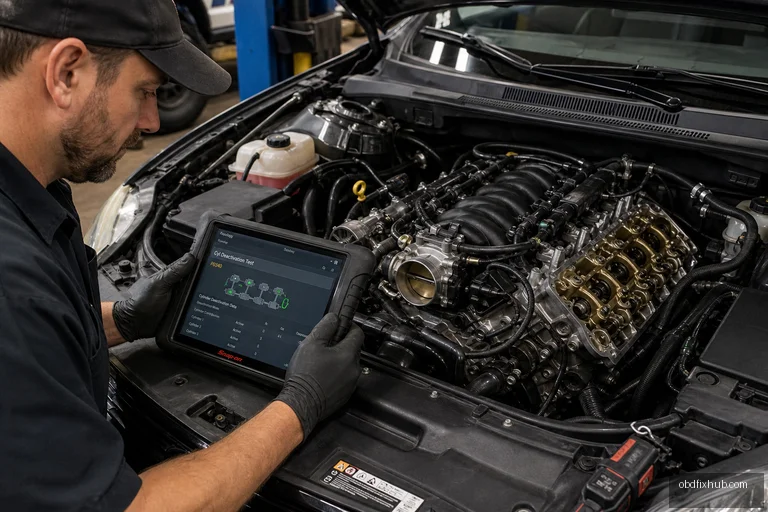
P340A means the engine computer has detected a performance or “stuck off” problem in the cylinder-deactivation intake valve control circuit. In many applications, the code points to the control system for cylinder 2, although the exact cylinder description can vary by manufacturer. The fault may be electrical, oil-pressure related, or mechanical, so replacing the solenoid immediately is not always the correct fix.
What Does P340A Mean?
Modern engines with cylinder deactivation can shut down selected cylinders during light-load driving to reduce fuel consumption. The powertrain control module (PCM) commands an oil-control solenoid, sometimes called a cylinder deactivation solenoid or valve-lift control solenoid, to redirect pressurized engine oil to a special lifter or rocker mechanism.
When the PCM sets P340A Cylinder Deactivation Intake Valve Control Circuit, it has seen a control system that did not respond as expected. The wording “intake valve control” does not necessarily mean the intake valve itself is broken. It often refers to the electrically controlled hydraulic system that changes how the intake-side valvetrain operates.
On several engine families, P340A is associated with cylinder 2 intake valve control performance or a system stuck in the inactive position. Always compare the code definition with the vehicle-specific service information because manufacturer naming, cylinder numbering, and diagnostic strategy are not identical across brands.
Symptoms of the P340A Trouble Code
The vehicle may still drive normally when the problem is intermittent or occurs only during cylinder-deactivation operation. In other cases, the engine will run poorly as soon as the PCM detects that the affected cylinder is not being controlled correctly.
- Illuminated Check Engine Light
- Rough idle or noticeable vibration
- Engine misfire, especially under light load
- Reduced fuel economy
- Hesitation during transitions between four-cylinder and full-cylinder operation
- Reduced engine power or a failsafe mode
- Ticking, tapping, or valvetrain noise
- Additional misfire or cylinder-deactivation codes
A useful real-world clue is when the engine runs smoothly under heavy acceleration but shakes at a steady cruising speed. That pattern can indicate a cylinder-deactivation control issue rather than a conventional ignition fault, because the system is more likely to activate during light-load conditions.
Common Causes of P340A
Low, dirty, or incorrect engine oil
Cylinder-deactivation systems depend on clean oil at the correct pressure. Low oil level, sludge, an incorrect viscosity, or an overdue oil change can prevent the control solenoid and special lifter from moving properly. A vehicle can have normal oil pressure at idle and still develop a problem in the deactivation circuit when the engine is hot.
Failed cylinder-deactivation solenoid
The solenoid may have an open coil, internal contamination, a sticking spool, or an electrical short. A solenoid can also pass a basic resistance test and still fail when hot or when commanded by the scan tool. This is why command testing is more valuable than relying on resistance alone.
Damaged wiring or connectors
Heat, oil saturation, broken locking tabs, and harness movement near the valve cover are common causes. Inspect the connector for pushed-back terminals and green corrosion. On engines where the harness runs close to the exhaust, insulation may become brittle and intermittently contact ground.
Restricted oil passages
Sludge or sealant debris can restrict the small oil passages feeding the deactivation mechanism. This is particularly important after an engine repair where excessive RTV sealant may have entered the lubrication system. A new solenoid will not correct a blocked passage.
Sticking or collapsed lifter
A mechanically damaged deactivation lifter can remain inactive even when the electrical circuit and oil-control solenoid work correctly. Persistent ticking, a steady misfire, low compression, or valvetrain movement that differs from the other cylinders raises suspicion of a lifter or camshaft problem.
PCM software or control issue
Some manufacturers have released software updates for cylinder-deactivation faults or revised diagnostic thresholds. This is less common than an oil or wiring problem, but a dealer-level scan tool may be required to check calibration updates and manufacturer-specific technical service bulletins.
How to Diagnose P340A Correctly
Do not begin by installing a lifter or replacing the entire valve-control assembly. A structured test can separate an electrical fault from a hydraulic or mechanical failure.
- Record all codes and freeze-frame data. Note engine temperature, RPM, load, oil pressure information, and whether misfire codes are present. Multiple cylinder-deactivation codes often suggest a shared oil-pressure or power-supply problem.
- Check the oil level and condition. Verify the level on a level surface and inspect for fuel dilution, sludge, or an incorrect viscosity. If the oil is badly contaminated, change the oil and filter before deeper testing, while remembering that an oil change cannot repair a damaged lifter.
- Inspect the solenoid connector and harness. With the ignition off, look for corrosion, loose pins, rubbed insulation, and oil inside the connector. Perform a gentle wiggle test while monitoring the scan tool or circuit voltage.
- Test power, ground, and control signals. Use the wiring diagram for the specific vehicle. A test light or oscilloscope can reveal a missing feed, poor ground, or a PCM command that is present but not reaching the solenoid.
- Activate the solenoid with a capable scan tool. Listen for a consistent click and watch engine response or commanded-versus-actual data. Some systems require a bidirectional scan tool; a basic code reader cannot perform this test.
- Measure oil pressure mechanically. Compare hot idle and higher-RPM pressure with the manufacturer’s specifications. Low pressure may indicate a worn pump, leaking bearings, a restricted pickup, or excessive internal leakage.
- Check the valvetrain if the controls pass. Compression, leak-down, rocker movement, and a visual inspection under the valve cover can identify a sticking lifter, damaged cam lobe, or other mechanical fault.
How to Fix P340A
The correct repair depends on the failed part. A loose connector may only require terminal repair and harness protection, while a contaminated solenoid may need replacement and an oil-system inspection. Use the vehicle manufacturer’s procedure for solenoid orientation, torque, and any required priming or relearn process.
- Repair damaged wiring or replace terminals rather than using a temporary twist-and-tape repair.
- Replace the cylinder-deactivation solenoid if it fails electrical or bidirectional testing.
- Correct the oil level and viscosity, then use the specified oil filter.
- Clean or repair restricted oil passages only with a documented service procedure.
- Replace a failed lifter or damaged camshaft after confirming the mechanical fault.
- Update PCM software when a manufacturer bulletin specifically applies.
After the repair, clear the codes and perform a complete drive cycle that includes warm-up, steady cruising, and gentle acceleration. Confirm that the cylinder-deactivation command changes as expected and that no misfire counters increase. Simply clearing P340A without verifying system operation can leave an intermittent fault undetected.
Can You Drive With P340A?
Short-distance driving may be possible if the engine is smooth, the oil level is correct, and the Check Engine Light is steady. However, avoid extended driving if the light flashes, the engine is misfiring, oil pressure is low, or a loud ticking noise is present. A severe misfire can damage the catalytic converter, while continued operation with low oil pressure can turn a manageable control fault into major engine damage.
Repair Cost Considerations
The final cost varies widely because a wiring repair and a camshaft or lifter replacement are very different jobs. Diagnosis is often inexpensive compared with parts replacement, and it can prevent unnecessary work. Ask the repair shop whether the quote includes oil-pressure testing, circuit testing, and confirmation of the deactivation command rather than only code clearing.
Frequently Asked Questions
Is P340A caused by a bad intake valve?
Usually, not directly. The code generally concerns the electrical and hydraulic control system that manages cylinder deactivation on the intake side. A damaged valve is possible, but wiring, oil pressure, a solenoid, or a lifter should be tested first.
Can low engine oil trigger P340A?
Yes. Low, dirty, or incorrect-viscosity oil can prevent the deactivation mechanism from responding correctly. Check the oil before replacing expensive components, but do not assume an oil change alone has solved the problem.
Does P340A always mean cylinder 2?
No. Many databases associate P340A with cylinder 2 intake valve control performance, but code descriptions and cylinder applications can vary. Confirm the definition using the vehicle’s factory service information.
Can I fix P340A by replacing the solenoid?
Sometimes, but only if testing confirms that the solenoid is faulty. A blocked oil passage, damaged wiring, low oil pressure, or a failed lifter can produce the same code and will remain unresolved after a solenoid replacement.
Should P340A be diagnosed immediately?
Yes, especially if the engine is misfiring, ticking, or losing power. Early diagnosis can prevent catalytic-converter damage and may keep a wiring or solenoid repair from developing into a major valvetrain repair.
Final Takeaway
P340A is a cylinder-deactivation intake valve control fault, not an automatic verdict that the engine needs a new head or lifter. Start with oil level and condition, inspect the harness, test the solenoid command, verify oil pressure, and only then investigate internal valvetrain components. If the Check Engine Light is flashing or the engine is making abnormal noise, stop driving and have the system tested professionally.




