P0070 Ambient Air Temperature Sensor Circuit A means the engine control module (ECM) has detected an electrical problem in the outside-air temperature sensor circuit. The fault is usually caused by a damaged sensor, corroded connector, broken wiring, or an incorrect signal—not by the engine running too hot. In many vehicles, the repair is straightforward, but testing the circuit before replacing parts prevents an unnecessary sensor swap.
What Does P0070 Mean?
On most OBD-II vehicles, the ambient air temperature sensor measures the air outside the vehicle and sends that information to the ECM or body control module. The data may be used for fuel strategy, intake-air calculations, cooling fan logic, transmission control, and automatic climate-control operation.
The sensor is normally a thermistor. Its electrical resistance changes with temperature, and the control module converts that change into a temperature reading. The exact voltage range, resistance values, and module involved vary by manufacturer, so the factory wiring diagram and service data are more reliable than a generic resistance chart.
The word “Circuit A” identifies the manufacturer’s circuit designation. It does not necessarily mean the vehicle has two separate ambient temperature sensors. Some models use an additional sensor for the HVAC system, while others use only one sensor and still label the circuit “A.”
Common Symptoms of P0070
A failed ambient temperature sensor may not make the vehicle undriveable. In fact, the most obvious clue is often an implausible outside-temperature display rather than a change in engine performance.
- The check engine light or service engine light is illuminated.
- The outside-temperature display reads extremely high, extremely low, or shows a fixed value.
- Automatic climate control blows warmer or cooler air than expected.
- Air conditioning operation may be limited or temporarily disabled.
- Fuel economy or cold-start behavior may change on certain vehicle designs.
- Additional communication, HVAC, or temperature-related trouble codes may appear.
A reading such as -40 degrees is a valuable diagnostic clue. On many systems, it indicates an open circuit or disconnected sensor. A reading that is unrealistically hot may point toward a shorted circuit, although the exact interpretation must be confirmed with the vehicle’s service information.
Most Common Causes of the P0070 Code
- Failed ambient air temperature sensor: Internal thermistors can crack, drift out of calibration, or become contaminated after years of exposure.
- Damaged wiring: The harness is often routed behind the grille or front bumper, where it can be cut by road debris or pulled during bumper repairs.
- Corroded connector terminals: Water, salt, and dirt can increase resistance or interrupt the signal completely.
- Loose or poorly repaired wiring: A previous front-end repair may leave a stretched wire, weak crimp, or connector that is not fully locked.
- Short to ground or voltage: Chafed insulation can force the signal outside its normal range.
- Control-module or reference-voltage fault: This is less common and should only be considered after the sensor and wiring test correctly.
How to Diagnose P0070 Correctly
Do not begin by clearing the code and replacing the sensor. A short diagnostic process can distinguish a defective sensor from a wiring problem in minutes.
1. Check the scan-tool temperature reading
With the vehicle cold and parked overnight, compare the scan-tool ambient temperature with the actual air temperature. A small difference is normal because the sensor may be affected by heat from the engine bay or sunlight. A reading of -40 degrees, 250 degrees, or another impossible value indicates a circuit problem or invalid data.
2. Inspect the sensor and connector
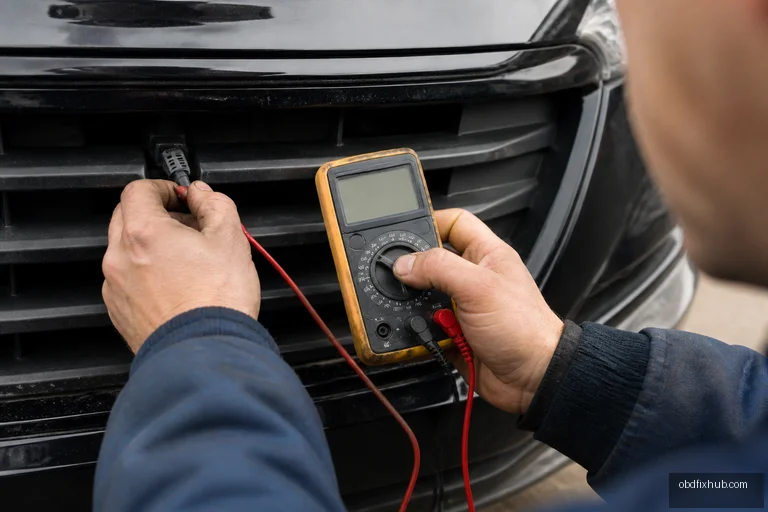
Locate the sensor, usually behind the front grille, in the lower bumper area, or near a side mirror. Look for a missing sensor, crushed housing, green corrosion on the terminals, water inside the connector, and wires stretched tightly across a bracket. Pay special attention after a bumper replacement or minor front-end collision.
3. Verify the wiring with a wiring diagram
Most circuits include a signal wire and a sensor ground, although some designs use a shared reference or a different module arrangement. With the ignition on, check for the expected reference voltage and a solid ground. Do not assume every two-wire connector has the same pinout; probing the wrong terminal can damage a control module.
4. Test the sensor resistance or signal
Disconnect the sensor before measuring resistance. Compare the measured resistance with the manufacturer’s temperature chart, not a universal value. Warm the sensor gradually with your hand or a controlled heat source and watch for a smooth change; a reading that jumps, remains open, or changes only when the connector is moved suggests an internal fault or terminal problem.
5. Perform a wiggle test
While monitoring the live temperature data, gently move the harness near the sensor, grille, and connector. If the temperature suddenly changes, the problem is probably an intermittent wire or loose terminal. This test is particularly useful when the code returns only in wet weather or after driving over rough roads.
How to Fix P0070
The correct repair depends on the test results. Replace the ambient temperature sensor if its resistance is outside specification or its reading does not change smoothly with temperature. Clean light terminal oxidation with an approved electrical-contact cleaner, but replace terminals that are loose, spread, or heavily corroded.
Repair damaged wires using the manufacturer’s recommended method. A sealed crimp connection with heat-shrink protection is generally more durable in a bumper harness than twisting wires together or using an unsealed household connector. Secure the harness away from sharp edges, cooling fans, exhaust heat, and areas where the bumper can pinch it.
If the sensor and wiring pass every test, check for software updates, technical service bulletins, and module-related faults for that specific vehicle. A control-module replacement should be a last step, supported by documented voltage and continuity tests—not a guess based only on the presence of P0070.
Can You Drive With P0070?
Usually, the vehicle can be driven short-term if it starts, runs normally, and has no overheating or severe drivability symptoms. However, the outside-temperature information may affect air-conditioning performance and, on some models, engine or transmission control. Avoid ignoring the code for months, especially if other temperature or cooling-system codes are present.
How to Clear and Confirm the Repair
After repairing the fault, clear the code with a scan tool and compare the live ambient temperature with the actual temperature again. Drive through several conditions, including a cold start and normal road vibration, then rescan for pending or confirmed codes. Some vehicles need a complete ignition cycle or a short drive before the monitor runs, so an immediate “code not found” result does not always prove the repair is complete.
P0070 Repair Cost Considerations
The sensor itself is often inexpensive, but labor can increase if the connector is hidden behind a bumper or if a damaged harness must be repaired. A basic inspection may cost little, while diagnosis involving wiring access and manufacturer-specific testing takes longer. The most cost-effective approach is to pay for accurate diagnosis first; replacing a sensor without checking the connector is a common reason the code returns.
Frequently Asked Questions
Is P0070 serious?
P0070 is usually not an immediate safety emergency, but it should not be ignored. It can affect climate control and, depending on the vehicle, engine-management decisions. Have it diagnosed promptly if the vehicle shows additional warning lights or unusual running behavior.
Can a bad ambient temperature sensor cause overheating?
Normally, no. The ambient sensor measures outside air and is different from the engine coolant temperature sensor. A vehicle overheating with P0070 needs a separate cooling-system diagnosis rather than an automatic sensor replacement.
Where is the ambient air temperature sensor located?
Common locations include the front grille, lower bumper, radiator support, or side-mirror housing. The exact position depends on the model, and the sensor may look like a small plastic probe with a two-wire connector.
Will disconnecting the battery fix P0070?
Disconnecting the battery may erase the code temporarily, but it cannot repair an open wire, corroded terminal, or failed sensor. If the underlying fault remains, P0070 will return after the vehicle’s diagnostic monitor runs.
Can I replace the P0070 sensor myself?
Many owners can replace the sensor if it is accessible and the connector is undamaged. Before installing a new part, inspect the wiring and verify the live-data reading; otherwise, the original circuit fault may remain and the replacement will not solve the problem.
Bottom Line
P0070 points to a fault in the ambient air temperature sensor circuit, most commonly a failed sensor, corroded connector, or damaged front-end wiring. Start with the scan-tool reading and a careful visual inspection, then test voltage, ground, continuity, and sensor response against the vehicle’s specifications. That sequence produces a reliable repair and avoids replacing expensive modules unnecessarily.




