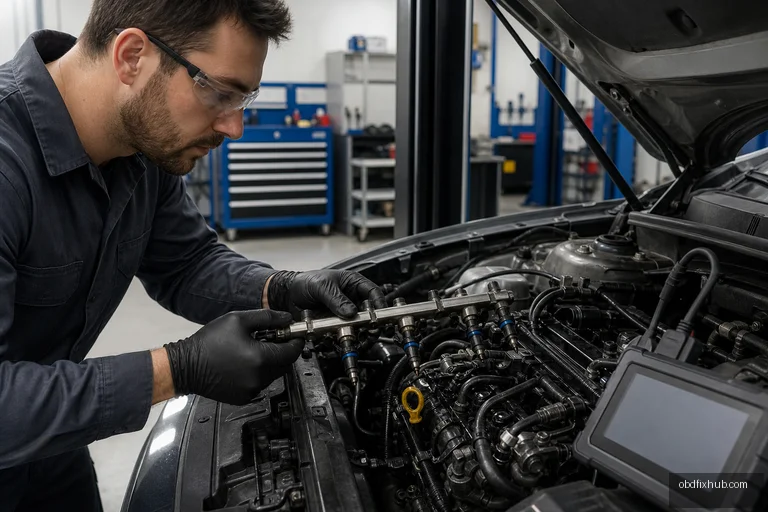
P0093 Fuel System Leak Detected – Large Leak means the engine computer has detected a major loss of fuel pressure, fuel volume, or fuel-system integrity. It may be caused by an external fuel leak, a failed pump, a leaking injector, a faulty pressure sensor, or an electrical problem that falsely reports low pressure. Because fuel can ignite and a lean or unstable engine can suffer damage, this code should be diagnosed promptly rather than cleared and ignored.
What Does P0093 Mean?
The powertrain control module (PCM) monitors the fuel system by comparing commanded fuel pressure with actual pressure and, on some vehicles, checking how quickly pressure drops after the engine is switched off. If the difference is larger than the manufacturer allows, the PCM stores P0093 and may activate limp mode.
The exact definition is not identical across every make and model. On some gasoline vehicles, P0093 is linked to a returnless fuel system or fuel pressure regulation problem. On certain diesel engines, it can indicate a substantial loss of high-pressure fuel, often caused by an injector, pressure-control valve, rail-pressure sensor, or fuel line fault. Always confirm the manufacturer-specific description before replacing parts.
Common Symptoms of P0093
A vehicle with this code may still start and drive, or it may lose power suddenly. The symptoms depend on whether the problem is a genuine leak, inadequate fuel delivery, or an inaccurate sensor signal.
- Check Engine Light or an engine management warning
- Hard starting, extended cranking, or an engine that will not start
- Rough idle, hesitation, stumbling, or misfires under load
- Reduced engine power or limp-home mode
- Engine stalling, especially during acceleration
- Visible fuel near the tank, fuel rail, injectors, or fuel lines
- A strong gasoline or diesel smell around the vehicle
- Poor fuel economy or unusually high fuel-trim readings
A raw-fuel smell is more important than the warning light itself. If fuel is dripping, pooling, or spraying, shut the engine off, keep away from cigarettes and sparks, and have the vehicle transported for inspection.
Most Likely Causes of the P0093 Code
1. External fuel leak
Cracked rubber hose, damaged plastic line, a loose quick-connect fitting, a leaking fuel filter housing, or a split tank can reduce system pressure. A leak may only appear while the pump is running, so a dry driveway does not completely rule it out. Inspecting with the engine running can be dangerous; a technician should use the correct pressure-testing procedure and protective equipment.
2. Weak or failing fuel pump
A worn pump may run but fail to produce the required pressure or volume. Restricted tank strainers, a clogged fuel filter, contaminated fuel, or a failing pump electrical circuit can create the same result. A pump that sounds louder than usual is a useful clue, but noise alone is not proof of failure.
3. Leaking or stuck-open injector
An injector that does not close properly can bleed pressure away after shutdown and flood one cylinder. Possible clues include difficult hot starts, fuel in the engine oil, a fuel-soaked spark plug on a gasoline engine, white smoke on some diesels, or a noticeable oil-level increase. Fuel dilution can quickly damage bearings, so the oil should be checked before continued driving.
4. Fuel pressure regulator or control valve problem
The pressure regulator, fuel metering valve, or rail-pressure control valve may stick, become contaminated, or lose its electrical command. On common-rail diesel engines, never loosen a high-pressure line while the engine is running. Rail pressure can penetrate skin and cause severe injury.
5. Faulty fuel pressure sensor or wiring
A pressure sensor that reports an implausible value can trigger P0093 even when no fuel is leaking. Corroded connectors, damaged wiring near the fuel tank, poor grounds, and an incorrect reference voltage are frequent causes of misdiagnosis. A scan tool showing an impossible pressure reading with the key on and engine off is a strong reason to test the circuit before replacing the pump.
How to Diagnose P0093 Correctly
- Check for immediate danger. Look for wet fuel, vapour, smoke, or a strong odour. Do not continue driving if a leak is visible or the engine compartment smells heavily of fuel.
- Record all codes and freeze-frame data. Related codes such as low fuel pressure, injector, or sensor faults can reveal whether the event occurred during starting, acceleration, or cruising.
- Compare actual and commanded pressure. Use a capable scan tool and the vehicle’s service specifications. Do not rely on a generic pressure number because gasoline port-injection, direct-injection, and diesel systems operate at very different pressures.
- Perform a fuel-pressure and volume test. The pressure should be checked during key-on, cranking, idle, and load conditions where applicable. A pressure drop after shutdown may indicate an injector, check valve, regulator, or external leak.
- Inspect the electrical side. Test pump voltage, ground quality, fuse and relay operation, sensor reference voltage, signal return, and connector tension. A voltage-drop test under load is more useful than simply checking for battery voltage with the connector unplugged.
- Test individual components. Depending on the vehicle, this may include injector balance testing, a return-flow test on a diesel, smoke or pressure testing of a low-pressure circuit, or a regulator command test.
A practical diagnostic example is a vehicle that sets P0093 only during hard acceleration. If static pressure is normal but pressure collapses under load, the technician should investigate fuel volume, tank restriction, pump current draw, and power supply before blaming the pressure sensor. Replacing the sensor first would not correct a pump that cannot keep up.
P0093 Repair: What Usually Fixes It?
The repair depends on the failed part. Common fixes include replacing a split fuel hose, tightening or renewing a sealing connector, replacing the fuel filter, repairing pump wiring, installing a fuel pump module, replacing a pressure regulator, or servicing a leaking injector. On diesel systems, contamination or metal debris from a failed high-pressure pump may require extensive fuel-system cleaning rather than a single component replacement.
After the repair, the system should be inspected for leaks, fuel pressure should be verified under the original failure conditions, and the code should be cleared with a scan tool. A proper road test should confirm that commanded and actual pressure remain within specification. If the engine oil smells like fuel or the oil level has risen, change the oil after repairing the fault.
Can You Drive With P0093?
Do not drive the vehicle if fuel is leaking, fuel vapour is strong, the engine is stalling, or the engine oil is diluted. Even without an obvious leak, continued driving with unstable fuel pressure can leave you stranded, damage the catalytic converter through misfires, or cause severe damage on some diesel systems. If the vehicle runs normally and no leak is present, a short trip to a repair facility may be possible, but towing is the safer choice.
How Much Does a P0093 Repair Cost?
Costs vary widely because P0093 can result from a simple damaged hose or a high-pressure diesel fuel-system failure. A connector, fuse, or hose may be relatively inexpensive, while a fuel pump, injector, or diesel high-pressure pump can cost substantially more. Diagnostic time is worthwhile: pressure testing and electrical checks can prevent an unnecessary pump or injector replacement.
Key Takeaway
P0093 is not a code to dismiss as a harmless emissions fault. Treat it as a fuel-pressure or fuel-leak warning, check for immediate fire hazards, and diagnose the system using manufacturer pressure specifications and live data. If there is visible fuel or a strong smell, switch the engine off and arrange professional recovery.
Frequently Asked Questions
Is P0093 the same as an EVAP large-leak code?
No. P0093 generally concerns fuel delivery or fuel-pressure loss, while codes such as P0455 usually relate to an evaporative-emissions system leak. The exact definition can vary by vehicle, so verify the code in model-specific service information.
Can a bad fuel cap cause P0093?
A loose or damaged fuel cap normally causes an EVAP leak code rather than P0093. It should still be checked, but replacing the cap alone is unlikely to repair a genuine fuel-pressure problem.
Can low fuel cause the P0093 code?
Driving with very low fuel can expose a weak pump or allow the pump to draw air during hard cornering, but low fuel by itself is not usually the root cause. If the code returns after refuelling, test pump pressure, volume, and electrical supply.
Should I replace the fuel pump immediately?
No. Confirm fuel pressure, fuel volume, pump voltage, wiring integrity, and sensor readings first. A leaking injector, restricted filter, poor ground, or faulty pressure sensor can produce the same symptoms and code.




