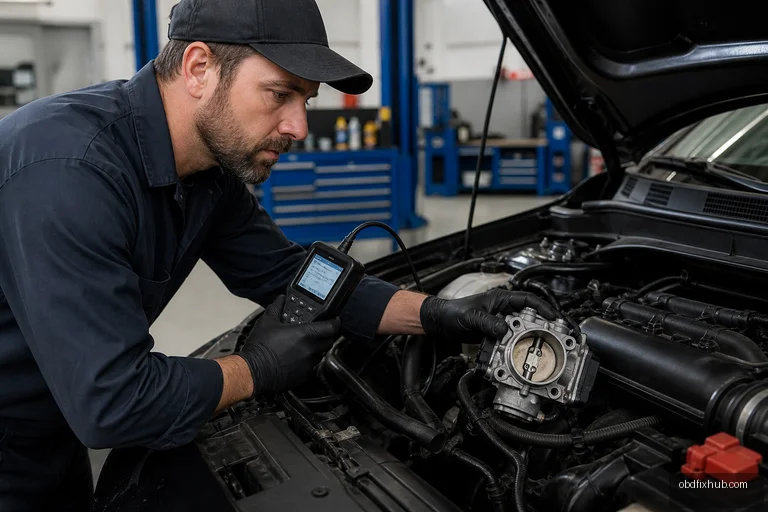
P0505 Idle Control System: Meaning, Causes, Symptoms & Fix
P0505 means the engine computer has detected a malfunction in the idle speed control system. In practical terms, the PCM cannot maintain the commanded idle speed, often because of a vacuum leak, a dirty throttle body, a failed idle air control valve, damaged wiring, or an electronic throttle problem. The correct repair depends on testing the air path and electrical signals rather than replacing the valve immediately.
This is an informational troubleshooting guide for the common OBD-II code P0505 Idle Control System. The code appears on many vehicles, but the exact diagnostic procedure and idle relearn process vary by manufacturer.
What Does P0505 Idle Control System Mean?
At idle, the engine needs a carefully controlled amount of air. On older vehicles, an idle air control valve, usually called an IAC valve, meters bypass air around the closed throttle plate. On newer vehicles, the electronic throttle body often performs the same job without a separate IAC valve.
When the PCM commands a specific idle speed but sees the engine speed rise, fall, or remain outside the expected range, it may store P0505. This does not automatically prove that the idle control valve is defective. The computer is reporting a control-system problem, not naming one failed part.
P0505 Symptoms to Watch For
The most obvious symptom is unstable engine speed when the vehicle is stopped. A vehicle may idle normally when cold but surge or stall after warming up, especially when the headlights, air conditioning, or power steering load is added.
- Check Engine Light illuminated
- Engine stalling when coming to a stop
- High or unusually low idle speed
- Idle surging up and down
- Hard starting after the engine warms up
- Rough idle or excessive vibration
- Engine hesitation when the throttle is released
- Idle speed dropping when the air conditioner engages
A useful real-world clue is how the engine behaves with electrical loads. If the idle drops sharply when the blower motor, rear defroster, or headlights are switched on, the PCM may be unable to compensate for the added load, or the engine may have an air or fuel problem that is exposing a weak idle-control response.
What Causes P0505?
1. Dirty throttle body or idle air passage
Carbon deposits can narrow the air passage around the throttle plate. Even a thin ring of buildup can make idle control sluggish, particularly on high-mileage vehicles that spend much of their time in city traffic. Cleaning may help, but the throttle plate should not be forced open on some electronically controlled systems.
2. Failed idle air control valve
An IAC valve can stick from carbon contamination, develop an internal electrical fault, or respond too slowly. A valve that is physically stuck may produce a high idle, stalling, or an idle that changes when the connector is tapped or moved. Resistance testing alone is not always conclusive; a valve can have acceptable resistance and still stick mechanically.
3. Vacuum or intake air leak
A split PCV hose, loose intake boot, leaking intake manifold gasket, brake-booster hose, or failed purge valve can allow unmetered air into the engine. The PCM then struggles to control idle speed. Inspecting hoses by eye is not enough in many cases because small cracks often open only when the rubber is flexed.
4. Wiring, connector, or power supply problems
Corrosion in the IAC connector, a broken ground, damaged wiring near the throttle body, or a blown fuse can interrupt valve operation. Oil contamination inside a connector is another commonly missed cause. A professional diagnosis should include voltage and ground checks under load, not only a visual inspection.
5. Electronic throttle body faults
On vehicles without a separate IAC valve, P0505 may relate to the throttle actuator, throttle position sensors, carbon buildup, or a failed throttle-body motor. Related codes such as throttle position or actuator codes can provide important clues and should be diagnosed first.
6. Other engine-management problems
Misfires, incorrect fuel pressure, an inaccurate mass airflow sensor, an exhaust gas recirculation valve stuck open, or a major evaporative-emissions leak can all disturb idle quality. If the scan tool shows misfire, fuel-trim, or airflow codes alongside P0505, repairing only the idle valve may not solve the problem.
How to Diagnose P0505 Correctly
A good diagnosis starts before any part is removed. Record all stored and pending codes, freeze-frame data, engine temperature, commanded idle speed, and actual RPM. Freeze-frame information can reveal whether the fault appeared during a cold start, deceleration, or when the engine was already warm.
- Check for related codes. Misfire, lean-condition, throttle-position, and mass-airflow codes may identify the primary fault.
- Inspect the intake system. Examine the air duct, PCV hoses, brake-booster hose, purge line, manifold area, and throttle-body gasket.
- Test for vacuum leaks. A smoke test is generally more reliable than spraying flammable chemicals around a running engine.
- Inspect the throttle body and IAC valve. Look for carbon, sticking, damaged connectors, and signs of water or oil intrusion.
- Check electrical circuits. Verify the correct power, ground, control signal, and wire continuity using the vehicle wiring diagram.
- Use live data. Compare commanded idle, actual RPM, short-term fuel trim, long-term fuel trim, throttle angle, and IAC position where available.
- Repair the root cause, then perform the required relearn. Some vehicles need an idle or throttle-position relearn before the repair is complete.
One practical diagnostic distinction is fuel trim. Strong positive fuel trims at idle that improve noticeably at higher RPM often point toward a vacuum leak. If trims remain abnormal across the RPM range, investigate fuel delivery, airflow measurement, or exhaust leaks as well.
How to Fix P0505 Idle Control System Malfunction
The repair may be as simple as replacing a split vacuum hose or cleaning a contaminated throttle body. If testing confirms an electrically or mechanically failed IAC valve, replace it with a quality part and inspect the connector before installation. A new valve connected to a corroded terminal will usually produce the same code again.
For an electronic throttle body, follow the manufacturer’s cleaning instructions and use the specified throttle or idle relearn procedure. Do not assume that disconnecting the battery completes the relearn. Some vehicles require a scan tool, a specific ignition sequence, or a road-test procedure before idle control returns to normal.
After the repair, clear the code, start the engine without touching the accelerator, and allow it to reach operating temperature if the service procedure permits. Confirm stable idle with the air conditioner and electrical loads switched on, then perform a complete drive cycle and rescan for pending codes.
Can You Drive With a Bad Idle Control Valve?
Short-distance driving may be possible if the vehicle only has a slightly unstable idle and does not stall. However, driving is not risk-free. An engine that stalls while turning, entering traffic, or stopping at an intersection can cause a loss of power steering assistance and reduce braking assistance after repeated pedal applications.
Do not continue driving if the engine stalls frequently, the throttle sticks, the Check Engine Light flashes, the vehicle accelerates unexpectedly, or the idle is extremely high. Arrange diagnosis promptly, particularly if the vehicle is needed in heavy traffic or on steep roads.
How Much Does It Cost to Fix an Idle Control Valve?
Repair costs depend heavily on the vehicle and whether it uses a separate IAC valve or an electronic throttle body. Typical U.S. shop pricing is approximately:
- Vacuum hose or minor intake repair: $50–$250
- Throttle-body cleaning: $100–$250
- IAC valve replacement: $150–$500, including labor on many vehicles
- Electronic throttle-body replacement: $400–$1,200 or more
- Electrical diagnosis or wiring repair: $100–$400, depending on access and fault location
These are planning ranges, not a quote. Dealer labor rates, aftermarket versus original-equipment parts, vehicle packaging, and the need for a throttle relearn can change the final bill. Ask whether diagnostic time, programming, and idle relearn are included before approving the repair.
How Do You Reset an Idle Air Control Valve?
There is no universal reset method for every vehicle. In most cases, the correct process is to repair the underlying fault, clear the P0505 code with an OBD-II scanner, and complete the manufacturer’s idle or throttle relearn procedure.
Disconnecting the negative battery cable for several minutes may erase adaptive memory on some older vehicles, but it can also reset radio settings, security features, and other learned values. It does not repair a vacuum leak or a failed valve. On many modern vehicles, a scan tool is the safest way to reset throttle adaptation and confirm that the PCM has accepted the new idle position.
Frequently Asked Questions
Is P0505 caused by a bad idle air control valve?
It can be, but not necessarily. Vacuum leaks, a dirty throttle body, wiring faults, electronic throttle problems, and other engine issues can trigger the same code.
Will cleaning the throttle body fix P0505?
Cleaning can fix the code when carbon buildup restricts the idle air passage. It will not correct a damaged actuator, faulty wiring, intake leak, or failed sensor.
Can a low battery cause P0505?
Low voltage or poor battery connections can disrupt actuator operation and create misleading codes. Check charging voltage and grounds, especially if several unrelated codes appeared at the same time.
Do I need a new IAC valve after clearing P0505?
No. Clearing the code only removes the stored fault from memory. If the original cause remains, P0505 will return after the PCM runs its idle-control checks.
Bottom Line
P0505 is a control-system warning, not a guaranteed idle air control valve failure. Start with related codes, intake leaks, throttle-body condition, and electrical testing before buying parts. Once the root cause is repaired, clear the code and complete the correct idle relearn procedure; that approach is faster, cheaper, and more reliable than repeatedly replacing components.




