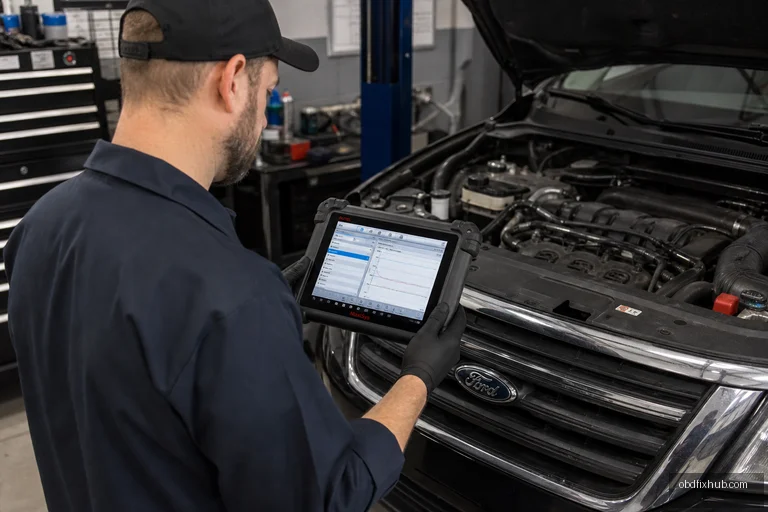
P0700 transmission control system MIL request means the transmission control module has detected a fault and asked the engine computer to turn on the check engine light. P0700 is usually only a communication or notification code; the real problem is normally stored as a manufacturer-specific code inside the transmission control module (TCM). The correct fix is to scan the TCM, repair the underlying fault, and then verify that the code does not return.
What Does P0700 Mean?
P0700 is a generic OBD-II diagnostic trouble code defined as Transmission Control System MIL Request. The transmission control system has identified an abnormal condition serious enough to request a malfunction indicator lamp, or MIL, on the instrument panel.
Unlike a code that directly identifies a failed solenoid or sensor, P0700 does not tell you which transmission component is defective. It is best understood as a warning from the transmission computer to the engine computer: the transmission module has more information available, and that information must be retrieved with a scan tool that can access the TCM.
Common Symptoms of a P0700 Code
Symptoms depend on the TCM code that triggered the MIL request. Some vehicles drive almost normally, while others enter a protective operating mode called limp mode. Typical symptoms include:
- Check engine light or transmission warning light
- Harsh, delayed, or erratic gear changes
- Transmission stuck in one gear, often third gear or another fail-safe gear
- Delayed engagement when selecting Drive or Reverse
- Slipping, flaring engine speed, or inability to shift
- Reduced fuel economy
- Transmission overheating or an unusual burning smell
- Intermittent symptoms that appear after the vehicle warms up
A vehicle with only a stored P0700 and no drivability symptoms may have an intermittent electrical or communication issue. A vehicle that is stuck in gear, slipping badly, or refusing to move should be treated as a potentially serious transmission problem rather than a simple warning-light issue.
What Causes P0700?
The code can be caused by an internal transmission fault, an electrical problem, or a loss of communication between modules. The most common causes include:
- Failed shift solenoid, pressure-control solenoid, or transmission speed sensor
- Low, contaminated, overheated, or incorrect transmission fluid
- Damaged transmission wiring, loose connectors, or corrosion near the transmission case
- Faulty transmission control module or valve body
- CAN bus communication failure between the TCM and PCM
- Weak battery, failing alternator, or unstable system voltage
- Blown fuse, poor ground, or an ignition-power supply problem
- Software calibration issue or a manufacturer technical service bulletin
Fluid level deserves special attention. On many modern vehicles, the transmission does not have a traditional dipstick, and the fluid must be checked at a specified temperature through a level plug. Guessing the level or adding universal fluid can create new shift problems and make diagnosis more difficult.
How to Diagnose and Fix P0700
There is no reliable one-part repair for P0700. A professional diagnosis follows the information trail from the transmission module rather than replacing parts based on the generic code alone.
1. Scan every control module
Use a scan tool capable of communicating with the TCM, not just a basic code reader that reads the engine computer. Record all active, pending, and history codes, along with freeze-frame data. Codes such as a solenoid circuit fault, input-speed sensor fault, low-voltage fault, or communication fault are usually the key to the repair.
2. Check battery and charging voltage
A weak battery can absolutely cause P0700, especially during engine cranking. Check the battery with the vehicle off and test the charging system with the engine running and electrical loads switched on. Low voltage, excessive alternator ripple, or a loose battery terminal can interrupt TCM operation and generate misleading transmission codes.
Do not condemn the TCM until power and ground have been tested under load. A voltage reading that looks normal with no electrical load may still drop at the module connector when the transmission circuits are active.
3. Inspect fuses, grounds, connectors, and wiring
Inspect the transmission harness where it passes close to the exhaust, engine mounts, and transmission housing. Look for chafing, oil-soaked insulation, bent terminals, water intrusion, and green corrosion. Check TCM grounds for excessive voltage drop instead of relying only on a visual inspection.
4. Verify fluid condition and transmission operation
Check the fluid according to the manufacturer’s procedure. Dark or burned-smelling fluid, metal debris, or a low level may point to internal wear, while a clean fluid level does not rule out a solenoid, sensor, or valve-body issue. If the transmission is slipping, continued driving can turn a manageable electrical fault into expensive clutch damage.
5. Test the specific component identified by the TCM code
Depending on the vehicle, testing may include solenoid resistance, circuit continuity, sensor signal voltage, hydraulic pressure, and CAN network integrity. A replacement solenoid or valve body should be confirmed by test results, because several different faults can produce similar shifting symptoms.
6. Clear codes and perform a verification drive
After the repair, clear the codes with the scan tool and complete the required drive cycle. Confirm that the TCM communicates correctly, the transmission reaches normal operating temperature, and shifts occur without a new warning. If P0700 returns immediately, the underlying TCM code was not resolved or the module still has a power, ground, or communication problem.
Can You Still Drive With a P0700 Code?
Sometimes, but only for a short distance and only if the vehicle shifts normally, the fluid is not leaking, and no severe symptoms are present. Driving gently to a repair shop may be reasonable when the light is steady and the vehicle behaves normally.
Stop driving and arrange professional assistance if the transmission is slipping, banging into gear, stuck in one gear, overheating, leaking fluid, or refusing to engage Drive or Reverse. A flashing warning light, burning smell, or rapidly worsening shifting problem also calls for immediate attention. Limp mode is designed to protect the transmission, not to make long-distance driving safe.
Can a Bad Battery Cause P0700?
Yes. A weak battery, poor battery connection, failing alternator, or unstable ground can cause the TCM to reset or lose communication with other modules. This is especially common after a difficult cold start, battery replacement, jump-start, or extended period of low charge.
However, replacing the battery is not a complete diagnosis. If the correct battery and charging voltage are present, the next step is to retrieve the TCM-specific codes and inspect the module’s power, grounds, wiring, and network communication.
Practical Example: Why Clearing P0700 Is Not a Repair
Consider a vehicle that displays P0700 after shifting harshly from second to third gear. Clearing the code may turn off the light temporarily, but the TCM could still be storing a pressure-control solenoid code. If the solenoid circuit is not tested, the vehicle may continue to operate with excessive line pressure, causing harsh shifts and accelerating internal wear.
In another case, P0700 may appear after a battery was discharged. If the only TCM code is a low-voltage history code and the charging system tests correctly, the issue may be resolved after restoring battery voltage and completing a drive cycle. The distinction can save the owner from an unnecessary transmission replacement.
How Much Does a P0700 Repair Cost?
Cost varies widely because P0700 identifies a warning request, not a specific failed part. A diagnostic scan may cost less than a full transmission repair, while repairs can range from a battery terminal or wiring repair to a solenoid, valve body, TCM, or rebuilt transmission.
- Low-cost possibilities: battery, fuse, ground, connector, or wiring repair
- Moderate repairs: speed sensor, shift solenoid, fluid service, or software update
- Higher-cost repairs: valve body, TCM replacement and programming, or internal transmission rebuild
Ask the repair shop for the exact TCM codes, test results, and reason for the recommended repair. That documentation is more useful than a diagnosis based solely on the generic P0700 code.
Final Takeaway
P0700 means the transmission control module requested the check engine light; it does not identify the failed part by itself. The most effective repair is to scan the TCM for additional codes, test battery voltage and grounds, inspect transmission wiring and fluid, and then repair the confirmed fault. If your vehicle is slipping, stuck in gear, overheating, or refusing to move, avoid driving and have it diagnosed promptly.
Frequently Asked Questions
How do you fix a P0700 transmission control system malfunction?
Retrieve the manufacturer-specific codes stored in the TCM, then repair the confirmed cause. Possible repairs include correcting low voltage, repairing wiring, replacing a sensor or solenoid, updating software, or addressing an internal transmission fault.
How do you fix a transmission control system MIL request?
Do not simply erase P0700. Use a TCM-capable scan tool, inspect power and grounds, check fluid and wiring, diagnose the additional TCM code, complete the repair, and verify the result with a drive cycle.
Can I still drive with a P0700 code?
If the vehicle shifts normally and the light is steady, a short, gentle drive to a repair facility may be acceptable. Do not continue driving if it slips, bangs into gear, overheats, leaks fluid, or enters limp mode.
Can a bad battery cause a P0700?
Yes. Low cranking voltage, poor terminals, a weak alternator, or a bad ground can interrupt TCM communication and trigger P0700. Battery and charging-system testing should be part of the initial diagnosis.




