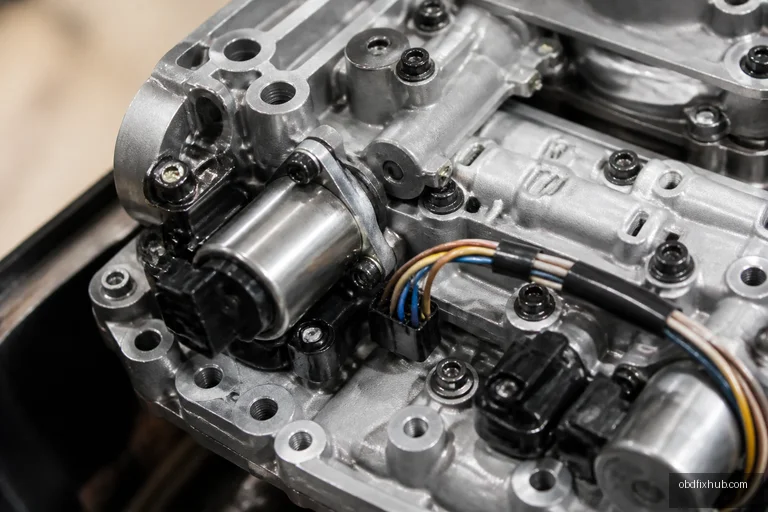
When the P0750 Shift Solenoid A code appears, the transmission control system has detected a problem with the electrical circuit or operation of Shift Solenoid A. The fault may be caused by a failed solenoid, damaged wiring, low or contaminated transmission fluid, a valve body problem, or—in less common cases—a transmission control module issue. Do not replace the solenoid solely because the code names it; accurate testing must identify whether the problem is electrical, hydraulic, or mechanical.
What Does P0750 Shift Solenoid A Mean?
P0750 is a generic OBD-II powertrain code used by many automatic-transmission vehicles. Shift solenoids are electronically controlled valves inside the transmission or valve body. They direct hydraulic pressure to the appropriate clutch packs and bands so the transmission can select the required gear.
With P0750 stored, the powertrain control module or transmission control module has detected an abnormal condition in the circuit assigned to Solenoid A. Depending on the vehicle manufacturer, that solenoid may control a particular gear change or hydraulic passage. The exact gear relationship is not universal, so the manufacturer’s service information matters.
In practical terms, the code usually means one of three things: the module cannot electrically control the solenoid, the solenoid does not respond as expected, or the transmission cannot produce the hydraulic result the computer requested.
P0750 Symptoms to Watch For
Some vehicles still drive normally when the code first sets, while others enter fail-safe mode immediately. A brief electrical interruption can store P0750 before a driver notices any shifting problem, so a warning light should not be ignored simply because the vehicle feels acceptable.
- Illuminated Check Engine or transmission warning light
- Harsh, delayed, or slipping shifts
- Transmission stuck in one gear or starting in a high gear
- Failure to shift into a specific gear
- Engine RPM flaring during an upshift
- Reduced fuel economy
- Transmission limp mode or limited performance
- Intermittent symptoms that appear after the vehicle warms up
A particularly useful clue is whether the fault appears during hot operation. A solenoid or internal connection may pass a cold resistance test but fail once heat changes the winding resistance or causes a component to bind.
Common Causes of P0750
1. Failed Shift Solenoid A
The solenoid coil can develop an open circuit, an internal short, or excessive resistance. Its moving pintle can also stick because of varnish, debris, or metal particles in the fluid. On some transmissions, the solenoid is serviced separately; on others, it is part of a larger solenoid pack.
2. Damaged Wiring or Connectors
Broken wires near the transmission connector are a frequent cause of intermittent P0750 faults. Heat, oil contamination, road debris, water intrusion, and vibration can damage the insulation or loosen a terminal. A connector may look clean from the outside while a backed-out terminal fails under load.
3. Low, Incorrect, or Contaminated Fluid
Low fluid can reduce hydraulic pressure and create shift complaints, although it does not always cause the electrical code by itself. Burnt-smelling fluid, heavy debris, or the wrong fluid specification can make a solenoid stick or produce poor shift results that trigger additional codes.
4. Valve Body or Hydraulic Problems
A worn valve bore, stuck spool valve, blocked passage, or damaged gasket can prevent the commanded shift even when the electrical circuit is healthy. This is why replacing a solenoid without checking hydraulic operation sometimes fails to solve P0750.
5. Control Module or Power Supply Fault
A blown fuse, poor ground, unstable battery voltage, or a failed transmission control module can interrupt the solenoid circuit. Module failure is possible, but it should be considered only after power, ground, wiring, solenoid resistance, and command signals have been verified.
How to Diagnose P0750 Correctly
- Scan all codes and review freeze-frame data. Record transmission temperature, vehicle speed, commanded gear, and battery voltage when the fault occurred. Other codes, such as gear-ratio or pressure-control codes, may change the diagnosis.
- Check the fluid and transmission connector. Verify the level using the manufacturer’s procedure, inspect the fluid condition, and look for leaks. Examine the connector for corrosion, bent pins, oil intrusion, and damaged wiring.
- Test power, ground, and circuit continuity. Use a wiring diagram rather than guessing which wire belongs to Solenoid A. Check for an open circuit, short to ground, short to voltage, and excessive voltage drop while the harness is moved.
- Measure solenoid resistance. Compare the reading with the vehicle-specific service specification. A generic resistance value cannot be applied to every transmission, and a normal ohm reading does not prove that the solenoid is mechanically free.
- Use a bidirectional scan tool when available. Command the solenoid on and off while monitoring current, pressure, and shift response. An activation test can reveal a circuit that passes a static multimeter test but fails under real operating conditions.
- Check hydraulic and mechanical operation. If the circuit tests correctly, a technician may need to perform a pressure test, inspect the valve body, or evaluate clutch and gear-ratio data before recommending internal transmission work.
One field-tested tip is to compare P0750 with the vehicle’s other transmission data instead of treating the code in isolation. If the solenoid current is correct but the commanded gear never produces the expected ratio, the problem may be hydraulic or mechanical rather than an electrical solenoid failure.
P0750 Shift Solenoid A Fix
The correct repair depends on the test results. Common repairs include repairing or replacing the transmission harness, cleaning or replacing a damaged connector, correcting the fluid level, servicing the valve body, or replacing Shift Solenoid A or the complete solenoid assembly.
After the repair, the technician should clear the codes and perform a controlled road test. The test should include the shift event that originally set the code, with the transmission at the correct operating temperature. A successful repair is confirmed by normal commanded shifts and the absence of returning diagnostic codes—not simply by turning off the warning light.
Transmission fluid service can help when the fluid is degraded or the solenoid is sticking from deposits, but it is not a guaranteed cure for an electrical circuit fault. Likewise, a transmission flush may be inappropriate for a severely damaged unit. Follow the manufacturer’s service procedure and use only the specified fluid.
How Much Does P0750 Repair Cost?
Costs vary substantially by vehicle design and access. A wiring repair or connector service may be relatively inexpensive, while a solenoid pack or valve body replacement can require several hours of labor. If the code is accompanied by slipping, metal in the pan, or multiple gear-ratio faults, the final repair may involve internal transmission work.
Before approving an expensive repair, ask for three details: the measured fault, the test that confirmed it, and whether the recommended part is a single solenoid, a solenoid pack, or a valve body. This simple request helps prevent parts replacement based only on the code description.
Can You Drive With P0750?
Short-distance driving may be possible if the transmission shifts normally and the warning light is steady, but continued driving is risky when the transmission is slipping, stuck in one gear, or shifting violently. Excessive clutch slip creates heat and can turn a manageable solenoid or wiring repair into major transmission damage.
If the vehicle enters limp mode, loses forward or reverse drive, or produces a burning smell, stop driving and arrange professional diagnosis. Do not repeatedly force the vehicle through harsh shifts to see whether the problem disappears.
Summary
P0750 identifies a Shift Solenoid A circuit or performance problem, not automatically a defective transmission. Begin with a complete scan, fluid and connector inspection, vehicle-specific electrical testing, and—when necessary—hydraulic diagnosis. Repair the confirmed cause, then verify the result with a proper road test.
If your vehicle has stored P0750, record any related codes and shifting symptoms before visiting a repair shop. That information, combined with freeze-frame data, often saves diagnostic time and prevents an unnecessary solenoid or transmission replacement.
Frequently Asked Questions
Is P0750 always caused by a bad shift solenoid?
No. Damaged wiring, poor electrical connections, low or contaminated fluid, valve body wear, power supply problems, and control module faults can all produce the code. Testing the circuit is essential before replacing the solenoid.
Can low transmission fluid cause P0750?
Low fluid can cause poor shifting and hydraulic problems, but it does not normally create an electrical circuit fault by itself. It may contribute to a sticking solenoid or trigger additional transmission codes, so the level and condition should still be checked.
Will changing the transmission fluid fix P0750?
It may help if the solenoid is sticking because of contamination and the transmission is otherwise healthy. It will not repair a broken wire, failed coil, damaged connector, or defective control module.
How serious is the P0750 code?
Its severity ranges from an intermittent wiring issue to a fault that leaves the transmission in limp mode. Driving with slipping or harsh shifts can cause further damage, so prompt diagnosis is recommended.




