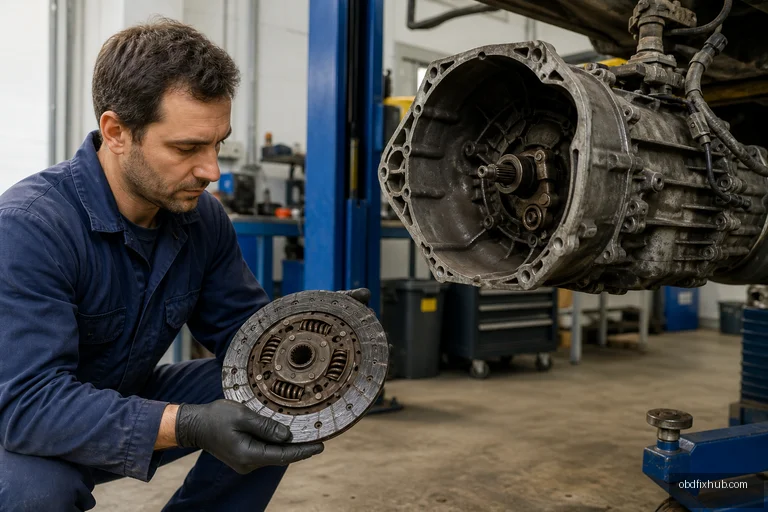
P0811 Excessive Clutch Slippage means the vehicle’s powertrain computer has detected that the clutch is slipping more than expected. In practical terms, engine speed rises without a matching increase in vehicle speed, especially under acceleration. The most common cause is a worn or contaminated clutch, but hydraulic faults, incorrect clutch adjustment, flywheel damage, or a failed clutch-position sensor can also trigger the code.
This is primarily an informational search: you want to understand the code before deciding whether the vehicle is safe to drive or needs immediate repair. The sections below explain the symptoms, likely causes, accurate diagnostic process, and the repairs that actually solve P0811 instead of merely clearing it.
What Does P0811 Mean?
P0811 is a generic OBD-II diagnostic trouble code associated with excessive clutch slip. The powertrain control module (PCM), transmission control module (TCM), or clutch-control system compares engine speed, transmission input speed, output speed, vehicle speed, and clutch engagement data. If those values show that the clutch is not transferring torque efficiently, the module stores P0811.
On a traditional manual transmission, the clutch connects the engine to the gearbox through a friction disc, pressure plate, and flywheel. When the clutch is released, the disc should clamp firmly. If it cannot hold the engine’s torque, the engine revs climb while the vehicle accelerates slowly. Some automated manual and dual-clutch transmissions can also set P0811 when their electronically controlled clutch cannot achieve or maintain the commanded engagement.
P0811 Excessive Clutch Slippage Symptoms
The most recognizable symptom is an engine-speed flare. For example, while accelerating uphill in fourth gear, the tachometer may jump from 2,500 to 3,500 rpm, yet the car gains very little speed. The revs may then drop suddenly when the clutch finally grabs.
- Check Engine Light or transmission warning light
- Engine rpm increasing faster than road speed
- Weak acceleration when climbing hills or towing
- A burning friction-material smell after traffic or hard acceleration
- Shuddering, grabbing, or vibration during takeoff
- Difficulty selecting gears, particularly if the clutch is not fully releasing
- Transmission entering limp mode on automated manual or dual-clutch vehicles
- Reduced fuel economy and an unusually high clutch engagement point
A burning smell is a useful warning, but its absence does not prove the clutch is healthy. A clutch can slip significantly during a short burst of acceleration without producing an obvious odor, especially when the friction surfaces are only beginning to fail.
Common Causes of Code P0811
1. Worn clutch disc or pressure plate
Normal friction wear eventually reduces the disc’s ability to transmit torque. A weak pressure plate spring can create the same problem by applying insufficient clamping force. High-mileage vehicles, cars used in heavy traffic, and vehicles that regularly tow are especially vulnerable.
2. Oil or hydraulic-fluid contamination
An engine rear-main seal, transmission input-shaft seal, or hydraulic leak can place fluid on the clutch disc. Even a small amount of oil can make the friction surface grab inconsistently and slip under load. Replacing the disc without repairing the leak usually leads to a repeat failure.
3. Flywheel damage
A flywheel with hot spots, cracks, severe scoring, or excessive runout prevents the new clutch from seating correctly. Dual-mass flywheels can also develop excessive free play or internal noise. Installing a clutch kit on a damaged flywheel is a common reason a repair does not last.
4. Incorrect clutch adjustment or hydraulic problems
On cable-operated systems, a misadjusted cable can prevent full clutch engagement. On hydraulic systems, air in the line, a failing master cylinder, a leaking slave cylinder, or a blocked compensating port can leave the release bearing partially applied. That small amount of pressure is enough to produce persistent slip.
5. Clutch-position sensor or wiring fault
Automated transmissions use sensors and actuators to measure clutch travel and engagement. A biased sensor, corroded connector, damaged wiring, or actuator problem can make the control module interpret an engagement error as excessive slip. In these cases, replacing the clutch immediately may waste money.
6. Incorrect adaptation or software issue
Automated manual and dual-clutch systems often require a clutch kiss-point or bite-point relearn after clutch replacement, actuator work, or battery-related voltage loss. If the learned values are wrong, the clutch may engage too late or too softly. Manufacturer software updates can also address known control strategies, so checking technical service bulletins is worthwhile.
How a Professional Diagnoses P0811
A good diagnosis begins with the vehicle’s exact transmission type and service history. The code should not be treated as proof that the clutch assembly is automatically defective. A technician should first scan every module, record freeze-frame data, and check for related codes involving clutch position, transmission speed sensors, actuator performance, or low system voltage.
- Confirm the complaint: During a controlled road test, the technician watches engine rpm, vehicle speed, commanded gear, clutch position, and transmission input speed. A sharp rpm increase without a corresponding speed increase is strong evidence of slip.
- Check for external causes: The clutch housing, bellhousing, master cylinder, slave cylinder, and transmission case are inspected for oil or hydraulic-fluid leaks.
- Inspect clutch operation: Pedal height, free play, release-bearing movement, cable adjustment, and hydraulic pressure are checked. A clutch that never fully clamps may have a control problem rather than a worn disc.
- Evaluate the flywheel and clutch assembly: If the transmission is removed, the disc thickness, rivet depth, pressure-plate condition, release bearing, flywheel surface, and dual-mass-flywheel play must all be assessed.
- Perform relearn procedures: Automated systems may need clutch adaptation, actuator calibration, or a specified drive cycle after repairs.
One practical mistake is performing a quick high-gear “stall test” repeatedly. It can confirm a slipping clutch, but repeated tests generate extreme heat and can turn a marginal clutch into a completely failed one. A scan-tool road test and careful inspection provide better information with less damage.
How to Fix P0811
The correct repair depends on the confirmed cause. A worn clutch normally requires replacement of the clutch disc, pressure plate, release bearing, and often the pilot bearing. The flywheel should be resurfaced only when its specification and construction permit it; many dual-mass flywheels should be replaced rather than machined.
- Repair any engine or transmission oil leak before installing friction components.
- Bleed and repair the hydraulic clutch system if pedal travel or pressure is incorrect.
- Adjust or replace a damaged clutch cable and verify correct free play.
- Replace a defective master cylinder, slave cylinder, clutch actuator, sensor, or wiring.
- Carry out the manufacturer’s clutch adaptation or bite-point relearn on automated systems.
- Install software updates when the manufacturer identifies a calibration issue.
After the repair, the vehicle should be road-tested under moderate load and rescanned. The clutch should engage smoothly, engine rpm should track road speed, and the data stream should show that commanded and actual clutch positions agree. Simply clearing P0811 without fixing the slip will usually cause the code and symptoms to return.
Can You Drive With P0811?
Short, gentle driving to a repair facility may be possible if the vehicle still moves normally and the clutch is only beginning to slip. Avoid towing, steep hills, heavy traffic, hard acceleration, and carrying a full load. Each slip event creates heat that can damage the flywheel and pressure plate.
Stop driving if the vehicle cannot maintain speed, the burning smell is strong, gears become difficult to select, the clutch pedal changes suddenly, or the transmission enters limp mode. A severely slipping clutch can leave you unable to move safely into traffic, and continued driving can turn a clutch-only repair into a much more expensive transmission or flywheel repair.
Summary: The Right Next Step for P0811
P0811 indicates excessive clutch slip, but the code alone does not identify the failed part. Start with a complete scan, a controlled road test, and an inspection for leaks, adjustment problems, sensor faults, and flywheel damage. If the clutch is worn, replace the complete related assembly and correct the cause of contamination; if the vehicle uses an automated clutch, finish with the required calibration procedure.
Do not keep clearing the code and driving until the clutch fails completely. Prompt diagnosis is the best way to protect the flywheel, avoid roadside breakdown, and prevent a relatively contained clutch repair from becoming a larger powertrain job.
Frequently Asked Questions About P0811
Can low clutch fluid cause P0811?
Yes, on vehicles with a hydraulic clutch, low fluid caused by a leak can prevent full engagement or release. The fluid level alone is not the diagnosis; the leak, air in the system, and master or slave cylinder operation must be checked.
Does P0811 always mean I need a new clutch?
No. A worn clutch is common, but incorrect adjustment, oil contamination, a damaged flywheel, wiring, sensors, or an actuator can also trigger the code. Testing should come before parts replacement.
Why does my car slip only in higher gears?
Higher gears place greater torque demand on the clutch at low engine speed. A marginal clutch may hold in first or second gear but slip in fourth, fifth, or sixth gear during hard acceleration or uphill driving.
Will changing the transmission fluid fix P0811?
Usually not. Manual transmission fluid does not restore worn friction material, and changing it will not repair a leaking seal or weak pressure plate. Fluid service helps only when the actual fault is related to an incorrect fluid level or a transmission-control problem.




