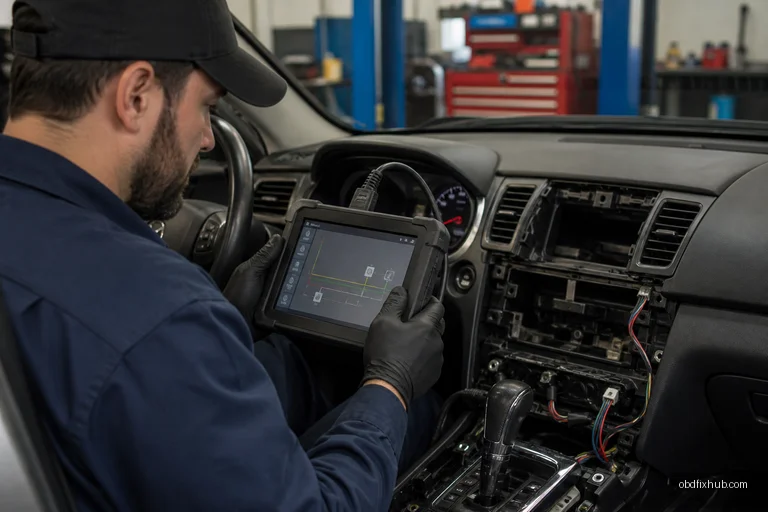
P0814 Transmission Range Display Circuit means the vehicle computer has detected a problem in the circuit that reports the selected gear to the instrument cluster or electronic display. The fault may come from a transmission range sensor, damaged wiring, poor power or ground, a misadjusted shift linkage, or—less commonly—the body control module, transmission control module, or instrument cluster.
This is usually an informational and diagnostic search intent: drivers want to understand the code, judge whether the vehicle is safe to drive, and identify the correct repair without replacing expensive parts unnecessarily. The most reliable approach is to test the gear-position signal at the source rather than immediately installing a new sensor.
What Does P0814 Mean?
Automatic transmissions use a range sensor, also called a transmission range switch, neutral safety switch, or park/neutral position switch, to tell the control modules whether the selector is in Park, Reverse, Neutral, Drive, or a lower gear. That information is also used to operate the PRNDL or gear-position display on the dashboard.
When the signal reaching the display or control module is missing, implausible, intermittent, or different from the actual shifter position, the system can set P0814. The exact wording and diagnostic strategy vary by manufacturer, so the factory service information for the specific year, engine, and transmission is important.
Common Symptoms of P0814
The symptoms depend on whether the problem affects only the display circuit or also the transmission range input used for shifting and starting. A vehicle with a simple display fault may drive normally, while one with an invalid range signal may enter fail-safe operation.
- The PRNDL display is blank, incorrect, flickering, or shows more than one position.
- The displayed gear does not match the selector position.
- The vehicle will not start in Park or Neutral, or starts only when the shifter is moved.
- Reverse lights remain on, fail to illuminate, or operate intermittently.
- Harsh shifting, delayed engagement, or limp-home mode may occur.
- The check engine light or transmission warning light is illuminated.
- Other communication, voltage, or transmission range codes may be stored.
A particularly useful clue is a display that changes when the shifter is gently moved or held between positions. That often points toward linkage adjustment, a worn range sensor, or a poor connector rather than an internal transmission failure.
Most Common Causes of the P0814 Code
1. Faulty transmission range sensor
The sensor can develop worn internal contacts, corrosion, or dead spots. On some transmissions it is mounted externally on the case; on others it is integrated into an internal transmission range switch assembly. An external sensor is generally easier to inspect, while an internal unit may require substantially more labor.
2. Misadjusted shift cable or linkage
If the cable is stretched, loose, bent, or incorrectly adjusted, the transmission manual lever may not reach the same position indicated by the cabin selector. This can create a P0814 even when the electrical sensor is functioning correctly. Always confirm that the transmission lever reaches its detents before condemning the sensor.
3. Damaged wiring or corroded connectors
Wiring near the transmission is exposed to heat, oil, road salt, water, and movement. Look for rubbed insulation, pulled terminals, green corrosion, loose connector locks, and fluid contamination inside the plug. A circuit can pass a quick continuity test and still fail under vibration if a terminal is loose.
4. Weak power supply or ground
Low battery voltage, a poor engine-to-body ground strap, or a shared fuse problem can distort the range signal. Check system voltage and relevant fuses before performing complicated module diagnosis. Intermittent electrical faults often appear after a battery replacement, jump-start, or repair near the transmission harness.
5. Instrument cluster or control module fault
If the transmission range signal is correct at the sensor and at the module connector but the display remains wrong, the instrument cluster or a body or transmission control module becomes more suspect. Module failure is less common than wiring, adjustment, or sensor problems, so it should be diagnosed last.
How to Diagnose P0814 Correctly
A professional diagnosis begins with a complete scan, not just a code reader that reports P0814. Record all stored and pending codes, freeze-frame data, transmission data, and module communication faults. Codes related to low voltage, CAN communication, or the transmission range sensor may reveal the primary failure.
- Verify the complaint. Move the selector through every position and compare the actual position, dashboard display, scan-tool range data, reverse lights, and starter operation.
- Inspect the linkage. Confirm that the shifter cable is secure and that the transmission manual lever reaches each detent cleanly. Do not rely only on the cabin indicator.
- Check the connector and harness. Inspect for oil, water, bent pins, pushed-out terminals, chafing, and harness tension. Repair wiring using proper sealed splices rather than twisting wires together.
- Test power, ground, and signal circuits. Use the wiring diagram and a multimeter. Some range sensors use separate switched circuits, while others produce a voltage or network signal, so pin tests must follow the vehicle-specific procedure.
- Use live data. Watch the transmission range parameter while slowly selecting each position. A missing, duplicated, or unstable position is more informative than the code alone.
- Perform a wiggle test. With live data displayed, gently move the harness and connector. If the reported gear changes without moving the selector, the wiring or terminal fit is suspect.
- Clear the code and verify the repair. Road-test the vehicle through Park, Reverse, Neutral, and Drive transitions, then rescan for returning codes.
Do not use resistance measurements across an electronic sensor unless the service procedure specifically allows it. Applying test voltage to the wrong terminal can damage a sensor or control module. Back-probing with the correct wiring diagram and using a fused test method is safer.
How to Fix P0814
The correct repair depends on the failed part. A loose connector may need terminal repair and weatherproofing; a damaged harness may require a properly routed replacement section; and a misadjusted cable must be aligned according to the manufacturer’s procedure. If the range sensor is defective, replace it and perform any required adjustment or calibration.
Some vehicles require a transmission range sensor relearn after installation. This may involve a scan-tool calibration, a specified selector sequence, or an adjustment with the transmission and shifter in a defined position. Skipping that step can leave the original symptom in place even with a new sensor.
If the display alone is wrong but scan data, starting operation, reverse lights, and transmission behavior are normal, investigate the cluster-side wiring and display module. If several modules report conflicting gear information, diagnose network communication and power supply before replacing the cluster or transmission controller.
Can You Drive With P0814?
Short-distance driving may be possible when the vehicle selects gears normally and the display is the only symptom. However, a faulty range signal can prevent starting, activate limp mode, select the wrong gear indication, or cause reverse lights and safety interlocks to operate incorrectly.
Stop driving and arrange professional diagnosis if the vehicle shifts harshly, enters fail-safe mode, rolls unexpectedly, will not reliably select Park, or shows a gear different from the actual position. Apply the parking brake and use wheel chocks when inspecting a vehicle with an uncertain Park signal.
Estimated Repair Considerations
Connector cleaning or linkage adjustment is usually less expensive than replacing a range sensor. External sensors can often be replaced quickly, but internal range switches may require pan removal or additional transmission work. Labor time, access, part design, and the vehicle’s diagnostic procedure make a generic repair price unreliable.
The most important cost-saving step is confirming the signal failure before buying parts. A sensor replaced on a vehicle with a broken ground wire will not solve P0814, and a transmission replacement is almost never a logical first response to this code alone.
Final Takeaway
P0814 identifies a problem with the transmission range information used by the gear-position display and related safety systems. Start with a full scan, verify the linkage, inspect the connector and harness, compare live data with the actual selector position, and test the sensor circuits using the correct wiring diagram. Repair the confirmed fault, complete any required relearn, and verify every gear position before returning the vehicle to service.
Frequently Asked Questions
Is P0814 a transmission failure?
Not necessarily. P0814 usually concerns the range sensor, display circuit, wiring, linkage, or related control signal. Internal transmission damage should not be assumed unless other test results support it.
Can a bad battery cause P0814?
Low voltage or a poor ground can create unreliable sensor and module signals, particularly after a weak start or jump-start. Check battery voltage, charging voltage, fuses, and grounds before replacing transmission components.
Will disconnecting the battery fix P0814?
Disconnecting the battery may temporarily erase the code, but it does not repair the underlying fault. If the problem remains, P0814 will return after the vehicle completes its diagnostic checks.
Do I need to replace the transmission range sensor immediately?
No. First verify the shift cable adjustment, connector condition, power, ground, signal wiring, and live-data response. A wiring or alignment fault can produce the same code as a failed sensor.




