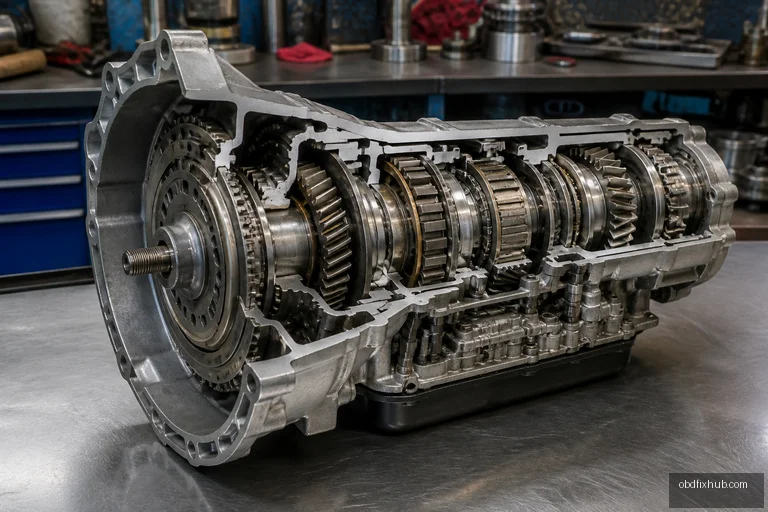
P088E Planetary Gear Set Failure: Meaning, Causes, Symptoms & Fix
P088E means the transmission control system has detected a failure or abnormal operation in a planetary gear set. In practice, that does not always mean the gears are already destroyed. Low transmission fluid, hydraulic pressure loss, a failed clutch pack, damaged bearings, wiring faults, or incorrect gear-ratio feedback can all trigger a P088E planetary gear set failure code. Accurate diagnosis requires more than clearing the code or replacing a solenoid.
What Does P088E Mean?
The planetary gear set is a compact arrangement of a sun gear, planet gears, a planet carrier, and a ring gear. Automatic transmissions use one or more of these gear sets to create different forward speeds and reverse. Clutches and bands hold or drive specific components so the transmission can change ratios smoothly.
When the transmission control module detects a ratio, speed, or engagement result that does not match the commanded operation, it may store P088E. The exact wording and diagnostic strategy can vary by manufacturer, transmission family, and software calibration, so the vehicle-specific service information should always take priority over a generic code description.
Common Symptoms of P088E Planetary Gear Set Failure
The symptoms depend on which gear set or associated clutch is affected. A vehicle may still move normally at first, while another may lose drive as soon as the transmission becomes hot. The most common signs include:
- Slipping during acceleration or under heavy load
- Harsh, delayed, or incorrect gear changes
- Loss of one or more forward gears
- Reverse not engaging or engaging with a long delay
- Transmission stuck in one gear or limp-home mode
- Whining, grinding, rattling, or clunking from the transmission
- Burnt-smelling, dark, or metal-contaminated transmission fluid
- Illuminated Check Engine or transmission warning light
- Reduced fuel economy and unusually high engine speed
A useful real-world clue is the relationship between noise and gear selection. A grinding noise present only in one range can point toward a damaged gear set or bearing, while a flare in engine speed during several shifts more often suggests clutch slip, low pressure, or worn friction material.
What Causes a P088E Code?
1. Low, degraded, or incorrect transmission fluid
Planetary gears and clutch packs depend on clean fluid at the correct pressure. A low level can allow aeration and pressure loss; overheated fluid can lose its friction characteristics and lubricating ability. Using the wrong fluid can also alter clutch engagement and produce abnormal shift behavior without immediately causing a mechanical failure.
2. Damaged planetary gears, carrier, or bearings
Broken gear teeth, excessive backlash, a cracked carrier, or worn thrust bearings can create ratio errors and mechanical noise. Metal particles from this type of damage often circulate through the valve body and cooler, which is why simply installing a replacement gear set without cleaning the hydraulic system can lead to a repeat failure.
3. Worn clutch packs or failed one-way clutches
The gear set itself may be intact while the clutch that controls it is slipping or failing to hold. Burned friction plates, a damaged piston seal, weak return springs, or a failed sprag can produce the same loss-of-ratio condition that the control module interprets as a planetary gear set problem.
4. Hydraulic or electronic control problems
A sticking valve, restricted filter, faulty pressure-control solenoid, damaged connector, or low line pressure can prevent the correct planetary member from being held. Before condemning hard parts, technicians should inspect transmission power and ground circuits, connector pins, fluid pressure, commanded solenoid operation, and input/output speed sensor data.
5. Software or calibration issues
Some vehicles require a transmission control module update or a clutch and gear-learn procedure after repair. A software issue is less common than fluid or mechanical damage, but it should not be ignored, especially when the code appeared after a battery replacement, module replacement, or transmission rebuild.
How to Diagnose P088E Correctly
A professional diagnosis should separate a genuine planetary gear failure from a problem that merely produces the same operating result. The following sequence prevents unnecessary parts replacement:
- Scan all modules. Record P088E, freeze-frame data, transmission temperature, commanded gear, actual gear, and any companion codes before clearing anything.
- Verify the complaint. Note whether the fault occurs cold, hot, during acceleration, during a particular shift, or only in reverse.
- Inspect the fluid and pan. Check level using the manufacturer procedure. Look for a burnt odor, clutch material, steel flakes, or larger fragments. Fine gray paste can be normal in small amounts, but sharp chips or gear-tooth pieces are a serious warning.
- Check electrical and hydraulic controls. Test the harness, grounds, solenoid resistance, sensor signals, and line pressure. A pressure test under the correct temperature and gear conditions is far more informative than guessing from the code alone.
- Compare speed data. Input and output speed readings can reveal whether the transmission is slipping, failing to engage a commanded element, or reporting an implausible signal.
- Inspect internally if evidence points to hard-part damage. Persistent grinding, metal in the pan, repeated ratio errors, or loss of a specific gear usually justifies valve-body removal or complete transmission disassembly.
P088E Repair Options
The correct fix depends on the failed component. A low fluid level caused by an external leak may require leak repair, the correct fluid, and a filter service. A faulty solenoid, wiring problem, speed sensor, or valve-body issue may be repaired without replacing the entire transmission.
If the pan contains substantial metal or the transmission has lost specific gears, repair usually involves replacing damaged planetary components, bearings, clutches, seals, and often the torque converter. The cooler and lines should be flushed or replaced according to the manufacturer procedure. Otherwise, old debris can quickly damage a rebuilt unit.
After repair, the technician may need to perform a transmission adaptive reset, clutch-volume index procedure, or road-learning cycle. Skipping this step can leave harsh shifts or incorrect line pressure even when the mechanical repair is sound.
Can You Drive With P088E?
Short-distance driving may be possible if the vehicle shifts normally and the code is intermittent, but continued use is risky. Every slipping event creates heat and removes more friction material from the clutch packs. If the transmission is grinding, losing drive, stuck in limp mode, or leaking fluid, stop driving and arrange a tow.
Do not treat a fluid change as a guaranteed cure when the fluid contains metal. Fresh fluid can temporarily improve shift quality while damaged gears continue to deteriorate, making the eventual repair more expensive.
How Much Does P088E Repair Cost?
Cost varies widely because P088E can result from a wiring fault, a valve-body problem, or a complete internal failure. Electrical diagnosis and a fluid service are usually far less expensive than removing and rebuilding the transmission. The estimate should identify the failed component, the condition of the cooler system, required programming, and whether a warranty is included.
Ask the repair shop to show you the fluid-pan debris and provide pressure or scan-data evidence before approving a full transmission replacement. This simple step helps distinguish a genuine planetary gear failure from a controllable hydraulic or electrical fault.
Final Takeaway
P088E is a serious transmission code, but it is not automatic proof that the planetary gear set must be replaced. Start with the vehicle-specific code definition, fluid condition, wiring, pressure readings, and speed-sensor data. If metal contamination, gear-specific loss, or grinding is present, stop driving and have the transmission inspected before secondary damage spreads through the valve body and cooler.
Frequently Asked Questions
Is P088E always caused by broken planetary gears?
No. A worn clutch pack, low line pressure, failed solenoid, incorrect fluid level, speed-sensor fault, or wiring problem can create the same code. Internal inspection is justified only after basic electrical, hydraulic, and fluid checks support it.
Will changing the transmission fluid fix P088E?
It may help when the problem is caused by low fluid, contamination, or a restricted filter. It will not repair broken gears, damaged bearings, burned clutches, or a failed carrier. Metal in the fluid is a warning that more than a routine service is needed.
Can a bad speed sensor trigger a planetary gear set code?
Yes. The control module uses input and output speed signals to verify the commanded gear ratio. An incorrect signal can imitate slip or gear-set failure, so sensor wiring and live data should be checked before transmission replacement.
Should I clear P088E and keep driving?
Clearing the code only erases the record; it does not correct the fault. If the transmission slips, grinds, loses drive, or enters limp mode, continued driving can turn a repairable problem into a complete rebuild.




