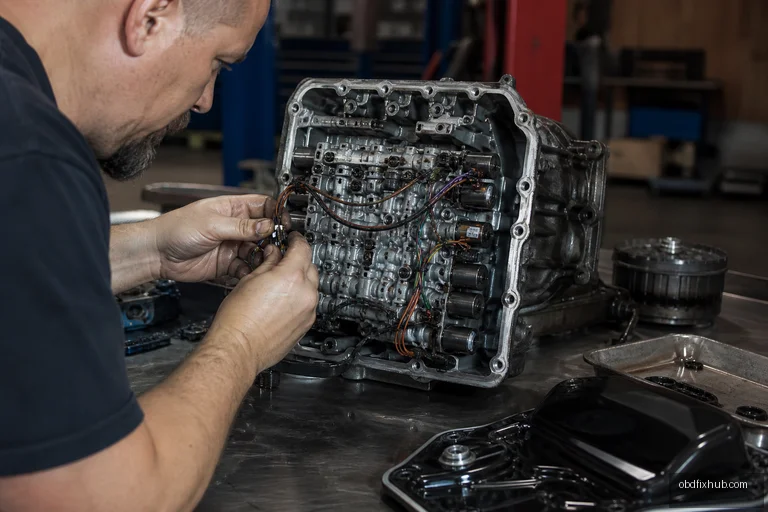
P0893 Multiple Gears Engaged means the transmission control module has detected a gear state that should not be possible, usually because it believes two transmission elements are applied at the same time. The code does not automatically prove that two physical gears are locked together; a faulty solenoid, incorrect fluid pressure, wiring problem, speed-sensor signal, or internal transmission fault can create the same electronic condition.
This is an informational search intent: most drivers want to understand the code, judge whether the vehicle is safe to drive, and learn what a proper repair involves. A correct diagnosis matters because replacing the transmission based only on P0893 can be an expensive mistake.
What Does P0893 Multiple Gears Engaged Mean?
Automatic transmissions use clutch packs, bands, valve-body passages, and electronic solenoids to select one gear at a time. The transmission control module, or TCM, compares commanded gear position with input speed, output speed, engine speed, and hydraulic behavior.
When those signals indicate that more than one forward gear may be applied, the TCM stores P0893. For example, if the module commands third gear but the speed ratio resembles two different gear states simultaneously, it may interpret the mismatch as multiple gears engaged.
The exact detection strategy varies by vehicle. Some manufacturers use P0893 for a genuine hydraulic or mechanical overlap, while others set it after identifying an implausible ratio caused by an electrical or sensor problem. Always check the factory service information for the specific year, engine, transmission, and calibration.
Common Symptoms of Code P0893
Drivers often notice the problem as a harsh shift or an unexpected loss of drive. The symptoms can appear immediately after the code is stored, or the vehicle may continue to operate normally until the transmission reaches a particular temperature or gear.
- Check Engine Light or transmission warning light
- Harsh, delayed, or erratic gear changes
- Transmission stuck in one gear or limp mode
- Engine flare between shifts, where RPM rises without normal acceleration
- Shuddering, bucking, or a feeling that the brakes are briefly applied
- Unexpected neutral, slipping, or loss of reverse
- Reduced vehicle speed and limited shift operation
- Transmission fluid overheating or a burning odor
A particularly useful clue is whether the symptom changes with temperature. A vehicle that shifts acceptably when cold but begins overlapping or slipping after 20 minutes may have a sticking valve, worn solenoid, restricted filter, or fluid-pressure problem rather than a simple software fault.
What Causes P0893?
1. Faulty shift solenoid or pressure-control solenoid
Solenoids regulate hydraulic pressure and determine which clutch circuits are filled. A solenoid can be electrically open, internally shorted, mechanically stuck, or contaminated by debris. Even when the resistance reading is within specification, the solenoid may fail under heat or may respond too slowly during an actual shift.
2. Valve body wear or a sticking valve
The valve body directs transmission fluid through small passages. Wear around a spool valve can allow cross-leakage between circuits, while varnish or metal debris can prevent a valve from returning fully. This is one of the reasons P0893 may be accompanied by harsh engagement, delayed shifts, or several solenoid-related codes.
3. Low, incorrect, or contaminated transmission fluid
Low fluid level can introduce aeration and unstable pressure. Overfilled fluid can foam and create a similar problem. The wrong fluid type, a restricted filter, or heavily degraded fluid can also change clutch fill times enough for the TCM to detect an impossible gear condition.
Check fluid level using the manufacturer’s exact procedure. Some transmissions require a specific temperature, a level vehicle, and a running engine; checking them like a conventional dipstick transmission can produce a misleading result.
4. Wiring, connectors, or power-supply faults
Transmission wiring is exposed to heat, vibration, oil, and road splash. Corrosion inside a connector or a partially broken conductor can interrupt a solenoid circuit for milliseconds—long enough to set a code but not always long enough to be obvious during a stationary test.
Inspect the transmission connector for fluid intrusion, pushed-back terminals, green corrosion, damaged insulation, and poor ground connections. A voltage-drop test under load is more informative than simply looking for battery voltage with the connector disconnected.
5. Faulty input or output speed sensor
The TCM needs accurate speed information to verify the selected gear. A sensor with an intermittent signal, damaged reluctor ring, excessive metal contamination, or incorrect air gap can report an implausible ratio. In this case, the transmission may be functioning mechanically while the control module incorrectly concludes that multiple gears are applied.
6. Internal clutch, band, or drum damage
Worn clutch packs, a damaged drum, broken retaining components, or a failed one-way clutch can create genuine mechanical overlap or uncontrolled clutch application. Metal in the pan, burnt fluid, persistent slipping, and a failure that remains after electrical tests point more strongly toward internal damage.
How to Diagnose P0893 Correctly
Do not begin by clearing the code or replacing every shift solenoid. A professional diagnosis should establish whether the TCM commanded an impossible gear, received false speed data, or encountered a real hydraulic problem.
- Scan all modules. Record P0893 and every related code before clearing anything. Codes for speed sensors, solenoid circuits, transmission temperature, low voltage, or communication can change the diagnostic direction.
- Review freeze-frame data. Note vehicle speed, commanded gear, actual gear, transmission temperature, throttle position, and battery voltage when the fault occurred.
- Check service bulletins and software updates. Some vehicles have revised TCM calibration or known connector issues. A software update is only appropriate after confirming that the vehicle meets the bulletin conditions.
- Inspect fluid and wiring. Look for the correct level, burnt odor, unusual color, metal particles, damaged connectors, and harness chafing. Do not rely on fluid color alone; a clean-looking fluid does not rule out a pressure fault.
- Test solenoid circuits. Compare resistance and current draw with factory specifications. Use a lab scope or bidirectional scan-tool test when available, because a static resistance check can miss an intermittent or mechanically sticking solenoid.
- Compare live data during a road test. Watch commanded gear, actual gear, input speed, output speed, turbine speed, and slip RPM. A road test should be performed only if the vehicle can shift safely and maintain control.
- Perform hydraulic and mechanical tests. Line-pressure testing, clutch-pressure tests, and, when necessary, transmission removal can distinguish a control problem from internal damage.
One practical diagnostic shortcut is to compare the timing of the fault with the shift event. If P0893 appears immediately when a particular solenoid is commanded, focus on that circuit and its hydraulic passage. If the code appears while the speed signals suddenly drop out, investigate the sensor, reluctor, wiring, and module power supply first.
P0893 Repair Options
The repair depends on the confirmed cause, not on the code description alone. Possible solutions include:
- Correcting the transmission fluid level with the specified fluid
- Replacing a failed shift or pressure-control solenoid
- Repairing damaged wiring, terminals, grounds, or connectors
- Replacing an inaccurate input or output speed sensor
- Cleaning, rebuilding, or replacing the valve body
- Updating or reprogramming the TCM when supported by diagnostic evidence
- Repairing or rebuilding internal clutch packs, drums, bands, or other damaged components
After the repair, the technician should clear the codes, complete the required transmission relearn or adaptive reset procedure, and perform a controlled road test. Many modern transmissions adjust clutch pressure over time; skipping the relearn can leave behind harsh shifts even after the original fault has been corrected.
Can You Drive With P0893?
Short, gentle driving to a repair facility may be possible if the transmission still selects gears normally, there is no severe slipping, and no warning advises stopping. However, continued driving is risky when the vehicle is stuck in gear, shifts violently, loses reverse, overheats, or smells of burnt fluid.
Do not tow or transport heavy loads with an active P0893. If the transmission is applying two clutch elements at once, driving can rapidly damage clutch packs and create metal contamination throughout the hydraulic system. A tow is usually cheaper than turning a solenoid or wiring repair into a complete transmission rebuild.
Summary: The Best Next Step
P0893 Multiple Gears Engaged is a transmission-control fault indicating that the selected gear and the measured transmission behavior do not agree. The root cause may be electrical, hydraulic, sensor-related, software-related, or internal mechanical damage.
Start with a full-module scan, freeze-frame data, fluid and connector inspection, and live transmission data. Avoid replacing the transmission solely because P0893 is present; a careful diagnosis can identify a failed solenoid, speed sensor, connector, or valve-body issue before major parts are approved.
Frequently Asked Questions
Is P0893 a serious transmission code?
It can be serious because continued driving may worsen clutch or valve-body damage. The severity depends on the symptoms, fluid condition, related codes, and whether the transmission is actually applying overlapping elements.
Can low transmission fluid cause P0893?
Yes. Low or aerated fluid can cause unstable hydraulic pressure and incorrect clutch engagement. Verify the level using the manufacturer’s temperature and inspection procedure before assuming the transmission has internal damage.
Will changing the transmission fluid fix P0893?
It may help when the cause is incorrect level, severe contamination, or a restricted filter, but fluid service will not repair a failed solenoid, damaged wiring, worn valve body, or broken internal component.
Can a bad speed sensor trigger P0893?
Yes. The TCM uses input and output speed signals to confirm the selected gear. An intermittent sensor or damaged reluctor can make a normally functioning transmission appear to have multiple gears engaged.
Should I replace the transmission if P0893 returns?
Not without pressure testing, live-data analysis, wiring checks, and inspection for metal or clutch debris. A transmission replacement is appropriate only when testing confirms internal damage or when rebuilding the existing unit is not economically practical.




