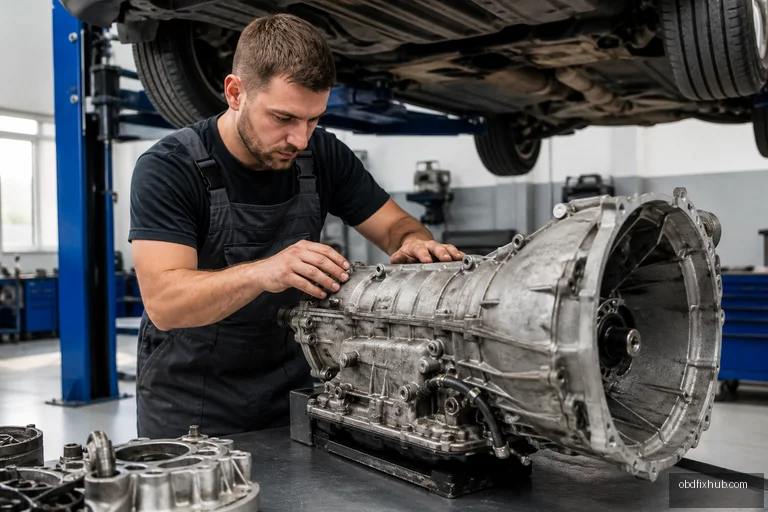
P0894 transmission component slipping means the transmission control system has detected that an internal transmission component is not holding or transferring power as expected. The most common causes are low or contaminated transmission fluid, a failing shift solenoid, valve-body trouble, worn clutch packs, wiring faults, or an incorrect input/output speed signal. Because P0894 is a performance code rather than a precise failed-part code, proper diagnosis matters before anyone recommends a transmission replacement.
What Does P0894 Transmission Component Slipping Mean?
The powertrain control module (PCM) or transmission control module (TCM) compares the transmission’s commanded gear with actual shaft speeds. If the input and output speeds show that a clutch, band, or gearset is allowing too much difference in speed, the module interprets that condition as component slipping and stores P0894.
In practical terms, the transmission may be applying a clutch for third gear, for example, but the input shaft continues spinning faster than it should. A brief speed fluctuation can occur during a normal shift, so the module usually sets the code only after the slip exceeds a calibrated limit for a specific time or operating condition.
The code does not identify one universal component. Its exact meaning can vary between manufacturers, and some vehicles may store additional manufacturer-specific transmission codes alongside P0894. Always check the service information for the exact year, engine, transmission model, and calibration.
Common Symptoms of P0894
Some vehicles enter limp mode immediately, while others continue to drive with only an intermittent flare during acceleration. The symptoms often become more noticeable after the transmission reaches operating temperature because hot fluid is thinner and worn hydraulic components lose pressure more easily.
- Engine RPM rises without a matching increase in vehicle speed
- A slipping or “flare” sensation during an upshift
- Delayed engagement when selecting Drive or Reverse
- Harsh, late, or incorrect gear changes
- Transmission stuck in one gear or limp-home mode
- Overheating transmission or a burnt-fluid smell
- Illuminated Check Engine or transmission warning light
- Poor acceleration, especially under load or on an incline
A useful road-test clue is the difference between an engine misfire and transmission slip. During genuine slip, the tachometer often jumps while the vehicle speed barely changes. A misfire usually produces hesitation, shaking, or a flashing Check Engine Light rather than a clean RPM flare during a gear change.
What Causes P0894?
Low, wrong, or degraded transmission fluid
Fluid level is the first practical check, but it must be measured using the manufacturer’s procedure. Some transmissions require a specific fluid temperature, a level check plug, or a scan tool to monitor temperature. Low fluid can allow the pump to draw air, reducing clutch-apply pressure and creating intermittent slip.
Fluid that is dark, overheated, or smells strongly burnt may indicate that the clutch material has already been damaged. Using the wrong fluid can also alter friction characteristics and shift pressure. A simple fluid top-up may correct a leak-related problem, but it will not repair a worn clutch pack.
Worn internal clutch packs or bands
Automatic transmissions use friction clutches and, in some designs, bands to hold specific gear elements. With mileage, friction material wears and hydraulic clearance increases. The transmission may then slip most noticeably in one gear, during torque-converter lockup, or when towing.
If the pan contains significant friction material or shiny metal debris, the problem is unlikely to be solved by replacing a solenoid alone. A transmission specialist may need to measure line pressure and inspect the pan before deciding whether internal overhaul is justified.
Failed shift solenoid or pressure-control solenoid
Solenoids regulate fluid flow and clutch pressure. A sticking, electrically open, or contaminated solenoid can apply a clutch too slowly or fail to maintain the pressure required under load. This may set P0894 together with codes such as P0750, P0755, P0760, or manufacturer-specific pressure-control codes.
Do not automatically replace every solenoid named in a scan-tool data list. A solenoid can test electrically within specification while the valve it controls is worn in the valve body. Pressure testing and commanded-actuation testing provide more useful evidence than resistance alone.
Valve-body or hydraulic-pressure problems
The valve body routes pressurized fluid through passages, valves, and accumulators. Wear in a valve bore can allow pressure to leak internally, especially when the fluid is hot. A restricted filter, damaged separator plate, stuck valve, or weak pump can produce similar symptoms.
This is why a transmission that shifts normally when cold but slips after 20 to 30 minutes deserves a hot line-pressure test. Cold operation can temporarily mask hydraulic leakage.
Speed sensor, wiring, or control-module faults
The TCM relies on input and output speed sensors to calculate slip. A damaged reluctor wheel, contaminated sensor, corroded connector, broken wire, or unstable power supply can create an incorrect speed relationship and falsely suggest mechanical slipping.
Look for sensor readings that suddenly drop to zero, jump unrealistically, or disagree with vehicle speed. A code caused by a sensor signal problem may be repairable without opening the transmission, but the signal must be verified rather than assumed to be accurate.
Torque converter or software-related issues
A failing torque converter clutch can cause shudder, RPM fluctuation, and slip-related faults, particularly at steady cruising speed. In other cases, a software calibration issue or an outdated TCM update may produce incorrect clutch pressure commands. Technical service bulletins and software updates should be checked before major repairs are approved.
How to Diagnose P0894 Correctly
A reliable diagnosis separates an electrical or control problem from genuine internal wear. The following sequence prevents many unnecessary transmission replacements:
- Scan all modules. Record freeze-frame data, transmission temperature, commanded gear, actual gear, input speed, output speed, and related codes. Do not erase the codes before saving this information.
- Check for technical service bulletins. Manufacturer bulletins may identify known valve-body, sensor, wiring, or software problems for a particular transmission.
- Inspect fluid level and condition. Follow the exact temperature and leveling procedure. Check for leaks around cooler lines, axle seals, the pan, and electrical connectors.
- Inspect wiring and connectors. Look for fluid intrusion, stretched harnesses, damaged insulation, loose grounds, and corrosion near the transmission case.
- Compare live data during a road test. Watch commanded gear, actual ratio, input speed, output speed, and slip speed during the event. A repeatable RPM flare in one gear is valuable evidence.
- Perform hydraulic tests. Line-pressure testing can reveal a weak pump, restricted filter, pressure-control problem, or internal leakage. The test must be performed at the specified temperatures and operating conditions.
- Inspect the pan if necessary. Excessive clutch debris or metal particles changes the repair decision significantly.
A common diagnostic mistake is clearing P0894 after adding fluid and assuming the repair is complete. If the transmission has been slipping long enough to overheat the friction material, the code may return after the next highway drive or heavy-load event.
How Is P0894 Fixed?
The repair depends on the confirmed cause, not simply on the code description. Possible fixes include:
- Repairing a fluid leak and setting the fluid level correctly
- Replacing severely degraded fluid and the transmission filter when appropriate
- Repairing damaged wiring, connectors, grounds, or speed-sensor circuits
- Replacing a defective solenoid or servicing the valve body
- Updating or reprogramming the TCM
- Replacing a faulty torque converter
- Rebuilding or replacing the transmission when clutch packs, bands, or hard parts are worn
Be cautious with transmission flushes. A fluid exchange cannot restore worn clutch material or repair a leaking valve body. On a badly damaged unit, an aggressive service may loosen debris or make an existing problem more apparent. The vehicle’s service schedule and the fluid condition should guide the decision.
Can You Drive With P0894?
Driving should be limited until the cause is known. A short trip to a repair facility may be reasonable if the transmission engages normally, the fluid level is correct, and there is no severe slipping or overheating. Avoid towing, hard acceleration, steep hills, and long highway trips.
Stop driving and arrange a tow if the vehicle loses Drive or Reverse, the transmission bangs violently into gear, the fluid is leaking heavily, the warning light is flashing, or RPM rises dramatically without acceleration. Continued slip creates heat, and heat can turn a repairable hydraulic or electronic fault into a complete rebuild.
Repair Cost and Prognosis
Costs vary widely because P0894 can represent anything from a wiring repair to internal transmission failure. A diagnostic inspection is usually far less expensive than replacing the entire unit, and it can prevent replacing a transmission that only has a sensor or pressure-control issue.
As a general rule, an external leak, sensor, solenoid, or software repair is less costly than valve-body work. A burnt smell, heavy debris in the pan, repeated slip under load, and loss of multiple gears point toward internal damage and a more extensive repair.
Key Takeaway
P0894 is a warning that the control module has detected excessive transmission slip, not a complete diagnosis by itself. Check fluid and related codes promptly, verify speed-sensor data, test hydraulic pressure, and inspect for internal debris before approving major repairs. Early diagnosis can be the difference between a manageable control-system repair and a full transmission rebuild.
Frequently Asked Questions
Is P0894 always caused by a bad transmission?
No. Low fluid, a damaged speed-sensor circuit, a faulty solenoid, valve-body wear, or a software issue can all trigger the code. Internal clutch damage is possible, but it should be confirmed with testing.
Will changing the transmission fluid fix P0894?
It may help if the fluid is low or badly degraded and no internal damage has occurred. Fluid replacement will not repair worn clutch packs, a damaged torque converter, or hydraulic leakage inside the valve body.
Why does my car slip only when it is hot?
Hot fluid becomes thinner, and worn valves, seals, pumps, or clutch packs may lose enough pressure to slip. A hot line-pressure test and live-data road test are especially important in this situation.
Can a bad speed sensor cause P0894?
Yes. If the input or output speed signal is inaccurate, the control module may calculate apparent slip that is not actually occurring. Sensor data, wiring integrity, and the reluctor system should be checked before condemning the transmission.
Should I clear P0894 after adding fluid?
After correcting the fluid level, the code can be cleared and the vehicle can be tested, but the repair is not proven until the transmission completes the relevant drive cycle without renewed slip. If the code returns, further diagnosis is required.




