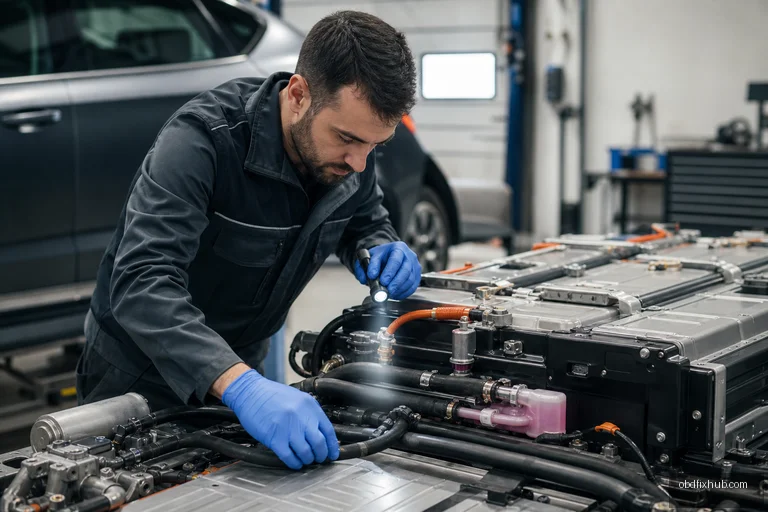
P0A7E means the hybrid or electric vehicle battery control system has detected that the high-voltage battery pack is too hot. The problem may be genuine overheating, restricted battery cooling, a failed temperature sensor, or an electrical fault that makes the battery appear hotter than it really is. Because excessive battery temperature can lead to reduced power, charging restrictions, or thermal damage, this is a code to diagnose promptly—not simply erase with a scan tool.
This is an informational search intent: most drivers want to understand the code, judge whether the vehicle is safe to drive, and identify the likely repair before paying for unnecessary parts. The exact temperature threshold and diagnostic procedure vary by manufacturer, battery chemistry, and model year.
What Does P0A7E Mean?
P0A7E is a standardized powertrain diagnostic trouble code associated with Hybrid/EV Battery Pack Over-Temperature. The battery energy control module, hybrid control module, or battery management system compares temperature data from several sensors inside the pack. If the measured temperature exceeds a calibrated limit—or the readings do not make sense compared with other sensors—the module stores the code.
The code does not identify one specific failed component. For example, a blocked battery air intake can produce the same code as a failed temperature sensor. A vehicle that has been fast-charged repeatedly in hot weather may also trigger the warning without having a permanently damaged battery.
Common Causes of P0A7E
- Restricted battery cooling airflow: Dust, pet hair, luggage, seat covers, or a child seat can block the cabin air intake used to cool the battery.
- Failed or weak cooling fan: The battery blower may be seized, noisy, contaminated, or unable to reach the commanded speed.
- High ambient temperature: Long climbs, stop-and-go traffic, towing, aggressive acceleration, and rapid charging can raise pack temperature faster than the cooling system can remove heat.
- Cooling duct or filter problems: A collapsed duct, clogged filter, disconnected hose, or incorrectly installed trim panel can reduce airflow.
- Battery coolant fault: Some hybrid and EV designs use liquid cooling. Low coolant, an air pocket, a leaking hose, a failed pump, or a restricted heat exchanger can cause overheating.
- Temperature sensor or wiring failure: An open circuit, short circuit, corrosion, loose connector, or sensor drift can create an implausible temperature reading.
- Battery module imbalance or internal resistance: A weak module may generate more heat during charging or discharge than the rest of the pack.
- Charging-system or control-module issues: Incorrect charging control, software faults, or communication errors can lead to abnormal thermal management.
Symptoms You May Notice
P0A7E may appear with a hybrid system warning, EV system warning, check-engine light, or a message such as “Power Limited,” “Battery Too Hot,” or “Stop Vehicle Safely.” Some vehicles will prevent EV operation or disable regenerative braking, forcing the gasoline engine to run more often.
Other symptoms include reduced acceleration, limited charging speed, a cooling fan that runs loudly after shutdown, an unusual hot or electrical smell, and a state-of-charge display that behaves abnormally. A fan running after the vehicle is parked is not automatically a failure; it may be a normal protective response. However, a fan that runs continuously, never runs when commanded, or produces grinding noises deserves testing.
Is It Safe to Drive With P0A7E?
There is no universal yes-or-no answer. If the vehicle displays a red battery warning, “Stop Safely,” smoke, a burning odor, visible leakage, severe power loss, or rapidly rising temperature, pull over in a safe open area, switch the vehicle off, keep people away, and arrange professional assistance. Do not park a suspected overheating EV inside a garage until the cause has been assessed.
If the warning is yellow, the vehicle drives normally, and the code appeared after extreme heat or heavy charging, a short trip to a qualified hybrid or EV repair facility may be possible. Avoid fast charging, hard acceleration, towing, steep climbs, and unnecessary driving. Never touch orange high-voltage cables or open the battery enclosure without the required training and equipment.
How to Diagnose P0A7E Correctly
- Record all codes and freeze-frame data. Do not focus on P0A7E alone. Battery fan, coolant pump, communication, sensor circuit, and isolation faults may reveal the primary cause.
- Check the vehicle’s operating conditions. Note outside temperature, charging type, battery state of charge, recent driving load, and whether the code appears during charging, acceleration, or sitting in traffic.
- Inspect the battery air intake and exhaust. Remove loose debris and confirm that luggage, floor mats, pet hair, or trim panels are not obstructing airflow. Do not spray liquid into the intake.
- Command the cooling system with a professional scan tool. A technician should activate the fan or coolant pump and verify actual operation, current draw, airflow, and commanded versus reported speed.
- Compare temperature sensors. A healthy pack usually shows temperatures that change logically and remain reasonably consistent under similar conditions. One sensor reading far above or below the others can indicate wiring or sensor trouble.
- Test the liquid cooling circuit when fitted. Check coolant level using the manufacturer’s procedure, inspect for leaks, verify pump operation, and bleed air only with the correct service method.
- Evaluate battery condition and software. Module voltage spread, internal resistance, state-of-health data, and applicable technical service bulletins may be needed before condemning the battery pack.
A useful diagnostic clue is timing. If P0A7E appears immediately at startup with a cold battery, suspect a sensor, connector, wiring, or data problem before assuming the pack physically overheated. If it appears after a long fast-charge session or sustained hill climb, cooling capacity and battery heat generation become more likely.
How Is P0A7E Fixed?
The repair depends on the confirmed cause. A simple fix may involve cleaning the battery air intake, replacing a cabin filter or blower motor, repairing a duct, or correcting a low-coolant condition. Sensor or wiring faults require electrical testing rather than automatic battery replacement.
When the battery pack contains a weak module, repair options depend on the manufacturer’s service policy and the pack’s overall condition. Some vehicles support module-level repair, while others require a remanufactured or new battery assembly. A battery replacement should be the final diagnosis, supported by temperature, voltage, resistance, and insulation test results.
After repair, the technician should clear the codes, perform the specified battery cooling or charging test, and confirm that temperature readings remain stable under load. Simply clearing P0A7E may turn the warning off temporarily while the underlying thermal problem continues.
What You Can Do Before Visiting a Repair Shop
- Move luggage, clothing, pet carriers, and child-seat materials away from the battery cooling intake.
- Allow the vehicle to cool naturally; do not pour water over the battery or cooling components.
- Record when the warning occurs and whether the vehicle was charging, climbing, towing, or sitting in extreme heat.
- Use a scan tool capable of reading hybrid battery data, not only generic engine codes.
- Choose a technician trained in high-voltage systems and equipped with insulated safety tools.
Summary
P0A7E indicates that the vehicle’s battery management system has detected excessive hybrid or EV battery temperature—or a temperature signal that appears excessive. The most common causes include blocked airflow, a failed fan or coolant pump, extreme operating conditions, defective temperature sensing, and battery module problems. Treat the warning seriously, avoid high-load operation, and obtain a complete high-voltage diagnosis before approving an expensive battery replacement.
Frequently Asked Questions
Can a dirty battery air filter cause P0A7E?
Yes. A restricted filter or blocked intake can reduce cooling airflow enough to raise battery temperature, especially during hot weather, heavy traffic, or rapid charging. Cleaning or replacing it may solve the problem, but the fan and temperature data should still be tested.
Does P0A7E mean the hybrid battery must be replaced?
No. The code identifies an over-temperature condition, not a guaranteed battery failure. Cooling airflow, a blower, coolant pump, temperature sensor, wiring, or software may be responsible.
Can I clear P0A7E with an OBD scanner?
You can often clear the stored code, but that does not repair the cause. If the battery remains too hot or the sensor fault is present, the code and warning will return. Some vehicles also require a manufacturer-level scan tool to access battery data and reset related faults.
Why does P0A7E appear after fast charging?
Fast charging creates substantial heat, particularly when the battery is already warm or near a high state of charge. If the cooling system is restricted or weak, the battery may exceed its calibrated limit. Repeated occurrences should be professionally diagnosed.




