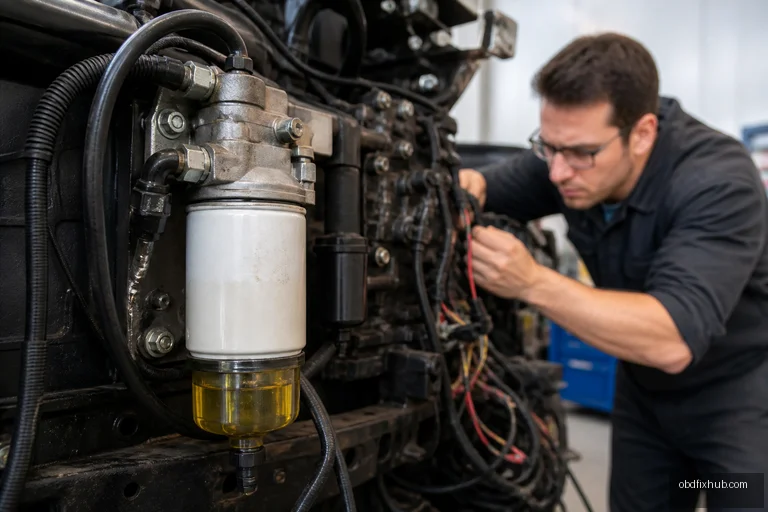
P2265 Water in Fuel Sensor Performance means the engine computer has detected an implausible, unstable, or out-of-range signal from the water-in-fuel sensor circuit. On most diesel vehicles, the sensor is built into the fuel filter or water separator. Do not ignore the warning: water can damage high-pressure pumps and injectors, while a failed sensor can trigger a warning even when the fuel is clean.
What Does P2265 Mean?
Diagnostic trouble code P2265 is commonly defined as Water in Fuel Sensor A Circuit Range/Performance. The powertrain control module (PCM) monitors the sensor signal and compares it with expected voltage, resistance, or capacitance values. If the reading does not respond correctly, remains outside its calibrated range, or disagrees with other operating conditions, the PCM stores P2265.
The word “performance” is important. This code does not always prove that water is present in the fuel. It may indicate a contaminated fuel supply, a sensor that has failed internally, corroded wiring, a poor connector, or a fuel filter housing problem. The exact sensor location and testing procedure vary by make, model, engine, and fuel system.
Common Symptoms of a Faulty Water-in-Fuel Sensor
A defective water-in-fuel sensor can produce symptoms ranging from a simple dashboard warning to drivability problems. Some vehicles continue to run normally because the PCM can still operate using substitute values; others reduce engine power to protect the injection system.
- Check Engine Light or a dedicated water-in-fuel warning light
- Hard starting, extended cranking, or a no-start condition
- Rough idle, hesitation, misfires, or sluggish acceleration
- Reduced engine power or limp mode
- Engine stalling, especially shortly after refueling
- Poor fuel economy or inconsistent throttle response
- Repeated warning messages after the fuel filter has been replaced
A useful real-world clue is timing. If the warning appeared immediately after refueling, contaminated diesel or a disturbed sensor connector deserves priority. If it returned after heavy rain, off-road driving, or pressure washing, inspect the connector and wiring for moisture before replacing parts.
What Causes P2265?
- Actual water in the fuel: Water may enter through contaminated fuel, a damaged filler cap seal, condensation, or a poorly maintained storage tank.
- Faulty water-in-fuel sensor: The sensing element can become contaminated, short internally, or drift outside its normal specification.
- Corroded or wet connector: Green corrosion, loose terminals, or water inside the plug can alter the signal.
- Damaged wiring: Chafing near the fuel filter, broken wires, poor grounds, and short circuits can create an incorrect reading.
- Restricted or incorrectly installed fuel filter: A damaged seal, wrong filter, or incorrectly seated sensor can cause leaks and implausible sensor data.
- Fuel filter housing damage: Cracks or a distorted drain valve may allow air or moisture into the system.
- Low system voltage: A weak battery or charging fault can make sensor readings unreliable during starting.
- Control-module or software issue: This is less common and should be considered only after the sensor circuit and fuel have been tested.
How to Diagnose P2265 Correctly
Replacing the sensor immediately is a common mistake. The first step is to scan for all stored, pending, and history codes, then record freeze-frame data. Additional fuel-pressure, low-voltage, or communication codes can change the diagnosis completely.
- Inspect the fuel: Use the vehicle’s water separator or filter drain procedure. Collect a sample in a clear container and allow it to stand. Water settles below diesel because it is heavier; cloudiness, separated layers, rust, or debris indicate contamination.
- Check the filter and housing: Confirm the filter is the correct part and installed in the correct direction. Look for water, diesel leaks, damaged O-rings, a cracked bowl, or a loose drain valve.
- Examine the connector: Disconnect the sensor with the ignition off. Look for moisture, pushed-back pins, corrosion, oil contamination, and terminals that do not grip firmly.
- Test the wiring: Use the manufacturer’s wiring diagram to check power, ground, signal continuity, and short circuits. Do not rely on a generic resistance value because sensor designs differ.
- Compare live data: With a professional scan tool, observe the water-in-fuel parameter while moving the harness gently and cycling the ignition. An intermittent value or a reading that never changes can expose a circuit fault.
- Verify the repair: Clear the code, start the engine, road-test under the conditions shown in the freeze frame, and rescan. A code that returns immediately usually points to an electrical or sensor problem rather than leftover contamination.
Never apply battery voltage to a sensor terminal unless the service manual specifically instructs you to do so. Many modern sensors use a low-voltage reference circuit, and an incorrect test can damage the PCM.
Repair Options for P2265
The correct fix depends on the test results. If water is present, drain the separator, replace the fuel filter, inspect the drained fuel for metal or heavy contamination, and refill with clean fuel from a trusted source. If a large amount of water has reached the high-pressure system, professional fuel-system cleaning may be necessary.
If the sensor itself fails its manufacturer-specified test, replace the sensor or the complete filter-housing assembly, depending on the design. Repair damaged wires with sealed automotive splices, clean light connector corrosion with appropriate electrical-contact cleaner, and replace terminals that are loose or badly oxidized.
After severe contamination, do not keep changing filters without finding the source. Repeated P2265 codes after a new filter often indicate a damaged connector, incorrect sensor installation, a leaking housing seal, or contaminated fuel remaining in the tank.
How Much Does It Cost to Replace a Water-in-Fuel Sensor?
The cost varies considerably by vehicle. On some diesel engines, the sensor is a separate, inexpensive component. On others, it is integrated into the fuel filter housing, making the repair more expensive.
- Sensor-only replacement: commonly about $80–$250 for parts and labor
- Fuel filter and sensor service: often about $120–$350
- Complete filter housing replacement: commonly $250–$900 or more
- Electrical diagnosis: typically $100–$200 before repairs
- Fuel contamination cleanup: potentially $300–$1,500 or more, depending on tank access and injection-system damage
Dealer pricing, diesel-engine access, regional labor rates, and original-equipment parts can push the total higher. Ask the repair shop whether the estimate includes draining contaminated fuel, replacing the filter, clearing the code, and verifying the repair.
Can You Bypass the Water-in-Fuel Sensor?
Bypassing P2265 is not a proper repair. Removing the sensor, shorting its wires, installing a resistor, or disabling the warning can hide real water contamination and expose the injection pump and injectors to expensive damage. It may also create a no-start condition or additional fault codes on vehicles that use the sensor as part of a protection strategy.
For diagnosis only, a qualified technician may follow the service manual’s circuit-substitution test. That is different from permanently bypassing the sensor. Restore the original circuit after testing, and replace the failed component rather than defeating the warning system.
How Long Can You Drive With the Water-in-Fuel Warning Light?
If the warning light is accompanied by rough running, power loss, hard starting, unusual fuel-pump noise, or a red warning message, stop as soon as it is safe and arrange recovery. Continuing to drive can move water through the high-pressure fuel system, where repairs become far more costly.
If the vehicle runs perfectly and the warning is yellow, drive only the shortest practical distance to a repair facility, avoiding heavy loads, high engine speeds, towing, and unnecessary idling. There is no safe universal mileage limit because the light may represent either a sensor fault or genuine water in the fuel. Treat it as urgent rather than assuming you can drive for days.
Practical Prevention Tips
- Buy diesel from busy, reputable stations with good fuel turnover.
- Replace the fuel filter at the manufacturer’s interval, or sooner in severe conditions.
- Drain the water separator only according to the vehicle’s procedure.
- Keep the filler cap, cap seal, and filler neck clean and properly closed.
- Do not use fuel additives as a substitute for draining significant water contamination.
- After water contamination, save a fuel sample and the receipt; both can support a fuel-quality claim.
Frequently Asked Questions
What are the symptoms of a faulty water-in-fuel sensor?
The most common signs are a Check Engine Light, water-in-fuel warning, hard starting, rough running, reduced power, stalling, and repeated P2265 codes. A failed sensor can also cause a warning with no noticeable drivability symptoms.
Is P2265 always caused by water in diesel fuel?
No. P2265 can be caused by actual water contamination, but a defective sensor, corroded connector, damaged wiring, low voltage, or a faulty filter housing can produce the same code.
How much does it cost to replace a water-in-fuel sensor?
A typical sensor-only repair may cost $80–$250, while an integrated filter housing can raise the bill to $250–$900 or more. Testing the fuel and circuit first prevents unnecessary replacement.
Can I clear P2265 and keep driving?
You can clear a stored code with a scan tool, but that does not remove water or repair the circuit. If the warning returns, stop treating it as a temporary glitch and diagnose the fuel system promptly.
Bottom line: P2265 is a fuel-system warning that deserves a measured diagnosis, not a blind sensor replacement or bypass. Check for water, inspect the filter housing and connector, test the circuit using the vehicle’s service data, and repair the underlying fault before expensive diesel-injection damage occurs.




