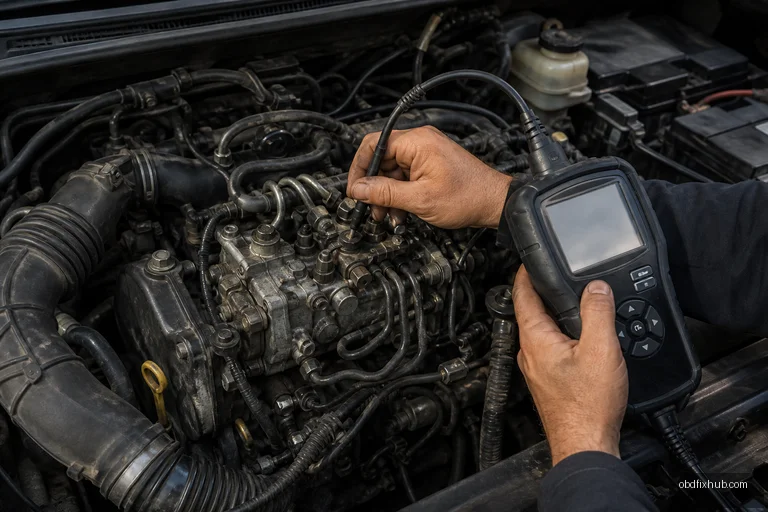
P2672 Injection Pump Timing Offset means the engine control module has detected that fuel-injection timing is outside the expected position or adjustment range. On a diesel engine, this can be caused by incorrect mechanical timing, a failing injection-pump actuator, a damaged timing sensor, wiring faults, low fuel pressure, or a calibration problem. Do not replace the injection pump immediately: the fault is often caused by timing synchronization or an electrical issue elsewhere in the system.
What Does P2672 Injection Pump Timing Offset Mean?
The injection pump must deliver fuel at a precise crankshaft position. If injection occurs too early or too late, combustion becomes inefficient and the engine may run roughly, smoke, lose power, or fail to start. The PCM or ECM calculates the actual injection position from signals supplied by the crankshaft position sensor, camshaft position sensor, pump timing sensor, and, on some systems, an internal pump position actuator.
When the commanded timing and the measured timing do not agree beyond the manufacturer’s permitted range, the module stores P2672. The exact wording and test strategy can vary by vehicle, so the factory service information for the specific engine remains essential. A code reader that only displays a generic description cannot tell you whether the root problem is mechanical timing, fuel delivery, or electronics.
Common Symptoms of P2672
The symptoms depend on how far the timing has moved from its target and whether the condition is constant or intermittent. A vehicle with a small offset may still drive, while a severely mistimed diesel can crank without starting.
- Hard starting, extended cranking, or a no-start condition
- Rough idle, engine vibration, or uneven combustion
- Reduced power and poor throttle response
- Black, white, or excessive gray exhaust smoke
- Engine hesitation, surging, or stalling
- Higher fuel consumption and possible diesel knock
- Illuminated Check Engine Light or reduced-power mode
- Additional crankshaft, camshaft, fuel-pressure, or injector codes
Most Likely Causes
1. Incorrect mechanical timing
A stretched timing chain, worn gear, slipped belt, damaged keyway, or incorrectly installed timing belt can move the pump relationship away from specification. This is especially likely when P2672 appears immediately after a timing-belt replacement or major engine repair. A belt can be installed one tooth out and still allow the engine to run, but the injection timing may be far enough off to trigger the code.
2. Faulty crankshaft or camshaft position sensor
The ECM needs accurate engine-position signals before it can calculate injection timing. A weak sensor, excessive air gap, metal debris on the sensor tip, or a damaged reluctor wheel can create an apparent pump timing error. In practice, a code for pump timing can be secondary to a poor crank or cam signal, so related synchronization codes should be investigated first.
3. Injection-pump actuator or timing-control failure
Many electronically controlled diesel pumps use an actuator or timing-control solenoid to advance and retard injection. Internal wear, contamination, a sticking valve, or an open circuit can prevent the pump from following the commanded position. On older rotary-pump systems, the pump’s internal timing mechanism may be worn even though the external wiring appears normal.
4. Wiring, connector, or ground problems
Oil-soaked connectors, corroded terminals, damaged harnesses, and weak engine grounds can interrupt the pump position or timing signal. A harness may test correctly while stationary but fail when vibration or engine movement changes the wire position. Inspect the connector for pushed-back terminals and check voltage drop under load rather than relying only on a visual inspection.
5. Fuel supply or fuel-quality problems
Restricted filters, air entering the low-pressure side, contaminated diesel, or insufficient supply pressure can make the pump behave unpredictably. Water or gasoline contamination can also damage precision pump components. If fuel pressure is unstable, correcting the timing command alone will not solve the fault.
6. Software or calibration issues
Some vehicles require a pump timing relearn, injector coding procedure, or ECM software update after pump replacement or timing-system work. If the mechanical installation is correct and the measured values are normal, check technical service bulletins and calibration updates before condemning an expensive component.
How to Diagnose P2672 Correctly
- Confirm the code and record freeze-frame data. Note engine speed, coolant temperature, battery voltage, fuel pressure, and whether the code is current or stored. Low battery voltage during cranking can create misleading synchronization faults.
- Scan for related codes. Crankshaft, camshaft, fuel-pressure, injector, and communication codes may identify the primary failure. Diagnose a crank/cam correlation code before replacing a pump.
- Check live data. Compare commanded injection timing with actual timing, pump position, engine speed, and synchronization status. A constant large offset suggests mechanical timing; an erratic value often points toward a sensor, wiring, or actuator problem.
- Inspect the fuel system. Replace a restricted fuel filter if service history is unknown, check for air bubbles where a transparent section is provided, and measure supply pressure using the manufacturer’s test procedure.
- Verify mechanical timing. Use the correct locking tools and timing marks. Do not rely on painted marks from a previous repair. Inspect the belt or chain, tensioner, sprockets, and pump drive for wear or movement.
- Test circuits under load. Check reference voltage, signal voltage, continuity, resistance, and voltage drop at the pump actuator and position sensor. Wiggle-test the harness while monitoring the scan tool data.
- Perform the required relearn or calibration. After a pump, timing belt, sensor, or ECM replacement, complete the manufacturer’s timing calibration. Clear the code and confirm that actual timing tracks commanded timing during cold start, idle, and acceleration.
Repair Options for P2672
The correct repair depends on the test results. A damaged sensor may require replacement and a synchronization relearn. A slipped timing belt requires correcting the timing and checking for valve or piston damage before extended operation. Wiring faults should be repaired with sealed automotive terminals and proper strain relief, not temporary twists or household connectors.
If fuel contamination is confirmed, drain and clean the tank, replace the filter, flush the supply system, and inspect the pump and injectors for damage. A failed injection pump may need professional bench testing because a pump that passes a basic resistance check can still have incorrect internal timing or inadequate delivery. After any pump replacement, verify programming, immobilizer requirements, injector coding, and the specified timing procedure.
Can You Drive With P2672?
Short-distance driving may be possible if the engine runs smoothly and there is no severe smoke, knocking, stalling, or loss of power. However, continued operation with incorrect injection timing can increase exhaust temperature, damage the diesel particulate filter, reduce lubrication, and worsen pump or injector wear. Stop driving and arrange a proper diagnosis if the engine is difficult to start, stalls in traffic, produces heavy smoke, or shows a low oil-pressure warning.
A Practical Diagnostic Tip
Pay attention to when the code first appeared. If P2672 started directly after a belt replacement, suspect installation or tensioning before an electronic pump failure. If it appears only when hot, test the pump actuator and sensors at operating temperature. If it occurs after refueling, prioritize fuel contamination and supply pressure. This timeline often saves hours of unnecessary parts replacement.
Summary
P2672 indicates that the measured injection-pump timing does not match the ECM’s expected value. The most effective diagnosis compares commanded and actual timing, verifies crank/cam synchronization, checks fuel supply, tests the wiring, and confirms mechanical timing. Use the vehicle-specific service manual for timing limits and relearn procedures, and avoid replacing the injection pump until the supporting tests prove it is faulty.
Frequently Asked Questions
Is P2672 always caused by a bad injection pump?
No. Incorrect belt or chain timing, crankshaft or camshaft sensor faults, wiring problems, low fuel pressure, and calibration issues can all produce the code.
Can a weak battery cause P2672?
Yes. Low cranking voltage can distort sensor signals and prevent the pump actuator from reaching its commanded position. Check battery voltage and cranking voltage before deeper testing.
Will clearing P2672 fix the problem?
Clearing the code only removes the stored fault temporarily. If the timing offset remains, the ECM will detect it again, often during the next start or drive cycle.
Does P2672 affect fuel economy?
It can. Incorrect injection timing reduces combustion efficiency and may cause increased fuel use, smoke, poor power, and higher exhaust temperatures.
Should I replace the timing belt after seeing P2672?
Not automatically. First verify belt condition, timing marks, tensioner operation, and actual camshaft-to-crankshaft alignment. Replace the belt only when inspection or service history supports that repair.




