P2680 means the engine control module has detected an abnormally high electrical signal in the coolant degassing valve control circuit. In practice, the problem is usually an open circuit, disconnected connector, damaged wiring, a valve coil that has failed internally, or a control wire shorted to battery voltage. The code does not automatically prove that the cooling system is overheating, but it should be diagnosed promptly because trapped air and poor coolant control can lead to unstable temperatures.
What Does P2680 Mean?
The coolant degassing valve helps manage air and coolant flow in the cooling system. Depending on the vehicle, it may be installed near the expansion tank, degas bottle, thermostat housing, or a coolant hose assembly. The engine computer controls the valve or monitors its circuit to ensure the cooling system can remove air and maintain the intended coolant flow.
With P2680, the module sees more voltage than expected on the valve control circuit. The word high refers to an electrical condition, not necessarily excessive coolant pressure. A valve that is unplugged can create the same fault as a control wire shorted to a power supply, so replacing the valve without testing the circuit is a common and avoidable mistake.
P2680 Symptoms You May Notice
Some vehicles will only store the code and illuminate the check engine light. Others may show cooling-system symptoms, particularly when air remains trapped after a coolant repair or when the valve is stuck in the wrong position.
- Check engine light or service engine warning
- Coolant temperature that rises and falls unexpectedly
- Long warm-up time or poor cabin heater performance
- Gurgling sounds behind the dashboard or near the expansion tank
- Coolant loss caused by overheating or a pressure-related leak
- Cooling fan operation that seems excessive or starts at unusual times
- Reduced engine performance or a protective limp-home strategy
If the temperature gauge is climbing, steam is visible, or the coolant warning is flashing, stop driving and allow the engine to cool. P2680 is an electrical trouble code, but a cooling system that is not properly deaerated can still cause serious engine damage.
Common Causes of the P2680 Code
1. Open or damaged wiring
Wiring routed beside the engine, radiator, or coolant hoses is exposed to heat, vibration, and moisture. Look for melted insulation, green corrosion inside the connector, pulled terminals, and harness sections rubbed through against a bracket. A wire can look intact externally while being broken inside the insulation near the connector.
2. Disconnected or poorly locked connector
A connector that was not fully seated after thermostat, radiator, engine, or coolant hose work can set P2680 immediately. Inspect the locking tab and gently tug each wire from the rear of the connector. A terminal pushed backward in the housing may make contact only intermittently, especially when the engine moves under load.
3. Failed coolant degassing valve
The valve may have an open solenoid coil, an internal short, contamination, or mechanical binding. Coolant intrusion into an electrical connector is particularly important to check. Do not rely on a generic resistance value unless the manufacturer service information provides one; valve designs and specifications vary considerably.
4. Short to battery voltage
If the control wire is touching a fused power feed, the computer may detect constant high voltage. This can happen where two harnesses have chafed together or where an aftermarket accessory has been connected incorrectly. A voltage reading alone is not enough—identify the circuit function from the wiring diagram before applying power or grounding anything.
5. Fuse, relay, or control-module problem
A blown fuse is often a result rather than the original cause. If a replacement fuse fails again, stop installing larger fuses and locate the short. An engine control module failure is possible but uncommon; it should be considered only after the valve, connector, wiring, power supply, and ground have passed proper tests.
How to Diagnose P2680 Correctly
Accurate diagnosis starts with the vehicle-specific wiring diagram and scan data. The exact circuit strategy differs between manufacturers, so the test procedure for one model cannot safely be copied to another.
- Record all codes and freeze-frame data. Note coolant temperature, battery voltage, engine speed, and whether P2680 is current or stored. Low system voltage or another cooling-system code may change the diagnostic direction.
- Check the coolant level only when cold. Inspect for leaks, a recently opened cooling system, incorrect coolant, or signs of air entering the system. Never remove a hot expansion-tank cap.
- Perform a visual inspection. Trace the valve harness from the connector to the main loom. Pay close attention to areas near exhaust heat, belt-driven components, sharp brackets, and previous repair work.
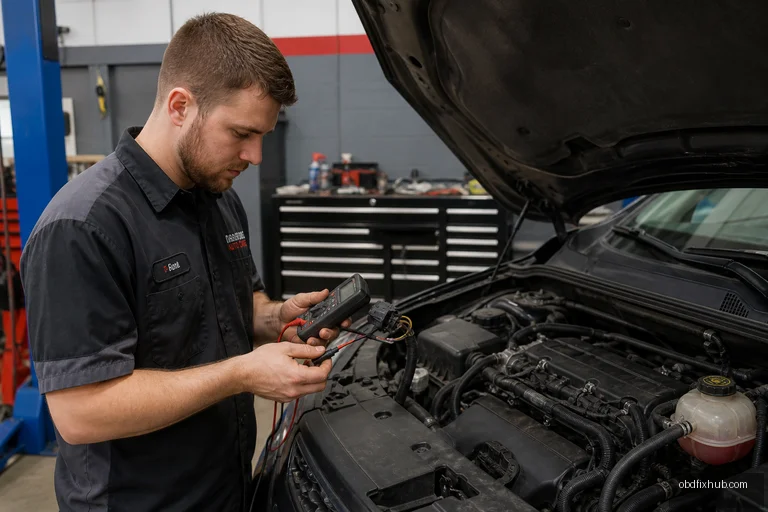
- Verify power and ground. Use a wiring diagram to identify the valve supply, control, and ground circuits. A test light or multimeter can confirm whether the correct voltage is present under load, not merely with an unloaded circuit.
- Test the control wire for an unintended voltage. With the valve disconnected and the ignition in the specified position, compare the measured voltage with the manufacturer’s expected value. If voltage remains high when it should not, isolate the harness from the module and power sources.
- Test the valve itself. Measure coil resistance only against the factory specification. If supported by the service procedure, use a bidirectional scan tool to command the valve and observe its response. Do not apply direct battery power unless the manufacturer explicitly allows it.
- Repair, clear, and verify. Repair wiring with sealed automotive splices or replace damaged terminals. After clearing the code, perform the required coolant bleeding procedure and complete a road test while monitoring coolant temperature and valve command data.
What Is the Right Fix for P2680?
The repair depends on the failed part. A loose connector may need terminal repair and proper locking. A shorted or broken harness requires a durable heat-resistant repair rather than tape wrapped around the damaged section. If the valve fails its electrical or functional test, replace it with the correct application-specific component.
After replacing a degassing valve or opening the cooling system, bleeding is not optional. Follow the manufacturer’s fill and air-purge process, which may involve a vacuum filler, a bleed screw, a scan-tool routine, or a specific heater and engine-speed sequence. An incorrectly filled system can produce gurgling, poor heat, temperature swings, and a return of the original complaint even after the electrical fault is repaired.
Common Diagnostic Mistakes
- Replacing the valve solely because the code names the valve circuit
- Confusing a high electrical signal with high coolant pressure
- Checking resistance without consulting the vehicle-specific specification
- Ignoring a connector disturbed during recent cooling-system work
- Clearing the code without checking live coolant temperature data
- Continuing to drive when the engine is overheating or losing coolant
Can You Drive With P2680?
Short-distance driving may be possible if the coolant level is correct, the temperature remains stable, and no coolant warning or overheating symptom is present. However, the vehicle should not be treated as safe simply because the gauge looks normal. If the gauge rises, the heater suddenly blows cold air, coolant is leaking, or the engine fan runs continuously, shut the engine off and arrange a proper diagnosis.
Summary: The Fastest Way to Resolve P2680
P2680 identifies a high signal in the coolant degassing valve control circuit. Begin with the connector, wiring, fuses, and power supply before condemning the valve. Use the factory wiring diagram and live data, then bleed the cooling system correctly after any repair. If the fault returns immediately after clearing, suspect an unresolved open circuit or a control wire short rather than repeatedly replacing parts.
Frequently Asked Questions
Is P2680 a serious code?
It can be serious when it is accompanied by overheating, coolant loss, or unstable temperature. The code itself is electrical, but a malfunctioning degassing system may allow air to remain in the cooling system and reduce reliable temperature control.
Can low coolant cause P2680?
Low coolant does not always create the electrical high condition directly. It can, however, expose leaks, allow air into the system, or damage a valve and its connector. Check the coolant level and inspect for leaks, but still perform electrical testing.
Do I need to replace the coolant degassing valve?
Not necessarily. A disconnected plug, corroded terminal, broken wire, or shorted harness can set the same code. Replace the valve only after its resistance and commanded operation fail the manufacturer’s tests.
Will clearing P2680 fix the problem?
Clearing the code only erases the stored fault. If the circuit remains high, the code will return—often as soon as the ignition is switched on or the vehicle completes its self-test.
Can I test the valve with a jumper wire?
Do not apply battery voltage or ground directly unless the service documentation specifically instructs you to do so. Some valves use pulse-width control or internal electronics, and an improvised jumper can damage the valve or the engine control module.




