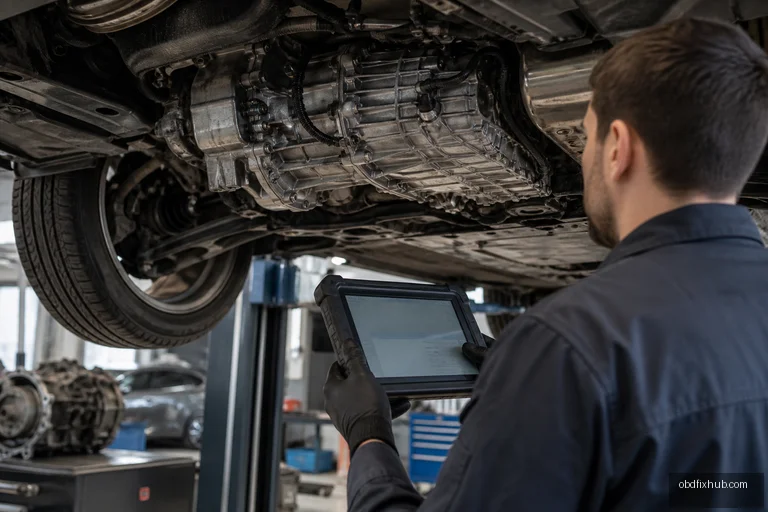
P2711 Unexpected Mechanical Gear Disengagement means the transmission control system detected that an engaged gear lost mechanical connection or did not remain engaged as commanded. On Volkswagen Group vehicles, this code is frequently associated with a DSG transmission, but it does not automatically prove that the entire gearbox needs replacement. A worn clutch pack, mechatronic fault, selector mechanism, wiring problem, incorrect adaptation, or internal mechanical damage can all produce the same code.
What Does Code P2711 Mean?
P2711 is a transmission diagnostic trouble code indicating an unexpected loss of gear engagement. The transmission control module, often called the TCM or mechatronic unit, compares the selected gear with input and output shaft speeds. If those speeds suddenly stop matching the expected ratio, the module records P2711 and may place the vehicle in limp mode.
In a DSG gearbox, this can feel as though the car briefly selects neutral while accelerating. The engine may flare in rpm, the vehicle may hesitate, or the transmission may refuse to select a gear after stopping. The code is a description of the detected event, not a final diagnosis.
P2711 DSG Symptoms
The symptoms depend on whether the root cause is hydraulic, electronic, clutch-related, or mechanical. In workshop testing, the most useful clue is when the disengagement occurs: during an upshift, when reversing, after the transmission becomes hot, or under heavy acceleration.
- Sudden loss of drive or a brief neutral-like sensation
- Harsh, delayed, or incomplete gear changes
- Engine rpm rising without corresponding vehicle speed
- Flashing PRNDS indicator or a transmission warning message
- Failure to select reverse, first gear, or an odd/even gear group
- Transmission entering limp mode with limited gears available
- Juddering or shuddering when pulling away
- P2711 returning shortly after clearing the fault memory
A single stored code with no drivability complaint may indicate an intermittent electrical or adaptation issue. A code accompanied by repeated loss of drive, metallic noise, or severe slipping should be treated as an urgent transmission problem.
Common Causes of P2711 Unexpected Mechanical Gear Disengagement
1. Worn DSG clutch pack
DSG clutches wear gradually, especially in vehicles used for frequent stop-and-go driving, towing, or steep hill starts. Excessive clutch clearance or a damaged friction surface can prevent the clutch from holding the requested gear. Heat often makes the problem worse, so the vehicle may drive acceptably when cold and fail after 20 to 30 minutes.
2. Failed DSG mechatronic unit
The mechatronic assembly combines the transmission control electronics with hydraulic valves and pressure control components. A sticking solenoid, weak hydraulic pump, internal pressure leak, or circuit-board fault can release a clutch or fail to operate a selector correctly. Mechatronic failure is common, but it should be confirmed with pressure data, actuator tests, and fault-code patterns rather than assumed from P2711 alone.
3. Selector fork, hub, or internal gearbox damage
A bent selector fork, worn engagement sleeve, damaged synchronizer component, or failed bearing can physically prevent a gear from staying engaged. A grinding noise, repeated failure in one specific gear, or visible metal debris in the oil increases suspicion of internal mechanical damage.
4. Speed sensor, wiring, or voltage problems
The TCM relies on accurate input and output speed signals. A contaminated sensor, damaged wiring, poor ground, low battery voltage, or corroded connector can make a healthy gearbox appear to disengage. Always check system voltage and connector condition before authorizing an expensive transmission repair.
5. Incorrect software or clutch adaptation
After a clutch replacement, mechatronic installation, gearbox swap, or control-module update, the DSG may need basic settings and clutch adaptation. If those procedures are skipped or interrupted, the control unit may command clutch positions that no longer match the mechanical hardware. In some cases, updating the transmission software resolves an intermittent P2711; in others, it only exposes an underlying worn clutch.
How to Diagnose P2711 Correctly
Replacing a mechatronic unit immediately is one of the most expensive diagnostic mistakes with this code. A reliable diagnosis should follow the sequence below:
- Scan every module. Record all transmission, engine, ABS, and voltage-related codes before clearing anything. Companion codes often identify the affected clutch or speed sensor.
- Check the freeze-frame data. Note vehicle speed, selected gear, transmission temperature, engine rpm, and clutch status when P2711 was stored.
- Inspect fluid and leaks. Use the correct fluid and level procedure for the exact DSG model. Burnt fluid, metal particles, or an incorrect fluid level are important evidence.
- Test the battery and grounds. Low voltage during cranking or poor transmission grounds can create misleading actuator and communication faults.
- Compare commanded and actual clutch data. Excessive slip, abnormal pressure values, or adaptation limits help separate clutch wear from a control problem.
- Perform guided basic settings. Adaptation should be completed only after confirming that the mechanical and hydraulic systems are capable of passing it.
- Road-test with live data. A qualified technician should reproduce the fault while monitoring gear position, shaft speeds, clutch pressure, and temperature.
A useful real-world clue is gear-group behavior. Many dual-clutch transmissions use one clutch for odd gears and another for even gears. If only one group repeatedly loses drive, the fault may be localized to that clutch, its actuator, or its selector mechanism rather than the complete gearbox.
How to Fix P2711
The correct repair depends on the failed component. Possible solutions include repairing wiring, replacing a speed sensor, correcting fluid level, updating software, completing clutch adaptation, replacing the DSG clutch pack, rebuilding the mechatronic unit, or repairing internal gearbox components.
If the clutch is worn but the gearset and mechatronic are healthy, a clutch replacement is usually more sensible than installing a complete transmission. If the gearbox contains metal debris or has damaged selectors, a professional rebuild or replacement transmission may be justified. Ask the repair shop for the test results that support its recommendation, not just a parts list.
How Much Does It Cost to Replace a DSG Transmission?
A complete DSG transmission replacement commonly costs approximately $4,000 to $8,000 at an independent specialist, while some newer or premium models can exceed that range. Dealer pricing may be higher. Used or remanufactured units can reduce the parts bill, but compatibility, mileage, warranty, coding, and adaptation must be verified.
- Diagnostic testing: about $100–$250
- Software, adaptation, or wiring repair: about $150–$600
- DSG mechatronic repair or replacement: about $1,500–$3,500
- DSG clutch replacement: about $1,500–$3,500
- Complete gearbox replacement: about $4,000–$8,000 or more
These figures vary by model, labor rates, transmission type, and whether the replacement unit is new, used, or remanufactured. A quote that excludes programming, fluid, seals, adaptation, or warranty terms may not be the cheapest option once the job is complete.
What Are the Signs of DSG Mechatronic Failure?
Typical signs include harsh or delayed shifts, repeated limp mode, inability to select reverse, flashing PRNDS, multiple solenoid or pressure-control codes, and faults that become more frequent as the transmission warms up. Some vehicles also show a hydraulic pump running for unusually long periods or fail the clutch basic-settings procedure.
However, clutch slip and mechatronic failure can feel very similar. A proper diagnosis should identify whether the unit is losing hydraulic pressure, commanding the wrong clutch position, or mechanically unable to hold the gear.
How Do You Know If a DSG Gearbox Is Bad?
A DSG gearbox is more likely to have internal damage when there is persistent failure in one gear, grinding or knocking from the casing, metal contamination in the oil, or a selector that will not engage despite correct hydraulic pressure and electrical signals. Repeated P2711 without abnormal noise may instead point toward adaptation, clutch wear, sensor input, or mechatronic control.
Do not continue driving if the vehicle repeatedly loses drive in traffic. Sudden neutral-like disengagement can leave you unable to accelerate when merging or crossing an intersection, and continued slipping can overheat the clutch and contaminate the transmission.
Final Advice
P2711 should be approached as a diagnostic starting point, not a verdict that the DSG must be replaced. Record the exact symptoms, transmission temperature, affected gears, and accompanying codes, then have the vehicle tested with manufacturer-level scan data. The right repair may be a simple electrical correction, but accurate testing is what separates a sensible clutch or mechatronic repair from an unnecessary complete gearbox replacement.
Frequently Asked Questions
What does code P2711 mean?
It means the transmission detected an unexpected mechanical loss of gear engagement. On DSG vehicles, possible causes include clutch wear, mechatronic faults, selector damage, sensor errors, wiring problems, and incorrect adaptation.
Can I drive with a P2711 code?
Only for the shortest distance needed to reach a qualified repair facility, and only if the vehicle still selects gears normally. Repeated loss of drive, severe slipping, warning lights, or limp mode makes continued driving unsafe and potentially more expensive.
Does P2711 always mean the DSG mechatronic is bad?
No. The code can be caused by a worn clutch, speed-sensor issue, low voltage, software or adaptation error, selector damage, or internal gearbox failure. Live data and targeted testing are required before replacing the mechatronic.
How much does it cost to replace a DSG transmission?
A complete replacement is commonly around $4,000–$8,000, although the price varies significantly by vehicle and transmission. A clutch or mechatronic repair may cost substantially less if the gearset is still serviceable.
What are the signs of DSG mechatronic failure?
Common signs include harsh shifting, delayed engagement, flashing PRNDS, limp mode, loss of reverse, repeated hydraulic or solenoid codes, and faults that worsen when the transmission is hot.




