P2712 Transmission Hydraulic Power Unit Leakage means the transmission control system has detected that hydraulic pressure is escaping from the power unit or that the unit cannot hold the pressure required for correct gear or clutch operation. It does not always mean you will see transmission fluid on the ground: an internal leak, weak accumulator, worn seal, failing pump, or pressure-control problem can trigger the code without any obvious external leak.
This is an informational search intent: most drivers want to understand whether the vehicle is safe to drive, what the code actually points to, and whether the repair involves a simple seal or a complete hydraulic unit. The exact test procedure varies by manufacturer, so the vehicle-specific service manual and scan-tool data matter more than a generic parts-swapping approach.
What Does P2712 Mean?
P2712 is a generic OBD-II transmission fault code associated with leakage or loss of hydraulic pressure in the transmission hydraulic power unit. In vehicles using an electro-hydraulic transmission system, the power unit may include an electric or mechanical pump, pressure accumulator, valves, solenoids, seals, passages, and a control module.
When the transmission requests a target pressure, the system monitors how quickly that pressure builds and how well it holds. If pressure drops too quickly, the pump runs longer than expected, or the measured pressure does not match the commanded value, the control module may store P2712 and place the transmission in a protective mode.
The definition can vary slightly between manufacturers. Some vehicles use this code for an internal hydraulic leak, while others associate it with a mechatronic unit, transmission pressure unit, or clutch actuator circuit. Always record the vehicle year, engine, transmission type, and manufacturer-specific subcodes before ordering parts.
Common Symptoms of P2712 Transmission Hydraulic Power Unit Leakage
The symptoms depend on how severe the pressure loss is and whether the vehicle uses a conventional automatic, dual-clutch transmission, automated manual gearbox, or hybrid transaxle. A minor leak may cause an intermittent warning, while a major leak can prevent the vehicle from selecting a gear.
- Transmission warning light, check engine light, or hybrid system warning
- Delayed engagement when selecting Drive or Reverse
- Harsh, slipping, or incomplete gear changes
- Transmission stuck in one gear or limp mode
- Repeated electric hydraulic pump operation after switching the vehicle off
- Low transmission fluid level or visible fluid around the transmission
- Grinding, buzzing, or unusually long pump run time
- Vehicle refusing to move even though the engine starts normally
A useful real-world clue is pump behavior. If an electric hydraulic pump cycles every few seconds after a gear change or runs for an unusually long time, the system may be trying to compensate for pressure loss. That clue is more valuable than simply seeing P2712 on a code reader because it helps distinguish a hydraulic leak from a communication or sensor fault.
What Causes the P2712 Code?
1. Internal hydraulic leakage
The most direct cause is pressure escaping inside the hydraulic power unit. A leaking valve, worn spool, damaged O-ring, cracked internal passage, or failed accumulator seal can allow fluid to bypass instead of applying a clutch or maintaining standby pressure.
2. External fluid leakage
Fluid may escape through a power-unit housing seam, pump seal, hydraulic line, cooler connection, transmission pan, or actuator seal. Some leaks only appear when the system is hot or pressurized, so a dry inspection on a cold vehicle can be misleading.
3. Low, contaminated, or incorrect fluid
Low fluid can introduce air into the pump and cause unstable pressure. Incorrect fluid or fluid contaminated with clutch material can damage valves and seals. A fluid level check must follow the manufacturer’s temperature and leveling procedure; checking it like engine oil can produce a false diagnosis.
4. Weak pump or failing accumulator
A worn pump may create pressure too slowly, while a damaged accumulator may fail to store pressure between pump cycles. In either case, the control module can interpret the condition as leakage because the measured pressure falls faster than expected.
5. Electrical or sensor faults
P2712 is a hydraulic-related code, but an inaccurate pressure sensor, damaged connector, poor ground, low battery voltage, or wiring resistance can create the same apparent pressure problem. This is especially important in hybrid and automated-manual vehicles, where a weak 12-volt battery can affect pump performance and actuator operation.
How to Diagnose P2712 Correctly
Do not begin by replacing the hydraulic pump. A disciplined diagnosis usually saves more money than the part itself.
- Scan all modules. Use a professional scan tool and save freeze-frame data, transmission codes, hybrid codes, and communication faults. The transmission controller may contain more useful information than the engine controller.
- Check battery voltage. Test the 12-volt battery under load and verify charging voltage. On hybrid vehicles, follow the high-voltage safety procedure and do not disconnect orange cables without proper training.
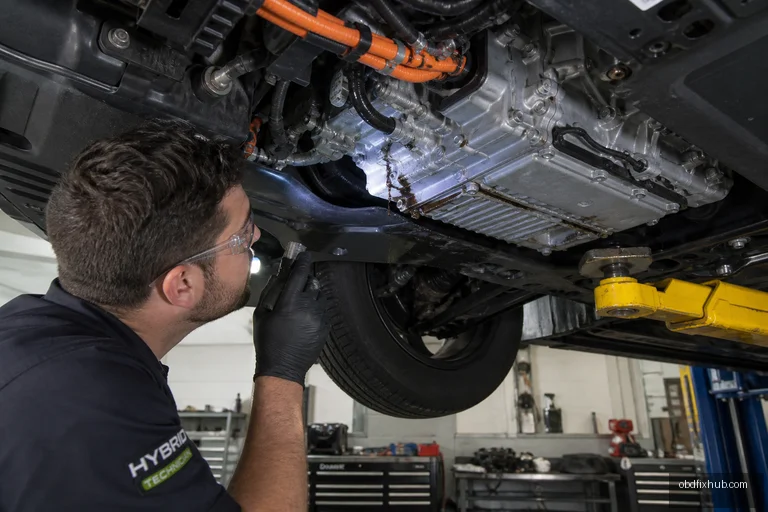
- Inspect for leaks. Look at the hydraulic unit, pump, lines, connectors, case seams, and nearby components. Clean the area first, then use the manufacturer-approved leak detection method if the source is unclear.
- Verify the fluid correctly. Confirm the exact fluid specification, level, color, and odor. Burnt fluid or heavy metallic debris suggests internal wear rather than a simple seal replacement.
- Monitor live pressure data. Compare commanded and actual hydraulic pressure during key-on, pump activation, gear selection, and clutch engagement. A rapid pressure drop after the pump stops strongly supports an internal leak or accumulator problem.
- Perform actuator and leak-down tests. Factory scan tools may run pump, solenoid, clutch, or pressure-hold tests. These tests can identify whether the loss occurs in the pump, valve body, actuator, or transmission circuit.
- Check wiring and connectors. Inspect for fluid intrusion, bent terminals, corrosion, damaged insulation, and poor ground connections before condemning a pressure sensor or control module.
A practical diagnostic mistake is confusing a leak in the hydraulic power unit with a conventional gearbox fluid leak. The former may require pressure testing and actuator data; the latter may be repaired with a seal or line replacement. The location of the fluid and the system pressure behavior must be evaluated together.
P2712 Repair: What Fixes the Problem?
The correct repair depends on the failed component. Possible fixes include restoring the fluid to the correct level, replacing a leaking hydraulic line or seal, repairing a damaged connector, replacing an accumulator, rebuilding the hydraulic power unit, or installing a manufacturer-approved pump or mechatronic assembly.
- External leak: Replace the failed seal, hose, fitting, pan gasket, or housing component, then clean the area and verify that the leak is gone under operating pressure.
- Internal valve or seal leak: The hydraulic unit may need professional rebuilding or replacement. Calibration and bleeding are often required afterward.
- Weak pump: Confirm voltage supply and pressure output before replacement. A pump can appear weak when the battery, ground, filter, or fluid level is the real problem.
- Sensor or wiring fault: Repair the circuit, replace the pressure sensor if the signal is inaccurate, and complete the required relearn or adaptation procedure.
- Contaminated fluid: Follow the factory procedure for fluid service. On clutch-based systems, a simple drain and fill may not remove debris trapped in the hydraulic unit.
After repair, the system may require hydraulic bleeding, clutch touch-point calibration, pressure adaptation, or a transmission control module relearn. Clearing the code without performing these procedures can cause the warning to return immediately, even when the mechanical repair was correct.
Can You Drive With P2712?
Short-distance driving may be possible if the vehicle shifts normally, the warning is intermittent, and there is no visible fluid loss. However, continued driving is risky when the transmission slips, bangs into gear, refuses Reverse, overheats, or enters limp mode. A complete hydraulic failure can leave the vehicle unable to move and may turn a seal repair into a more expensive clutch or transmission repair.
Stop driving and arrange a tow if fluid is actively dripping, the pump runs continuously, the transmission will not engage, or a hybrid vehicle displays a drivetrain or high-voltage warning. Never work underneath a running vehicle supported only by a jack.
Final Takeaway
P2712 points to a hydraulic pressure-retention problem, not automatically a failed transmission. Start with a full-module scan, battery and fluid checks, a careful leak inspection, and pressure testing. The most reliable repair is the one that identifies where pressure is being lost—pump, accumulator, valve body, actuator, seal, wiring, or sensor—before any expensive assembly is replaced.
Frequently Asked Questions
Is P2712 always caused by a transmission fluid leak?
No. P2712 can result from an internal hydraulic bypass, weak pump, failed accumulator, defective pressure sensor, wiring problem, or low fluid. An external puddle is not required.
Can low transmission fluid trigger P2712?
Yes. Low fluid can cause aeration and insufficient pump pressure, especially during gear engagement. The level must be checked using the manufacturer’s specified temperature and procedure.
Will changing the transmission fluid fix P2712?
It may help only when the cause is incorrect level or contaminated fluid. Fluid service will not repair a damaged pump, leaking accumulator, worn valve, or failed hydraulic seal.
Is P2712 safe to drive with?
It is not advisable to continue driving if the transmission slips, delays engagement, remains in one gear, loses Reverse, or leaks heavily. Those symptoms justify prompt diagnosis and possibly towing.
Does a P2712 repair require transmission replacement?
Not necessarily. Many cases are repaired with a line, seal, sensor, pump, accumulator, or hydraulic-unit service. Transmission replacement should be considered only after pressure testing and component-level diagnosis confirm severe internal damage.




