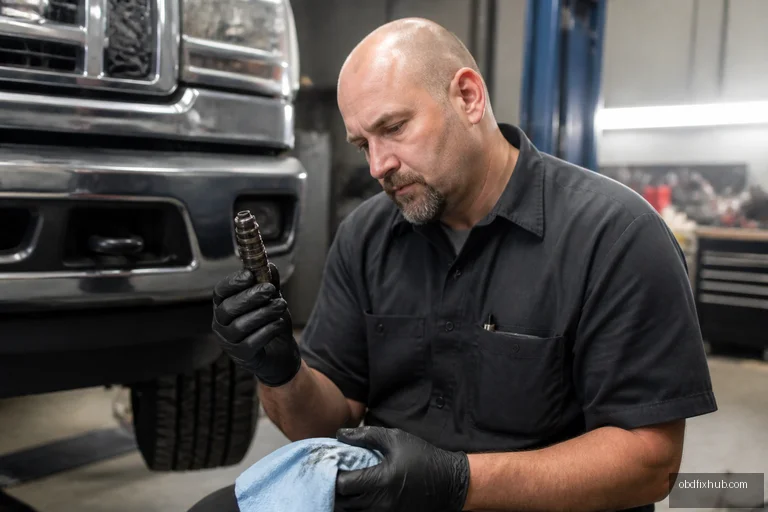
P2755 Transmission Fluid Cooler Control Circuit High means the transmission control module has detected higher-than-expected voltage in the circuit that controls the transmission fluid cooler. The fault is usually caused by a failed cooler control valve, an open or shorted wiring circuit, corrosion at a connector, or a control-module issue—not automatically a bad transmission. Diagnosis should begin with the electrical circuit and live data before expensive parts are replaced.
What Does P2755 Mean?
Automatic transmissions generate substantial heat through clutch slip, torque-converter operation, and internal hydraulic pressure. A transmission fluid cooler, sometimes controlled by an electric valve or coolant-management valve, keeps the fluid within its intended temperature range.
When the vehicle stores P2755, the transmission control module sees excessive voltage on the cooler control circuit. In practical terms, the module is commanding a valve or actuator and receiving an electrical response that is too high. Depending on the vehicle, the cooler may be integrated into the radiator, mounted as a separate heat exchanger, or managed through an engine-coolant valve.
- Code type: Generic OBD-II powertrain fault
- Primary system: Transmission fluid cooling control
- Electrical meaning: Circuit voltage higher than the expected range
- Common mistake: Replacing the transmission cooler without testing the wiring and actuator
Common Causes of P2755
The same code can have very different root causes across Ford, GM, Audi, Volkswagen, BMW, and other vehicles. Factory wiring diagrams and the vehicle’s service information matter because some systems use a pulse-width-modulated valve while others use a simple two-wire solenoid.
- A failed transmission fluid cooler control valve or solenoid
- An open control wire between the transmission module and the valve
- A short to battery voltage in the control circuit
- Damaged insulation caused by exhaust heat, road debris, or transmission movement
- Water, oil, or green corrosion inside the electrical connector
- A blown fuse, poor ground, or damaged power supply circuit
- A restricted cooler line or contaminated heat exchanger
- Incorrect wiring after transmission, radiator, or engine repairs
- A failed transmission control module, although this is less common
One useful workshop clue is the timing of the fault. If P2755 appeared immediately after a radiator replacement or transmission service, inspect the harness routing and connectors first. If it appears only during towing or long uphill driving, the electrical fault may be exposing a real overheating problem rather than being the original cause.
P2755 Symptoms You May Notice
A vehicle can store P2755 with very few immediate symptoms, particularly when the cooler valve is used only under specific temperature conditions. More serious cases can cause transmission overheating and drivability problems.
- Illuminated Check Engine or transmission warning light
- Harsh, delayed, or slipping gear changes
- Transmission stuck in a protective gear or limp mode
- Higher transmission fluid temperature on a scan tool
- Reduced fuel economy during extended driving
- Burning-fluid smell or smoke near the transmission
- Fluid leaks from cooler hoses, fittings, or the heat exchanger
- Cooling fan operation that seems abnormal on some vehicles
Do not judge transmission condition from one harsh shift alone. Low fluid, incorrect fluid level, degraded fluid, a failed valve body, and an overheating cooler circuit can produce similar symptoms. The diagnostic trouble code is a starting point, not a complete diagnosis.
How to Diagnose P2755 Correctly
1. Check temperature and fluid condition
Use a scan tool to compare transmission temperature with engine coolant temperature and ambient conditions. Fluid that is unusually dark, smells strongly burned, or contains metallic debris indicates a separate internal problem that must be addressed quickly.
2. Inspect the cooler valve and harness
Follow the cooler lines and locate the control valve. Look for melted wiring near the exhaust, stretched wires near brackets, loose terminals, and moisture inside the connector. A visual inspection often finds the cause when a connector has been disturbed during another repair.
3. Test voltage, ground, and continuity
Do not substitute a test light for a proper circuit test. Use a digital multimeter and the manufacturer’s pinout. With the connector disconnected, check for unwanted battery voltage on the control wire, verify power and ground where specified, and perform a wiggle test while monitoring the reading.
4. Test actuator operation
Many professional scan tools can command the cooler valve on and off. Listen for operation and confirm that commanded state, actual current, and temperature response agree. A valve that clicks but draws incorrect current may still be electrically defective or mechanically stuck.
5. Check technical service information
Some manufacturers have software updates, revised cooler valves, or harness repair procedures for this code. Clearing P2755 without completing a drive cycle can make the fault appear fixed when the module simply has not run the monitor again.
How Is P2755 Fixed?
The repair depends on the failed component. A corroded terminal may require connector repair rather than a complete wiring harness. A shorted wire must be repaired with suitable automotive-grade wire and protected from heat and abrasion. If the control valve fails resistance or actuator testing, replacement and a post-repair adaptation may be required.
- Repair or replace damaged wiring and terminals
- Clean or replace corroded connectors using the correct terminal procedure
- Replace the transmission cooler control valve or solenoid when tests confirm failure
- Flush or replace a restricted cooler and inspect cooler lines for blockage
- Correct the fluid level using the manufacturer’s temperature procedure
- Update or reprogram the transmission control module when a factory bulletin applies
After the repair, clear the code, verify the valve command with a scan tool, and complete a road test under the conditions that originally triggered the fault. Recheck for leaks and confirm that transmission temperature remains stable.
What Are the Symptoms of a Bad Transmission Cooler?
A bad transmission cooler may cause rising transmission temperature, slipping under load, delayed engagement, harsh shifts, fluid leaks, or a burnt smell. In some vehicles, the engine coolant may become oily if an internal radiator cooler fails. Conversely, coolant can enter the transmission and turn the fluid pink or milky, which is an urgent contamination problem.
External coolers can also become clogged with dirt or bent fins. Restricted airflow is especially important on vehicles used for towing. If the transmission overheats only in traffic or while climbing, inspect airflow, cooler fins, fan operation, and line restriction—not just the electronic valve.
How Long Will It Take for a Transmission to Cool Down?
A moderately overheated transmission may need 30 to 60 minutes of gentle, stationary cooling before temperatures fall substantially. After severe overheating, the vehicle may need several hours before it is safe to inspect, and the fluid or internal components may already be damaged.
Do not pour cold water over the transmission or continue driving with a temperature warning. Stop safely, select Park, shut the engine off if the owner’s manual permits it, and follow the manufacturer’s roadside instructions. A cool transmission does not mean the fault has disappeared; it only means the temperature has temporarily fallen.
What Does Audi Error Code P275300 Mean?
Audi and Volkswagen diagnostic tools often display an eight-character format such as P275300. This is generally interpreted as P2753-00, which commonly refers to a transmission fluid cooler control circuit open or a related circuit fault. It is not the same code as generic P2755, which indicates a high circuit condition.
Scanner wording can vary by Audi transmission, model year, and software version. Before replacing a valve, read the complete Audi fault text, freeze-frame data, measuring blocks, and any companion codes such as coolant-valve or power-supply faults. A P275300 stored together with a P19A200 may point toward a shared coolant-management system or wiring issue rather than two unrelated failed parts.
What Do “Hot” and “Cold” Mean on a Transmission Dipstick?
The “Cold” and “Hot” marks indicate different fluid-level ranges at different fluid temperatures. Transmission fluid expands as it heats, so the level must be checked at the temperature specified by the manufacturer. “Cold” is usually intended for an initial check when the vehicle has been parked, while “Hot” is checked after the transmission reaches its specified operating range.
Park on level ground, apply the parking brake, and follow the owner’s manual for gear selection and temperature requirements. Some vehicles require the engine running; others have no dipstick and must be checked through an overflow plug. Never add fluid simply because the level looks low when the transmission is cold, and never overfill to compensate for an incorrect checking procedure.
Can You Drive With P2755?
Short, gentle driving may be possible if the transmission shifts normally, the temperature is stable, and there is no warning indicating overheating. Avoid towing, hard acceleration, steep climbs, and long traffic delays until the code is diagnosed. Stop driving if the fluid smells burned, the transmission slips, the warning flashes, or the vehicle enters limp mode.
Continuing to drive with an inoperative cooler control can turn an inexpensive electrical repair into a transmission rebuild. A professional diagnosis is particularly important when the code returns immediately after clearing or appears with high transmission temperature.
Key Takeaway
P2755 identifies a high-voltage condition in the transmission fluid cooler control circuit. Start with the connector, harness, power supply, ground, and cooler valve command before condemning the transmission or cooler itself. Verify fluid level at the correct temperature, investigate overheating promptly, and confirm the repair with live data and a complete road test.
Frequently Asked Questions
Can low transmission fluid cause P2755?
Low fluid can cause overheating and shift problems, but it does not normally create a high electrical circuit voltage by itself. Check the fluid level and the electrical circuit separately.
Is P2755 a serious transmission code?
It can become serious if the cooler is no longer controlled and the transmission overheats. The vehicle may still drive normally at first, so prompt diagnosis is safer than waiting for slipping or limp mode.
Does clearing P2755 fix the problem?
No. Clearing the code only erases the stored fault until the control module runs its monitor again. If the electrical problem remains, P2755 will return.
Should I replace the transmission cooler when P2755 appears?
Not automatically. Test the cooler valve, wiring, connector, fluid temperature, and cooler flow first. Replacing the cooler without electrical testing can waste money and leave the original fault untouched.




